Cancer remains one of the leading causes of death globally, accounting for nearly 10 million deaths annually and placing a growing burden on healthcare systems, particularly in low and middle income countries.
In Kenya, an estimated 42,000 new cancer cases are diagnosed every year, with breast, cervical and prostate cancers among the most common.

Yet alongside these sobering statistics is another, often less told story, a growing population of cancer survivors living longer and healthier lives due to advances in screening, diagnosis and treatment.
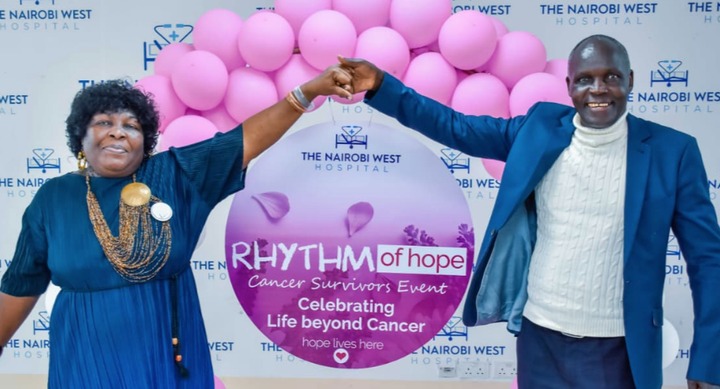
It was this progress, as well as the challenges that remain, that took centre stage during World Cancer Survivors Day commemorations held at The Nairobi West Hospital on Sunday, where survivors shared deeply personal accounts of their journeys through diagnosis, treatment and recovery.
Among them was 55-year-old Mary Ayoma, whose battle against both lung and cervical cancer tested her physically and emotionally.
Recalling her struggle with lung cancer, Ms Ayoma described months of persistent coughing that affected her daily life.
“Lung cancer was terrible. I used to cough nonstop,” she said.
However, it was cervical cancer that she described as the more difficult ordeal.
“Cervical cancer was the ultimate monster,” she told fellow survivors and healthcare professionals gathered at the event.
Beyond the pain and discomfort, she spoke candidly about the emotional toll of the disease, including coping with the strong odour often associated with advanced cervical cancer.
“The odour was very strong. I needed love and care from my family and my doctors to overcome it,” she said.
Her testimony highlighted a critical but often overlooked aspect of cancer care, the role of psychosocial support in helping patients navigate treatment and recovery.
For Melody Achieng’, a Stage Two breast cancer survivor, survival came down to early diagnosis and timely intervention.
She credited her recovery to prompt clinical assessment and treatment support from the multidisciplinary team at The Nairobi West Hospital.
“I was diagnosed early and treatment started quickly,” she said.
Her treatment journey was not without complications. At one point, she lost significant amounts of blood and required two complete blood transfusions.
“Having to undergo blood transfusions twice was very scary,” she recalled.
Today, she considers herself a living testament to the importance of seeking medical attention early and adhering to treatment plans.
Their stories reflect a broader shift in cancer care. While cancer remains a major public health challenge, advances in diagnostics, treatment and supportive care have significantly improved survival rates for many forms of the disease.
According to the World Health Organization, approximately one in five people will develop cancer during their lifetime. In 2022, there were an estimated 20 million new cancer cases and nearly 10 million cancer-related deaths worldwide.
However, experts note that between 30 and 50 pc of cancers can either be prevented or successfully treated when detected early.
Speaking during the event, Dr Iram Khan, a breast oncoplastic surgeon at The Nairobi West Hospital, said technological innovations are transforming the way cancer is diagnosed and managed.
“Cancer is a monster, but medicine is advancing every day,” she said.
She noted that modern diagnostic technologies, including artificial intelligence-assisted imaging and analysis tools, are helping clinicians identify cancers earlier, often before symptoms become severe.
“Early detection remains one of the strongest weapons we have against cancer. The earlier a cancer is diagnosed, the better the chances of successful treatment and improved quality of life,” said Dr Khan.
She added that advancements in precision medicine, digital pathology and imaging technologies are enabling more accurate diagnoses and personalised treatment plans, improving outcomes for patients across different cancer types.
Health experts continue to warn that many Kenyans still present to hospitals with advanced-stage cancers, largely due to limited awareness, fear, stigma and delayed screening.
For survivors such as Ayoma and Achieng’, this is why sharing their stories matters.
Their experiences serve as a reminder that cancer is not always a death sentence and that many patients can go on to live productive lives after treatment.
As the world marked Cancer Survivors Day, the message from both clinicians and survivors was clear: early screening, timely diagnosis, access to quality treatment and strong family support remain essential in the fight against cancer.
For thousands of patients currently undergoing treatment, the stories shared at the event offered something medicine alone cannot provide, hope.