Advocates for ecofeminist and gender justice have called on policymakers to ensure that Africa’s energy future is designed around the needs, realities and voices of women. The call was made in the sidelines of the ongoing sixty-fourth sessions of the UNFCCC Subsidiary Bodies (SBI 64 and SBSTA 64) taking place in Bonn, Germany
A new advocacy brief released ahead of the SBI64, “Whose Energy Is It Anyway? Centring Women’s Voices and Realities in Africa’s Energy Future,” warns that Africa’s energy crisis is not merely an infrastructure challenge but a profound women’s rights issue that continues to trap millions of women and girls in cycles of poverty, ill health and unpaid labour.

“Women are the first to feel the effects of deforestation and climate stress given their prescribed social roles; as a result, energy poverty is experienced differently by women and men,” Dr Melania Chiponda, Executive Director, Shine Collab, a global feminist network and non-profit that accelerates gender-just solutions at the intersection of climate resilience, community power, and energy access said.
According Dr Melania, who also authored the Advocacy brief, for millions of women across Africa, lack of access to modern energy means hours spent collecting firewood and water, exposure to toxic smoke from open fires, and less time available for education, paid work, leadership and rest.
Nearly 600 million Africans still lack reliable access to electricity, with Sub-Saharan Africa accounting for 77 percent of the world’s energy-poor population. While these statistics are widely cited, the report highlights the hidden reality that women and girls shoulder the greatest burden of energy poverty through unpaid care work, fuel collection and cooking using polluting biomass fuels.
The Advocacy brief highlights alarming gender disparities across the continent. Women in Sub-Saharan Africa perform more than three times as much unpaid care work as men. In countries such as Tanzania, Ethiopia, Mali and Rwanda, women spend several hours each day collecting fuel, fetching water and performing household tasks linked directly to inadequate energy access.
The consequences are severe. Indoor air pollution from biomass cooking fuels is estimated to have caused approximately 700,000 deaths across Africa in 2019 alone, disproportionately affecting women and children who spend the most time near cooking fires.
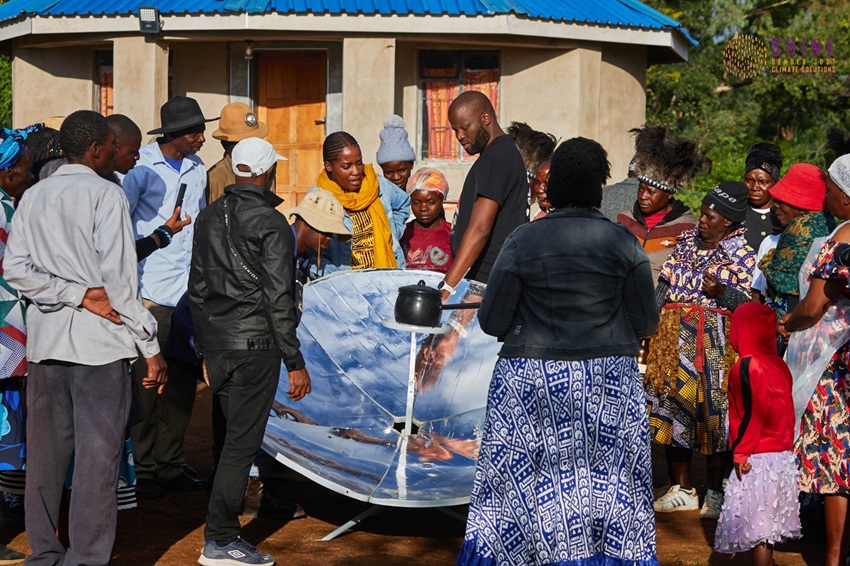
However, evidence presented in the brief demonstrates that investments in clean cooking technologies and reliable electricity can significantly reduce women’s time burdens and unlock opportunities for income generation, education and community participation. Programmes introducing improved cookstoves in Tanzania and Kenya have shown substantial reductions in time spent collecting fuel and preparing meals, allowing women to invest more time in productive economic activities.
The release of the brief coincides with growing momentum behind Mission 300, the joint AfDB and World Bank initiative that aims to connect 300 million Africans to electricity by 2030. While welcoming the initiative’s ambition, advocates warn that large-scale energy investments could reinforce existing inequalities if gender considerations are not intentionally built into planning, financing and implementation.
The brief calls on the African Development Bank, governments and development partners to adopt five key actions including, introducing gender-disaggregated monitoring systems to measure who benefits from energy investments and how those benefits are distributed, ensuring women’s meaningful participation in energy governance and decision-making structures at national and local levels and elevating clean cooking solutions as a central pillar of energy financing and development strategies.
In addition, the brief urges for affordability mechanisms, including subsidies and community financing models, that specifically address barriers facing women-led households and the institutionalization of participatory approaches that place rural women, women with disabilities and women in conflict-affected areas at the centre of energy planning processes.
According to projections cited in the brief, more than 220 million women and girls in Sub-Saharan Africa could be living in extreme poverty by 2030, with nearly half facing food insecurity. Advocates argue that decisions made today regarding energy financing will significantly influence whether those outcomes can be reversed.
“The conversation about Africa’s energy transition must move beyond megawatts and connections,” noted Dr Melanina. “Women’s time, health, safety and economic participation are not secondary benefits of energy access—they are the reason energy justice matters.”