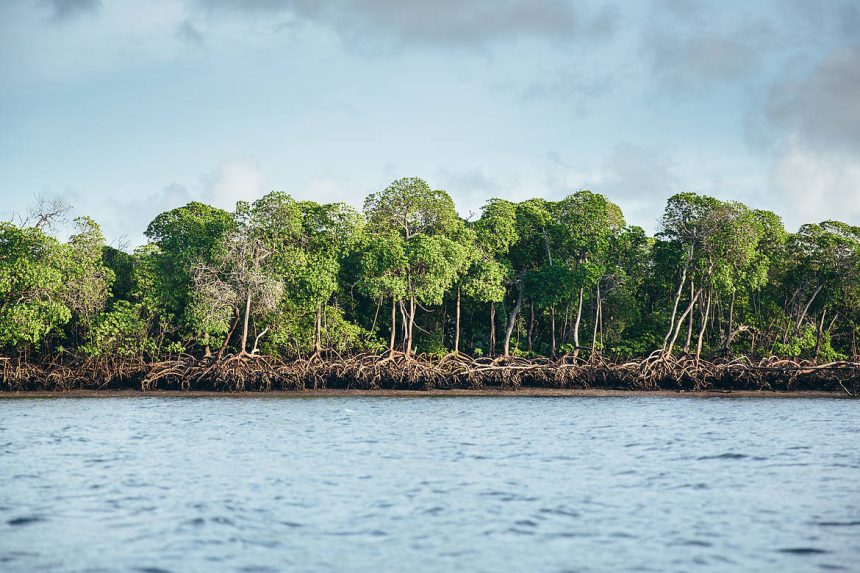
Kenya’s Mangrove forests should no longer be viewed solely as environmental assets but as strategic economic resources capable of driving the country’s blue economy, delegates attending the National Mangrove Stakeholder Forum in Lamu County have been told.
The two-day forum, convened by the State Department for Forestry, has brought together government agencies, development partners, researchers, conservation organisations, Community Forest Associations and private sector players to examine how sustainable mangrove management can strengthen livelihoods while advancing national climate and development goals.

Held under the theme “Advancing Policy Leadership, Coordination and Community-Led Stewardship for Kenya’s Mangrove Ecosystem,” the meeting is reviewing progress made under the National Mangrove Ecosystem Management Plan (2017–2027) while laying the groundwork for future conservation strategies.
According to the State Department for Forestry, Kenya’s mangrove forests cover approximately 61,271 hectares along the country’s 536-kilometre coastline.
Lamu accounts for the largest share at 61%, followed by Kilifi and Kwale with 14% each, Mombasa at 6% and Tana River at five per cent.
Despite their value, the forests continue to face mounting pressure from illegal wood harvesting, coastal development, encroachment, pollution, climate change, sedimentation and reduced freshwater inflows caused by upstream damming.
These challenges have contributed to an annual mangrove cover loss of 0.7%, higher than that of Kenya’s other forest ecosystems.
The forum is expected to develop practical recommendations aimed at strengthening governance, mobilising investment and improving coordination among institutions responsible for mangrove conservation.
Among the key areas under discussion are financing mechanisms for large-scale restoration, greater private sector participation, community benefit-sharing models and partnerships capable of accelerating implementation of the National Mangrove Ecosystem Management Plan.
The initiative also supports broader national priorities, including the 15 Billion Trees Programme by 2032, ecosystem restoration, biodiversity conservation, climate change commitments and the sustainable growth of Kenya’s blue economy.
Expected outcomes include a comprehensive review of the current management plan, an action framework for improved mangrove governance and stronger collaboration among government agencies, conservation organisations, researchers and coastal communities.
As policymakers and stakeholders deliberate in Kilifi, the message emerging from the forum is clear: protecting Kenya’s mangrove forests is not only essential for safeguarding the environment but also for unlocking sustainable economic opportunities that will benefit coastal communities and the nation for generations to come.