Kenya could soon have an intellectual property policy in place after two previous attempts to establish the plan failed.
This follows the conclusion of public participation on the Draft National Intellectual Property Policy conducted by the Ministry of Investments, Trade and Industry, the Anti-Counterfeit Authority (ACA), the Kenya Industrial Property Institute (KIPI), the Kenya Plant Health Inspectorate Service (KEPHIS), the Kenya National Innovation Agency (KENIA), the Kenya Copyright Board (KECOBO) and the National Research Fund (NRF).

The draft policy if adopted, will bring patents, trademarks, copyright, plant variety rights, geographical indications, traditional knowledge and enforcement under a single coherent framework, positioning intellectual property as a driver of innovation, creativity and economic growth.
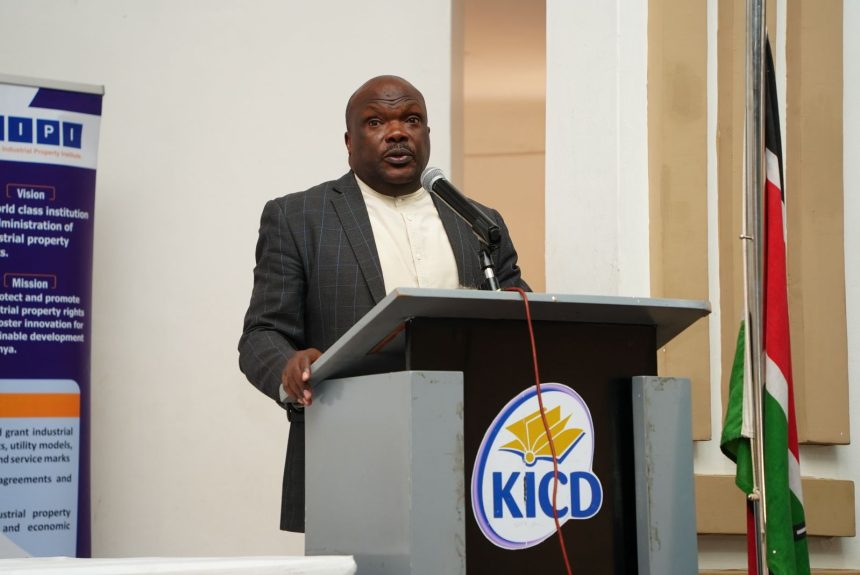
“The Ministry has listened closely across every region this tour has reached. What has struck us most is how differently intellectual property shows up from one county to the next — coffee in Nyeri, athletics in Eldoret, oil in Turkana, tourism on the coast. NIPPS 2026 must be flexible enough to protect all of it,” said Wahome King’uru, representing the Principal Secretary, State Department for Industry
The nationwide public participation concluded with engagement with stakeholders from Nairobi, Kajiado, Kiambu and Machakos counties, bringing total number of counties reached to 38.
Across the tour, the forums heard submissions on protecting produce and geographical indications such as Nyeri coffee, Kericho and Nandi tea, and West Pokot honey; safeguarding the image and endorsement rights of athletes from Eldoret, Nandi and Elgeyo Marakwet; governing new natural resource discoveries in Turkana and Elgeyo Marakwet; strengthening enforcement against counterfeit goods along border and coastal trade corridors; and supporting researchers, manufacturers and creative industries across the country to protect and commercialise their ideas.
“From the coffee highlands of Nyeri to the running towns of Eldoret, the coast of Mombasa and the trading floors of Kakamega, Kenyans have told us plainly what this policy must protect. Nairobi closes that conversation, but the real work is only beginning — turning what we have heard into a policy that works for every county, not just the ones with the loudest voices,” said Dr. Robi King’a, Executive Director of the Anti-Counterfeit Authority.
The submissions will now be collated and reviewed ahead of finalising the policy.