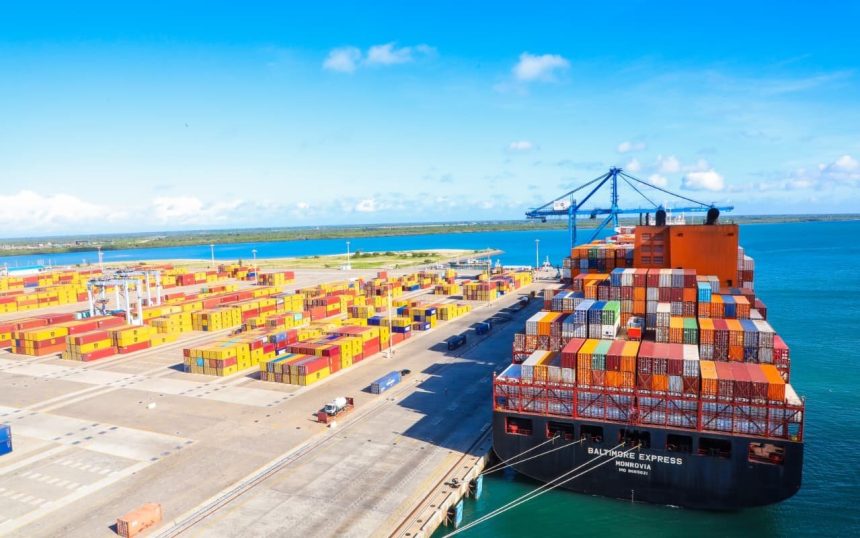
Lamu County residents have demanded a legally binding agreement with the Dangote Group before the proposed Ksh 2.2 trillion oil refinery project can proceed.
According to Bajuni community, indigenous residents have been sidelined from negotiations despite being the host community.

The leaders accused politicians from Lamu County of taking over discussions surrounding the proposed refinery while leaving local residents in the dark, warning that the project would not move forward unless proper legal procedures and community consultation are followed.
Addressing journalists in Lamu, the indigenous leaders clarified that they support the investment but insisted that it must be implemented transparently and with the full participation of the host community.
Speaking on behalf of the Bajuni Council of Elders, Badi Somo said the community wanted a written Memorandum of Understanding (MoU) with Dangote Group outlining employment quotas for local residents, a share of the refinery’s profits and specific community development projects.
“We don’t want to become flower girls in these projects. We want full involvement in every table of discussion, every table of decision-making and every negotiation as the local people of Lamu County,” said Somo.
He warned against repeating what he described as the experience of Uganda’s Hoima oil refinery, where, he claimed, foreigners secured skilled positions while locals were left with casual jobs.
Somo demanded that at least 70% of all jobs created by the refinery be reserved for Lamu residents and urged Dangote Group to establish training programmes to equip local youth with the technical skills required to work at the facility.
“We want our sons and daughters to be taken to institutions where they will acquire the qualifications needed to secure employment in the refinery,” he said.
Another community representative, Omar Shariff, echoed the call for meaningful public participation, insisting that local residents be involved in every stage of the project, from planning to implementation.
Shariff also proposed that at least two per cent of the refinery’s annual net profits be allocated to community development projects in Lamu County, saying the investment had the potential to transform the region through improved roads, schools and other infrastructure.
Religious leader Sheikh Abubakar Bausi said the community’s concerns stemmed from previous experiences under the Lamu Port-South Sudan-Ethiopia Transport (LAPSSET) Corridor project, where many employment opportunities went to people from outside the county.
Bausi urged both the national and county governments to ensure local residents are fully involved in the refinery project, emphasizing that the community was not opposed to the investment but wanted genuine participation in decisions affecting their land and livelihoods.
Former Pate Island employee Allaway Abuzein welcomed Dangote Group’s decision to invest in Lamu but urged the company to engage directly with indigenous community leaders rather than relying solely on political leaders.
Abuzein cited previous oil and gas exploration activities in Lamu East, where elders were consulted before the projects commenced, saying the same approach should be adopted for the proposed refinery.
He further stressed that the project should undergo a comprehensive Social and Environmental Impact Assessment to evaluate its effects on fishing communities, farmers, boda boda operators and the wider local economy.
Abuzein added that international best practice requires large-scale projects to establish a community benefit fund for host communities, describing such arrangements as a right rather than a privilege.
“In order for this project to succeed, there must be community support. That support will determine whether the refinery remains sustainable in the long term,” he said.