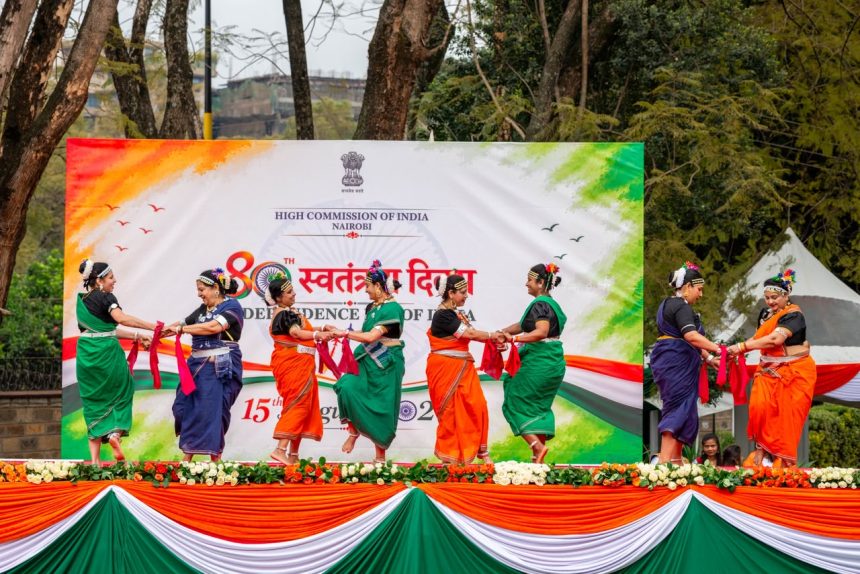
On August 15, India celebrated its 80th Independence Day, marking eight decades since the end of British colonial rule in 1947. The anniversary is significant beyond national remembrance. It invites reflection on how a vast, diverse developing country has sought to turn political independence into economic capability, social progress and greater influence in the world.
For Africa, India’s journey is particularly instructive because the two share important characteristics including colonial histories, large populations, development challenges and the continuing need to reconcile economic growth with social inclusion. India is not a model to be copied, but a fellow developing country whose successes, choices and shortcomings offer useful lessons.

The first is the value of a long-term national purpose. India’s ambition to achieve developed-country status by 2047 gives its development agenda a generational horizon. The important point is not the target year itself, but the attempt to anchor national transformation beyond individual governments and political cycles.
Africa has no shortage of development plans. What is often missing is continuity. Infrastructure, education, productive capacity and institutional reform require decades of sustained effort. India’s experience suggests that development is less about discovering another grand plan than about maintaining direction long enough for successive investments to reinforce one another.
A second lesson is that growth must be inclusive. Bringing millions of people into formal finance, widening access to healthcare and strengthening food security can turn previously marginalised citizens into active economic participants. For Africa, where large sections of the population remain outside formal economic systems, this is especially relevant.
Technology offers perhaps the clearest opportunity for African countries to leapfrog. India has demonstrated how digital infrastructure can transform payments and public-service delivery at enormous scale. Africa has already shown considerable ingenuity through mobile money.
The next step is to apply similar thinking to digital identity, government services, taxation, business finance and regional commerce. The objective should not be technology for its own sake, but institutions that work better because technology makes them more accessible.
Infrastructure is equally important. India’s approach increasingly links connectivity with economic opportunity. Roads, railways, waterways, aviation and digital networks are instruments for moving people, goods and capital. For Africa, this has a continental significance. The African Continental Free Trade Area will struggle to reach its full potential without efficient transport corridors, energy systems, ports and digital connectivity. Economic integration requires efficient infrastructure to make it real.
The framework of seven streams of national strength highlighted during India’s celebrations is also worth considering. Manufacturing, agriculture and food processing, technology and innovation, connectivity, defence, the green and blue economies, and soft power together suggest a broad conception of national development rather than an economy dependent on one sector.
That diversification is relevant to Africa, where dependence on raw commodity exports remains a structural vulnerability. The challenge is to move further up value chains — processing agricultural products, manufacturing locally, exploiting digital opportunities and developing creative industries — while using natural resources to build wider productive capacity.
Demography presents another shared opportunity. A young population can generate extraordinary economic dynamism if education, skills, entrepreneurship and employment keep pace. India’s emphasis on young entrepreneurs and job creation offers Africa a useful reminder that young people should not be viewed primarily as employment seekers. They can also be innovators, producers and employers.
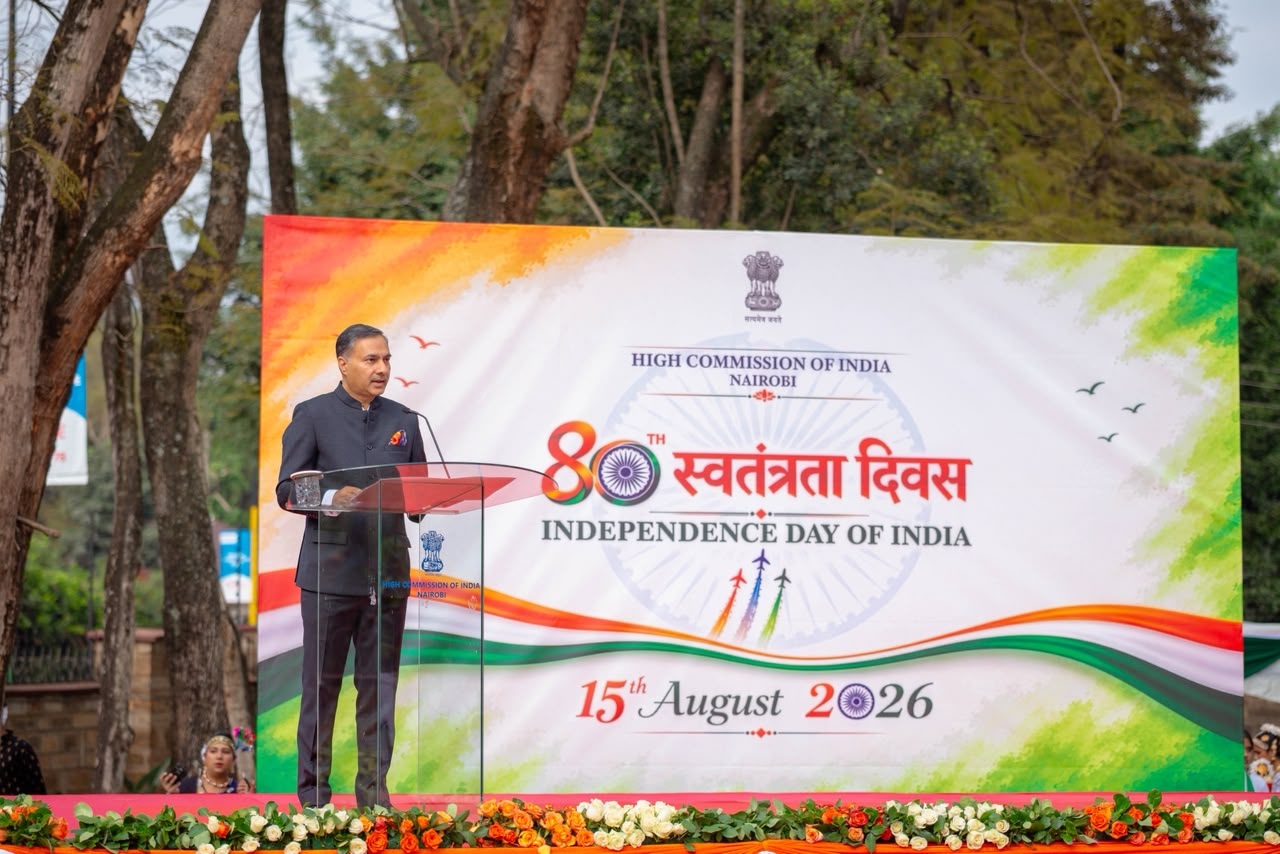
India’s relationship with Kenya adds a practical dimension to these lessons. Bilateral ties increasingly encompass trade, investment, development cooperation, education, health and culture. The substantial Indian-origin community in Kenya is another bridge between the two economies and societies, with potential for greater investment, skills transfer and knowledge exchange.
Even the symbolism of this year’s celebrations carried a wider historical message. In Nairobi, the High Commission commemorated Indian soldiers who died during the First World War, while the celebrations brought together more than 1,200 members of the diaspora and Friends of India. History, therefore, is not simply something to remember; it can inform contemporary partnerships.
India at 80 ultimately offers Africa a lesson in agency. Developing countries do not have to wait for prosperity to be delivered from outside. They can build domestic capabilities, embrace technology, invest in people, diversify production and pursue partnerships that serve their interests.
Conversely, Africa does not need to become India. But it can ask the more useful question – what can be learned from a fellow developing country that has pursued transformation with scale, persistence and a clear long-term destination?
The writer heads Global South Conversations, a think tank dedicated to South-South dialogue.