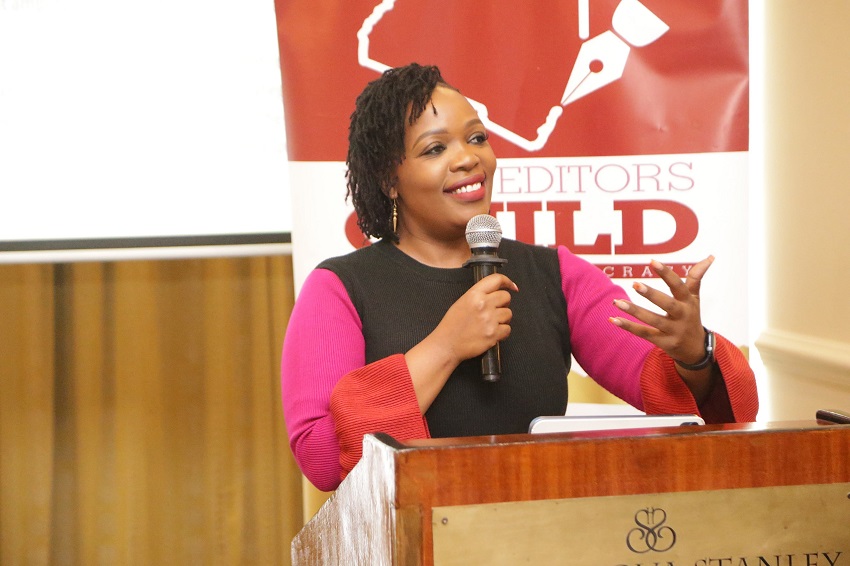
The Kenya Editors Guild (KEG) has called on editors and journalists to strengthen scrutiny of public financing, debt and complex financing arrangements to promote transparency and accountability.
Speaking during the first Peer-to-Peer Engagement on Media Agenda Setting on Complex and High-Risk Public Financing in Nairobi, KEG President Zubeida Kananu said the initiative would help the media identify key issues requiring greater public scrutiny.

She said the engagement marks a shift from conventional forums towards a media-led process where journalists identify the questions that public institutions should answer.
“Our responsibility as editors and journalists is not simply to report what institutions tell us. We have a responsibility to ask the difficult questions,” Kananu said.
The engagement is being held by KEG in partnership with the International Republican Institute (IRI), following a Media and CSOs Roundtable on Public Debt Accountability and Fiscal Justice held in June.
Kananu said the June meeting highlighted challenges affecting public debt reporting, including limited access to credible information, the technical complexity of financing arrangements, weak disclosure of loan agreements and guarantees, and fragmented institutional responsiveness.
She noted that public financing and debt matters often involve technical agreements, guarantees, procurement arrangements, repayment obligations and contingent liabilities that can be difficult for journalists to understand and explain to the public.
“Yet these issues have very real consequences for citizens and for the country,” she said.
Kananu urged journalists to interrogate issues surrounding public financing by asking who carries the risks, what guarantees have been provided, how procurement processes were conducted and what repayment obligations taxpayers face.
She also challenged journalists to examine what information citizens should reasonably have access to.
“These are not merely technical questions. They are questions of public interest, accountability and democratic oversight,” she said.
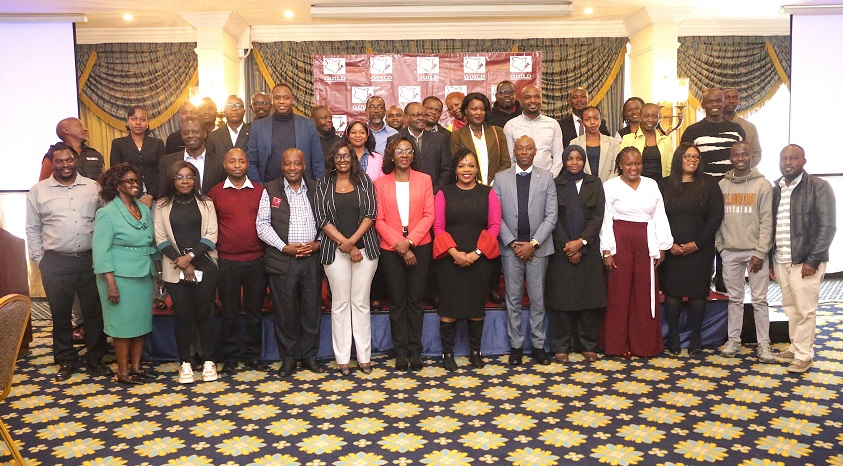
Media priorities
The first engagement is expected to produce a set of media priorities, evidence and information gaps, accountability questions and practical recommendations.
Kananu said the findings will be consolidated into a Media Issues Paper and draft agenda ahead of the first Institutional Dialogue scheduled for 17 September 2026.
She said the institutional dialogue should be driven by priorities identified by journalists rather than general discussions on public finance.
“We want the media to arrive at that dialogue with clearly articulated questions, supported by evidence and grounded in the experiences of journalists working in newsrooms,” she said.
Kananu encouraged editors and journalists participating in the engagement to share experiences from their newsrooms, including stories they have struggled to pursue and information they have been unable to access.
“Bring your newsroom experiences. Bring the stories you have struggled to pursue. Bring the information you have tried and failed to access,” she said.
The KEG president said the broader objective was not simply to produce another report, but to strengthen the media’s capacity to investigate complex public financing and improve public-interest reporting.
“Our goal should be to strengthen the capacity of the media to interrogate complex public financing, improve the quality of public-interest reporting and ultimately contribute to greater transparency and accountability,” Kananu said.
The peer-to-peer engagement is the first of five engagements that KEG will host in partnership with IRI as part of efforts to strengthen media coverage and scrutiny of complex and high-risk public financing.