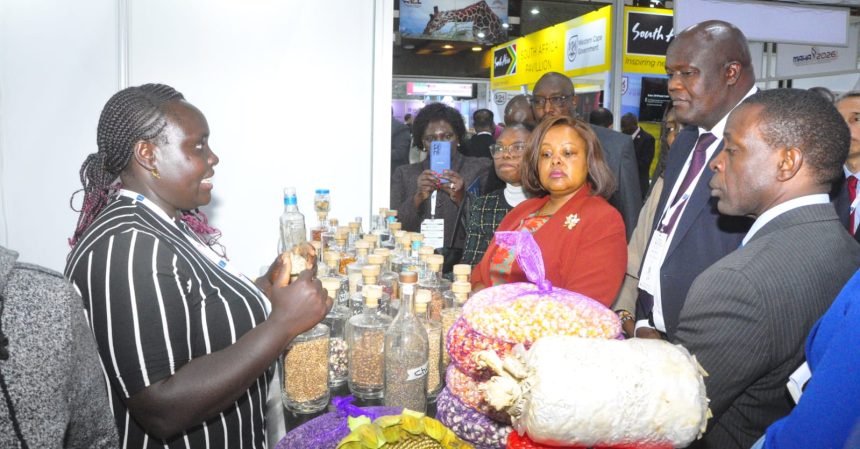
When Kenya opened the Africa Food Show 2026 Conference at KICC this week under the theme “Transforming Agrifood Systems for Healthy Diets: From Seed to Plate,” three government voices set the tone: Chief Guest and Secretary to the Cabinet Mercy Wanjau, and representatives of Agriculture Principal Secretary Dr. Kipronoh Ronoh and Livestock Principal Secretary Jonathan Mueke. But it was the Food and Agriculture Organization’s Representative in Kenya, Farayi Zimudzi, who delivered the gathering’s sharpest provocation: nutrition advice alone cannot put healthy food on anyone’s plate.
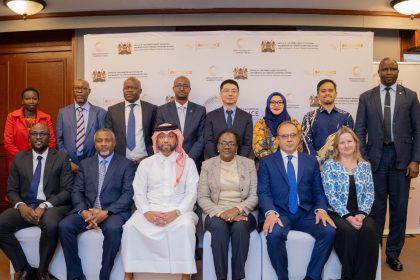
Speaking on behalf of FAO before a room that included IFAD Country Director Matteo Marchisio, Malaysia’s High Commissioner Ruzami Mohamad, and KALRO Director General Dr. Patrick Ketiem, Zimudzi distilled the conference theme into one uncomfortable question: is every actor in the food system from soil to seed, production to trade genuinely working toward diets people can eat healthily?

Her answer was a measured “not yet.” Kenya has made real gains in production and value addition, she acknowledged, but the country still carries what nutritionists call a double burden undernutrition and micronutrient deficiency sitting alongside rising obesity and diet-related disease. Health messaging alone, she argued, cannot resolve that tension. Food must be produced, kept safe, processed without losing its nutritional value, moved efficiently to market, and critically made available, affordable and desirable to the people who need it most.
Zimudzi’s most striking evidence came from a recent Kenyan study: tomatoes, kale, spinach and onions sampled from markets in Nairobi and Nakuru showed pesticide residues exceeding applicable limits in many cases the very vegetables Kenyans are routinely urged to eat more of. Her point, echoing World Health Organization guidance, was blunt: a diet must first be safe before it can be called healthy. The finding dovetailed neatly with Agriculture Dr. Ronoh’s representative earlier remarks on the newly enacted Food and Feed Safety Control Coordination Act, reinforcing a theme now running through nearly every ministerial address at this year’s conference that food safety is the connective tissue holding the whole system together.
Zimudzi also pushed delegates to think more carefully about processing, resisting the instinct to cast it as nutrition’s enemy. Processing extends shelf life and cuts post-harvest losses, she noted, but the sector must now grapple with a harder question: how to protect nutritional quality inside that process less salt, less sugar, fewer unhealthy fats without pricing nutritious processed foods beyond the reach of ordinary households.
Perhaps her boldest move was tracing the conversation all the way back to the ground itself. Citing Kenya’s 2011 National Micronutrient Survey, which flagged zinc deficiency as a significant public health concern, Zimudzi posed a question with no easy answer: how much do we truly understand about the way soil health, crop varieties, storage and processing shape the nutrients that eventually reach a Kenyan plate? It is a question, she stressed, that agriculture cannot answer alone nor can health. It requires researchers, universities, manufacturers, farmers, regulators, traders and consumers “around the same table.”
Beyond the podium, FAO’s presence points to work already under way: the organization is partnering with the Government of Kenya to develop Food Systems-Based Dietary Guidelines a multisectoral effort designed to move past simply telling people what to eat, toward reshaping what must change across the system to make healthy eating genuinely possible in the first place.
Set alongside the day’s earlier addresses, a throughline emerges. Wanjau called for whole-of-government coordination. Dr. Ronoh representative laid out pillars of governance, science, financing and community action. Mueke representative insisted that livestock and feed safety belong at the centre of the conversation, not its margins. And Zimudzi’s closing appeal tied every thread together: “Let us connect the dots from seed to plate.” Responsibility, she reminded delegates, cannot rest with the Ministry of Health alone farmers, researchers, manufacturers, traders, regulators, investors, development partners and consumers all have a role to play.
Her closing measure of success may be the conference’s most quotable line yet: that Kenya’s progress should be judged not only by how much food it produces, but by whether its food systems deliver safe, diverse, nutritious and affordable food to every citizen while protecting the livelihoods and environment that produce it.