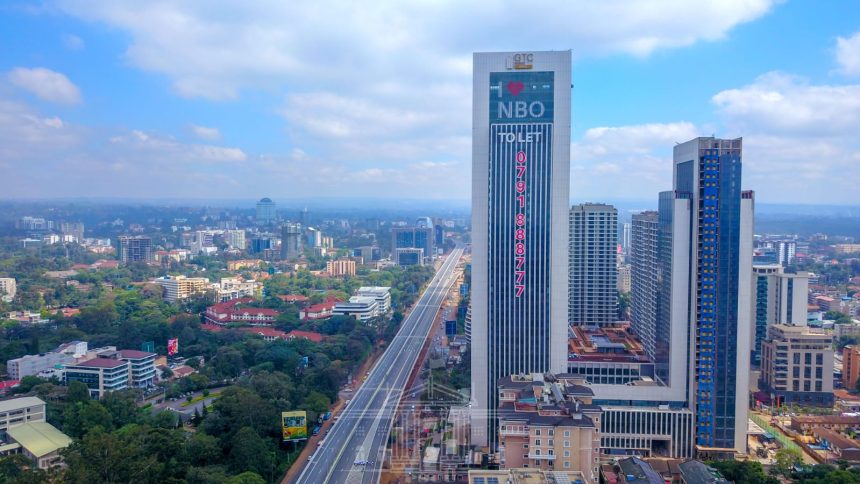
Nairobi has been ranked among the world’s most climate-resilient major cities, according to a new report by a geospatial A.I. company that analyses and predicts location risk, AlphaGeo.
The city ranks 10th globally of the 72 cities analysed, with Addis Ababa landing at number 2, Cairo at number 19 and Johannesburg at 20.

AlphaGeo says that the African cities “benefit largely from their favourable elevation and climate geography, giving them lower exposure to several major climate hazards”.
The report’s Climate Risk & Resilience Index (CRRI) takes into account hazards such as flooding, extreme heat, drought, wildfire, coastal flooding and hurricane winds, alongside a city’s ability to adapt to those risks.
MOST CLIMATE RESILIENT CITIES
Nairobi has been ranked 10th among the world’s most climate-resilient major cities, according to a New York Times analysis based on AlphaGeo data.#KBCniYetu ^PM pic.twitter.com/pJG7f0brrp— KBC Channel 1 News (@KBCChannel1) September 9, 2026
Nairobi’s ranking is influenced in the report by its natural advantages, combined with moderate adaptation.
For anyone who has lived in the city or was caught in the March floods this year, this ranking may seem surprising.
After all, Nairobi developed around a landscape historically associated with wetlands and the Nairobi River. The city’s name itself comes from the Maasai phrase Enkare Nyirobi, commonly translated as “place of cool waters”.
However, Nairobi’s wetland status is what puts it in a favourable position, according to the report. Nairobi’s original landscape makes it a giant sponge; wetlands, soil, vegetation and river corridors are known to absorb and slow down rainwater.
As the city has expanded, however, much of that natural system has been replaced by roads, buildings and other hard surfaces. More rainwater therefore runs rapidly into rivers and drainage systems. This is also supported by the Nairobi Rivers Commission, which notes that wetland encroachment can undermine flood regulation, while the city’s rapid transition to high-density development increases runoff.
The deadly floods of March 2026 are a powerful reminder that natural advantage does not equal preparedness or adaptation.
At least 37 people died in Nairobi following overnight rains that caused severe flooding across the city, the National Police Service (NPS) confirmed in March.
This ranking only means that Nairobi needs to turn its natural advantage into a flood-preparedness safety measure ahead of the coming El Niño rains.