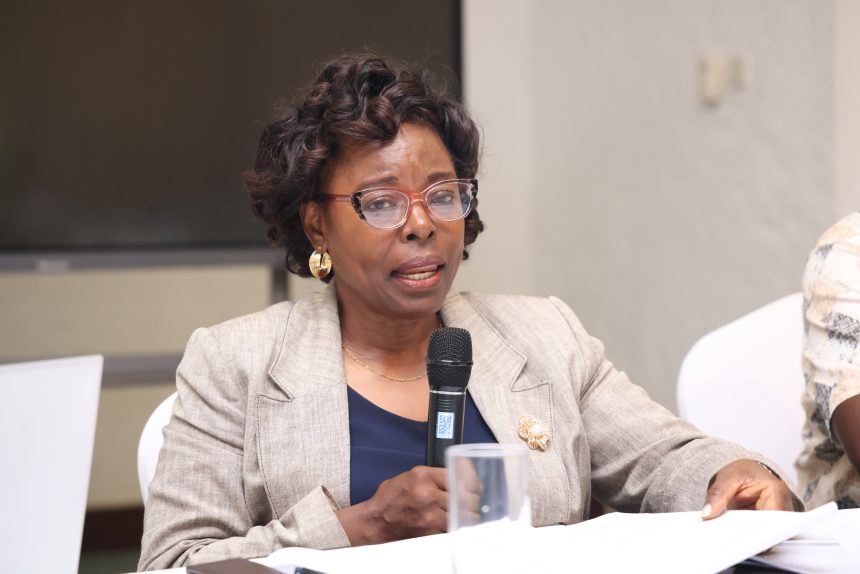
The Budget and Appropriations Committee has stepped up oversight of the implementation of the FY 2025/26 national budget, with the Controller of Budget, Dr. Margaret Nyakang’o, highlighting progress and proposing measures to strengthen efficiency, accountability and value for money in public expenditure.
Appearing before the Committee, chaired by Vice Chairperson Robert Pukose, Dr. Nyakang’o presented an assessment of revenue performance, Exchequer releases, implementation of priority Government programmes, donor-funded programmes and pending bills for both the National and County Governments.

The Controller of Budget highlighted the reduction in pending bills owed by National Government entities.
Dr. Nyakang’o said the reduction demonstrated progress in efforts to address pending obligations, while recommending that verified bills continue to be settled on a First-In, First-Out basis and within approved budgets.
The Committee also examined the implementation of the Electronic Government Procurement System (EGPS), which is intended to enhance transparency, efficiency and accountability in public procurement.
Japheth Nyakundi asked, “What is the challenge affecting EGPS, as we speak funds have been disbursed for NG-CDF but projects can’t be undertaken.”
Dr. Nyakang’o noted that although the transition had presented challenges, including integration with existing systems and a learning curve for users, continued capacity building and supplier sensitisation would help address the bottlenecks.
“The EGPS is aimed at ensuring efficiency and transparency in government procurement of goods and services,” Dr. Nyakang’o told the Committee, recommending enhanced training for officers and continued support to suppliers.
Members also sought clarification on the use of Article 223 of the Constitution, which permits supplementary expenditure in specific circumstances.
Dr. Nyakang’o urged that Article 223 be applied within the constitutional and statutory framework, particularly for expenditure that could not reasonably have been foreseen during the initial budget formulation.
Christopher Aseka challenged the Office of the Controller of Budget and the Committee to find practical ways of strengthening the application of Article 223.
The Committee further interrogated the implementation of the Equalisation Fund, with Members emphasising the need to ensure that the constitutional mechanism delivers tangible benefits to historically marginalised areas.
Adan Keynan noted that the Fund was established to address historical injustices and supporting marginalised areas called for measures to ensure it fulfils its constitutional purpose.
“The Fund was meant to cure the marginalisation that have affected parts of Kenya. The Fund as it is right now is not meeting the intended purpose,” said Keynan.
Jane Kagiri similarly sought the Controller’s assessment of the factors contributing to low absorption of Equalisation Fund resources in some counties.
The Controller of Budget reported that Kshs.4.17 billion had been authorised for withdrawal from the Equalisation Fund during FY 2025/26, including resources for development projects in 25 counties.
Lawmakers also examined how the Fund could be implemented without creating duplication of projects already financed through other devolved funding mechanisms.
On the broader question of budget credibility, Dr. Nyakang’o recommended stronger macroeconomic and revenue forecasting, improved programme costing, enhanced expenditure prioritisation and rigorous assessment of the affordability of new commitments.
She further called for predictable and timely release of Exchequer funds to Ministries, Departments and Agencies as well as County Governments to facilitate smooth implementation of approved programmes and projects.
In a separate session, the Parliamentary Budget Office led by Dr. Martin Masinde also briefed the Committee on the state of the economy, including impacts of the global geopolitical developments, macroeconomic dynamics underpinning the FY 2026/27 budget implementation; and fiscal framework underpinning the FY 2026/27 budget implementation.