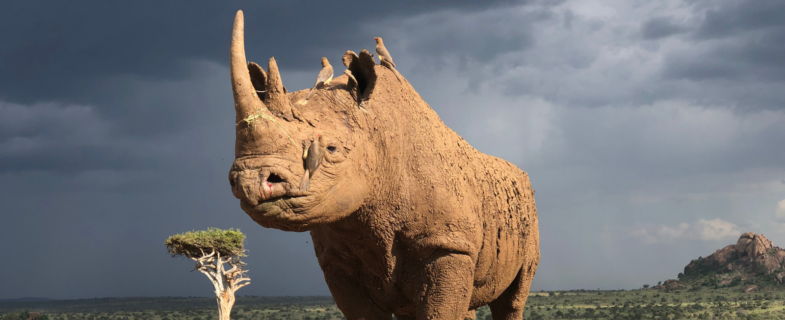
The Kenya Rhino Range Expansion (KRRE) and Kenya Wildlife Service (KWS) have unveiled a Ksh 5.8 billion plan to increase rhino population in the country and support tourism sector.
The two organisations are seeking to connect land, resources and expertise in order to support expansion of rhino habitat across Tsavo and Central Kenya.

The initiative is expected to strengthen the National Black Rhino Recovery and Action Plan 2022-2026, where Kenya targets to grow the population of the black rhino by 5% annually and restore its historic range.
In collaboration with stakeholders in government, the private sector and local communities, KRRE is seeking to address density dependency, in which overcrowded populations breed less successfully and face rising tension over limited resources and has been highlighted as one of the biggest challenges to recovery of the species.
“The Kenya Rhino Range expansion is not just about rhinos and environmental conservation. It’s about people. It’s about ensuring that we improve livelihoods for people surrounding the areas in which we hope to introduce rhinos,” said Jamie Gaymer, Chief Executive Officer Kenya Rhino Range Expansion.
KERRE backs the investment and growth of rhino population to translate into new rangers, lodges, drivers, builders, rhino monitors and researchers, along with a much larger number of indirect jobs tied to an industry that depends on thriving biodiversity.
“For the KRRE to be successful, we need to ensure that the people see the benefit of conservation. We need to drive a wildlife economy. We need to create employment, and we need to, create tangible benefits for the people who coexist with these animals. Rhinos are a keystone species that can catalyze a sequence of changes required in order to preserve biodiversity and the health of our planet,” he added.
Already, the new Tsavo West Rhino Sanctuary which has expanded the roaming range for the area’s approximately 150 black rhino from 92 to 3,200 square kilometers, more than 30 times the previous space has catalyzed the deployment of over 100 rangers, along with new ranger accommodation, water points and fencing.
In the last few weeks, Kenya Wildlife Service and KRRE have also completed a second ear notching and transmitter placement exercise that allows for 75% of Tsavo West’s existing rhino population to be identifiable and monitored successfully across what is now the largest rhino sanctuary of its kind in Africa.
According to the World Travel and Tourism Council, travel and tourism contributed $12.7 billion to Kenya’s economy last year, equivalent to 9.3% of GDP, and supported 1.8 million jobs, or roughly 8.3% of total employment.