Kenya requires approximately Ksh1.6 trillion to develop water harvesting infrastructure, including dams, to support domestic water supply and irrigation, with the national budget able to meet only 20 per cent of the funding needs.
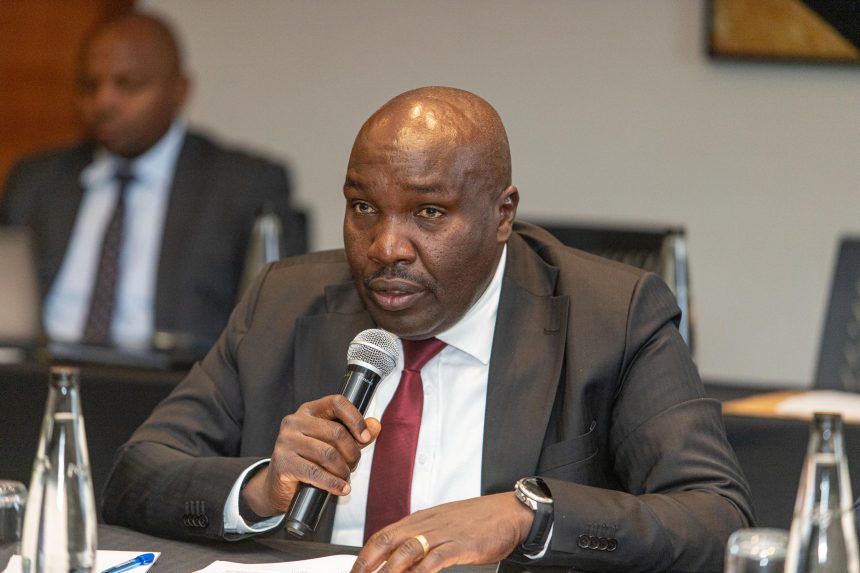
Principal Secretary for Water and Sanitation Julius Korir says the funding shortfall has prompted the government to seek alternative financing, including Public-Private Partnerships (PPPs), to accelerate the development of water infrastructure.

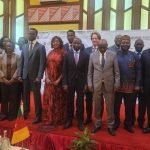
Speaking at the conclusion of the two-day 17th Africa Day for Food and Nutrition Security (ADFNS), Korir said water availability was central to achieving food security, improving nutrition and addressing health and sanitation challenges.
“Water harvesting is very expensive, yet water can solve most of the problems that we seek to address in terms of food security and nutrition, as well as health and sanitation,” said Korir.
The PS noted that, the government, has put water harvesting at the centre of its planning and has the, National Water and Sanitation Investment Plan and National Irrigation Investment Plan, NISIP aimed at addressing the need for access to water.
Koris said the government was pursuing PPP arrangements to bridge the 80 per cent financing gap, with several projects already under development.
“We have a number of PPP projects that are under development, and we hope to close a few of them very soon. Two of them are actually looking at providing water for irrigation along the Bura area and the Galana,” he said.
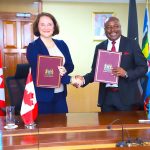
Korir said already the Africa Development Bank and World Bank, funded projects including Thwake Dam and the Mwache Dam, are nearing completion while government is in talks with Danida for the construction of a dam in Kiambu County.
He added that the proposed National Infrastructure Fund would also support water sector projects, with 50 mega-dams already identified for development, some of which would receive funding through the facility
Meanwhile, Health Cabinet Secretary Adan Duale noted that Water, food, nutrition and health are inseparable, as water determines what farmers can produce, the diversity of foods available to households, how safely food is prepared and consumed, and ultimately the health and nutritional wellbeing of the people.
In a speech read on his behalf by the Ministry of Health Director of Nutrition and Dietetics Services, Veronica Kirogo, Duale said unsafe water, poor sanitation and hygiene increased the risk of diarrhoeal diseases and other infections, with climate change worsening the situation.
“Droughts, floods and water scarcity disrupt food production and livelihoods, increase food prices, reduce access to diverse diets and heighten vulnerability to disease and malnutrition,” he said.
Duale called for coordinated investments in water, agriculture, health, nutrition, food safety, climate resilience and social protection to address the interconnected challenges facing households and communities.
He cited progress in reducing childhood malnutrition, noting that stunting among children under five declined from 26 per cent in 2014 to 18 per cent in 2022.
However, approximately five per cent of children under five remain affected by wasting, while 10 per cent are underweight.
The CS also raised concern over poor dietary diversity among young children, with only 37 per cent of those aged between six and 23 months receiving the minimum dietary diversity and 31 per cent meeting the minimum acceptable diet.
He further warned of the growing burden of overweight and obesity, particularly among women aged 20 to 49, with 45 per cent falling into these categories.