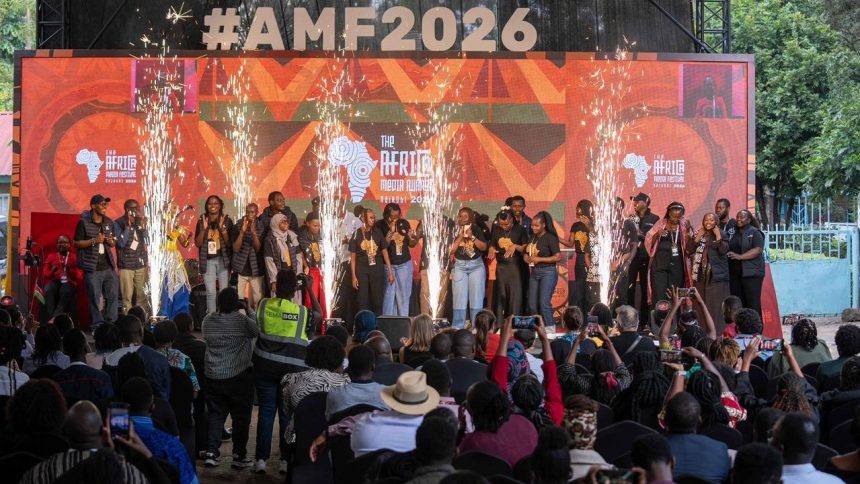
A Kenyan content creator, a trio of human rights journalists and a veteran Ghanaian press freedom advocate were among the standout honourees at the fourth edition of the Africa Media Festival (AMF 2026), which closed with the Africa Media Awards held in Nairobi.
The awards, which are presented by Baraza Media Lab, recognise journalists, creators and innovators redefining storytelling across the continent. The occasion marked the culmination of a two-day convention that drew more than 200 organisations from 31 countries.
Held under the theme ‘Resilient Storytelling: Reimagining Media Freedom,’ the festival served as a critical platform for collaboration, innovation and collective problem-solving at a time of sweeping transformation across Africa’s media ecosystem.
The festival’s formal sessions were dominated by a convergence of pressures redefining journalism across the continent, shrinking newsroom revenues, regulatory constraints, the expanding influence of digital platforms and above all, the disruptive rise of artificial intelligence.
In his keynote address, Ugandan journalist and Baraza Media Lab board chair Daniel Kalinaki issued a stark warning about AI-generated content blurring the lines between genuine local journalism and externally influenced narratives.
He pointed to a troubling pattern of fast-growing digital outlets that appear to be African but are foreign-owned and AI-driven.
“We are seeing the emergence of fast-growing digital outlets that we perceive to be local, but which in reality are foreign-owned and AI-driven, thus blurring lines between authentic journalism and externally influenced narratives,” said Mr Kalinaki.
Kalinaki raised urgent questions about the bias, credibility and integrity of AI-generated news summaries, automated content and opaque algorithms that are rapidly reshaping how information is produced, distributed and consumed.
The festival also highlighted growing concerns about political leaders bypassing traditional media in favour of direct digital engagement with curated audiences, a trend participants warned could accelerate the erosion of accountability journalism.
The winners of the festival
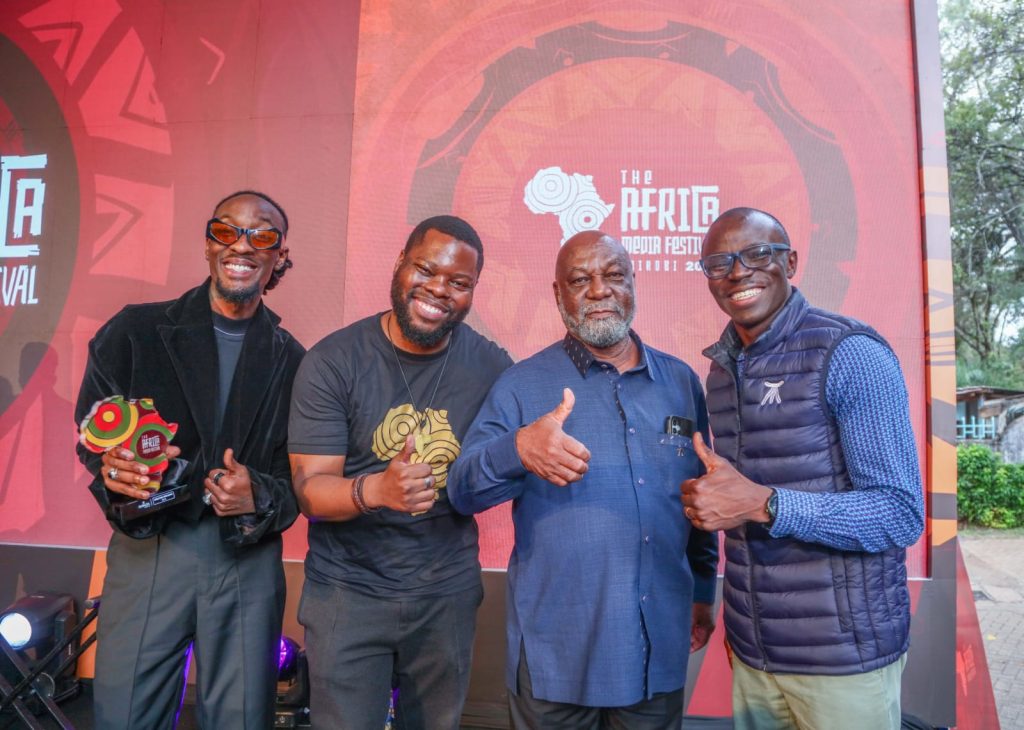
Kenyan digital creator Mike Muchiri, widely known by his creator name, Ziya was the highlight of the forum after bagging the Creator for Good Award, a newly introduced category that signals a deliberate shift toward recognising impact-driven digital storytelling and civic engagement.
Muchiri was recognised for transforming comedic entertainment into an advocacy tool and emerging as one of the continent’s most outspoken youth voices.
Ziya is the founder of Civic Rights Africa, a youth advocacy and policy education platform designed to ignite civic consciousness among young Africans.
His evolution from viral entertainer to purpose-driven creator exemplifies what organisers described as a broader shift within Africa’s media ecosystem, one in which ‘influence is increasingly tied to authenticity, identity and civic impact’.
“This award is not just for me, it is shared with every single creator who chooses not to be silent in the face of extreme corruption, blatant disregard of our constitution, as well as for human dignity and human life,” noted Muchiri.
In the Human Rights Journalism Award category, Robert Amalemba of Kenya claimed the top prize. Umar Farouk of Nigeria took first runner-up honours, while Tracy Bonareri, also of Kenya, was recognised as second runner-up.
The category celebrates reporters who cover some of the continent’s most dangerous and high-stakes beats, conflict zones, repression and systemic rights abuses — at considerable personal risk.
The festival also paid tribute to Professor Kwame Karikari, a towering figure in African media. The Ghanaian media scholar and press freedom advocate had earlier in the week received The Africa Editors Forum Lifetime Service to Journalism Award at the Africa Editors’ Congress.
His recognition at AMF 2026 underscored the festival’s commitment to honouring not only emerging voices but the foundational figures whose decades of advocacy have shaped the conditions in which African journalism operates today.
Collaboration emerged as a defining thread throughout AMF 2026.
Participants were challenged to rethink ownership, moving beyond content production toward controlling platforms, intellectual property and distribution channels. The message was pointed: in an era of decentralised, creator-driven media, African journalists and storytellers must become architects of the ecosystem, not merely its contributors.
“What lies ahead is not simply the decline of legacy institutions, but the emergence of a more decentralised, creator-driven and technologically mediated ecosystem, one that will require new models of ownership, stronger collaboration and a renewed commitment to transparency,” said festival curator, Martie Mtange.
In a notable departure from conventional media conference programming, organisers also integrated wellness support, including therapy access and informal social activities, in acknowledgement of the emotional toll exacted by covering conflict, repression and an industry in structural flux.