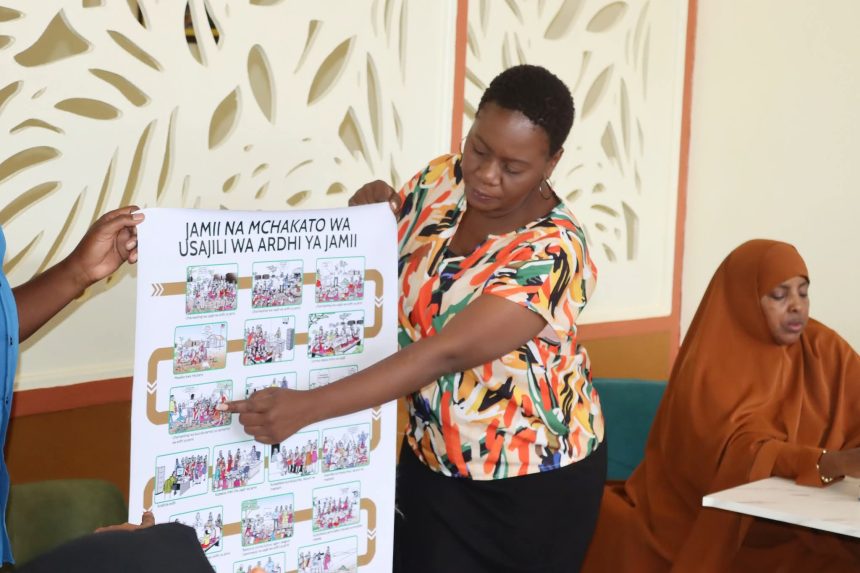
Communities in Wajir County have been urged to accelerate the registration of their land to protect it from land grabbing, irregular allocation and exclusion from decisions affecting natural resources.
Kenya Land Alliance (KLA) Chief Executive Officer Faith Allube says many pastoralist communities remain unaware that some of their land has already been gazetted, denying them an opportunity to take part in processes aimed at securing their tenure rights.

Speaking in Wajir during a community engagement on land rights, Allube said six sub-counties in the county have been gazetted, yet residents in three of the areas visited by KLA had no knowledge of the development.
“Most of the community members who are right-holders have no idea what is happening at county level, what has been designated as registered land, and how can they then take their place at the table and in policy action spaces,” she said.
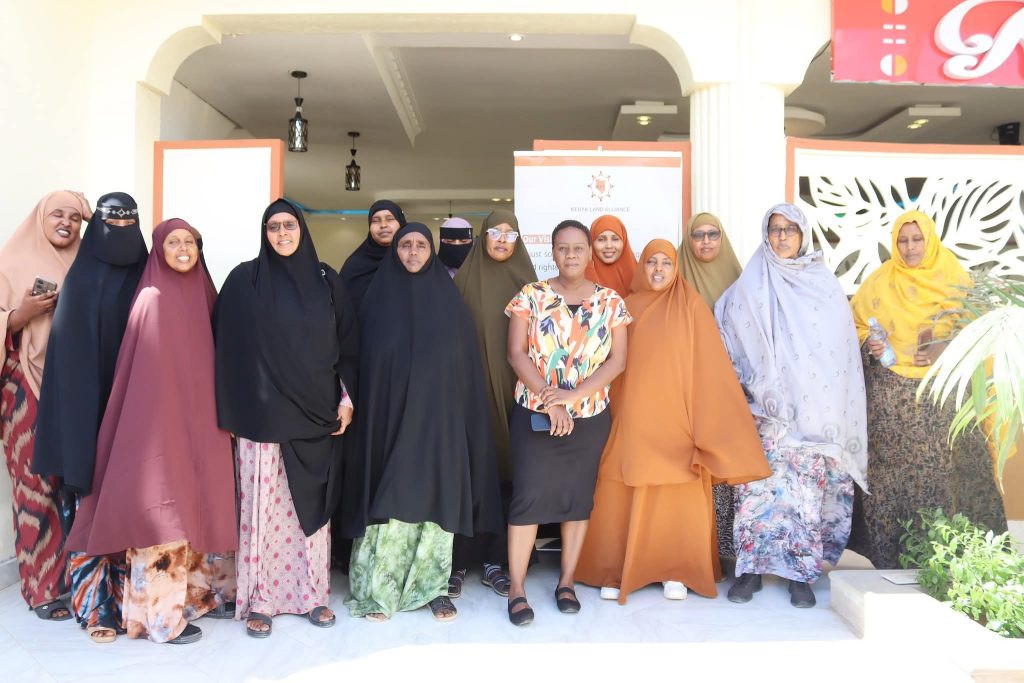
Allube said Wajir had one of the largest areas of community land in Kenya, but registration remained significantly behind because of historical marginalisation, limited resources, inadequate awareness and challenges associated with pastoralist lifestyles.
According to her, he the assumption that pastoralists could not register land because of their nomadic way of life had contributed to delays in securing community land rights.
“Wajir is among the counties that have taken a while to understand how to balance the issues of ethnicity, pastoralism and marginalisation,” Allube said.
She, however, challenged the county government to take greater responsibility for sensitising communities after gazettement, noting that the process of registering community land was resource-intensive.
According to Allube, communities are expected to mobilise themselves, develop bylaws and facilitate land surveys, requirements that can be difficult for resource-constrained pastoralist communities.
She also cited limited knowledge of the Community Land Act, factionalism and ethnicity as some of the challenges slowing the registration process.
Registration of community land, she noted, was also critical because unregistered land remained vulnerable to exploitation and irregular allocation.
Under the Constitution, community land is one of the recognised categories of land, while the Community Land Act, 2016 provides a framework for communities to formalise and protect their interests.
She said unregistered community land was held in trust by county governments, creating room for irregular allocation without adequate consultation with the rightful owners.
“With such fluid tenure, we have seen investors just grabbing part of this land without negotiating with communities,” she said.
Allube explained that registration did not require pastoralist communities to abandon their traditional way of life, but rather provided a formal mechanism for protecting boundaries and strengthening their participation in decisions concerning their land.
She said registered communities would also be better positioned to negotiate with investors seeking to establish businesses or other projects on community land.
“Mostly the importance of registration is to be able to have a bigger, better space in terms of decision-making on your land,” she remarked while also calling for greater participation of women in community land governance.
The law requires women to be represented in community land management structures.
Allube said Section 15 of the Community Land Act requires adults above 18 years to be included in the community assembly and community register, while statutory requirements provide for women’s representation in community land management committees.
She acknowledged that cultural practices continued to conflict with statutory provisions, particularly in pastoralist communities where women have traditionally had limited influence over land decisions.
“There is a sort of push and pull between statutory laws and informal laws and the way that pastoralists live,” she said.
At the engagement session, women in Wajir were urged to use existing women’s groups, investment clubs, table-banking initiatives and other self-help structures as platforms for civic education and mobilisation on land rights.
Allube also proposed greater involvement of students in tertiary institutions in disseminating information on land laws through digital platforms noting that combining the knowledge of women leaders and custodians of culture with the digital skills of young people could promote intergenerational dialogue on land rights.
Meanwhile, Wajir County Civil Society Consortium representative Fatuma Yusuf said women’s participation in land decision-making was essential because women constituted a significant part of the community and were directly affected by decisions on land ownership and use.
Fatuma urged women not to wait to be invited into decision-making spaces but to organise and demand representation.
“I am expecting women not to wait to be invited, or to be called, or to participate, but also they have to bring themselves on board to make sure they fight for the space,” she said.
She linked women’s limited participation in land governance to cases involving matrimonial property, eviction from family land and gender-based violence.
Fatuma said some women were forced out of matrimonial homes without property despite having contributed to building their families, while others discovered that property they had inherited had been registered in their husbands’ names.
She cited financial constraints, dependence on men, limited awareness of property rights and cultural norms as major barriers to women’s land ownership.
Fatuma called for continuous civic education targeting pastoralist women, saying even educated women were sometimes unable to protect their land rights because of social and cultural pressures.
She said community radio could play an important role in educating residents on both their rights and responsibilities regarding land ownership and registration.
Abdi Hussein Adan, a member of Wagalla Fresh Milk and Yogurt Traders, said residents also faced frequent land disputes because many people lacked documentation proving ownership.
He said settlements such as Wagalla were located far from municipal centres, making access to land registration services difficult.
“The challenges we face when it comes to land are so many. Our people do not recognise the importance of land registration because of our nature of life,” Adan said.
He said the lack of registration and proof of ownership often resulted in conflicts between residents over land.
“People usually do not have a proof of land ownership,” he said.
Allube urged communities in Wajir to take greater responsibility for protecting their land rights, warning them against leaving the role to politicians or non-governmental organisations.
She said the approaching electioneering period could also expose communities to misleading promises, including promises of title deeds by individuals without the authority to deliver them.
“The communities in Wajir should know that if they do not arise and take their position as owners of the land, then other people will always be making a decision for them,” she said.
Rsidents were encouraged to work with civil society organisations, the media and other resource persons to access information and strengthen their watchdog role in land governance.