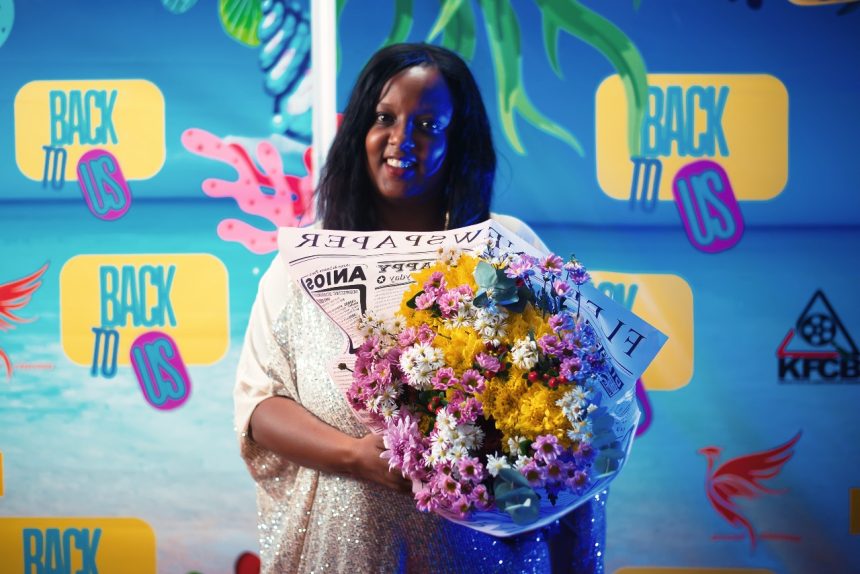
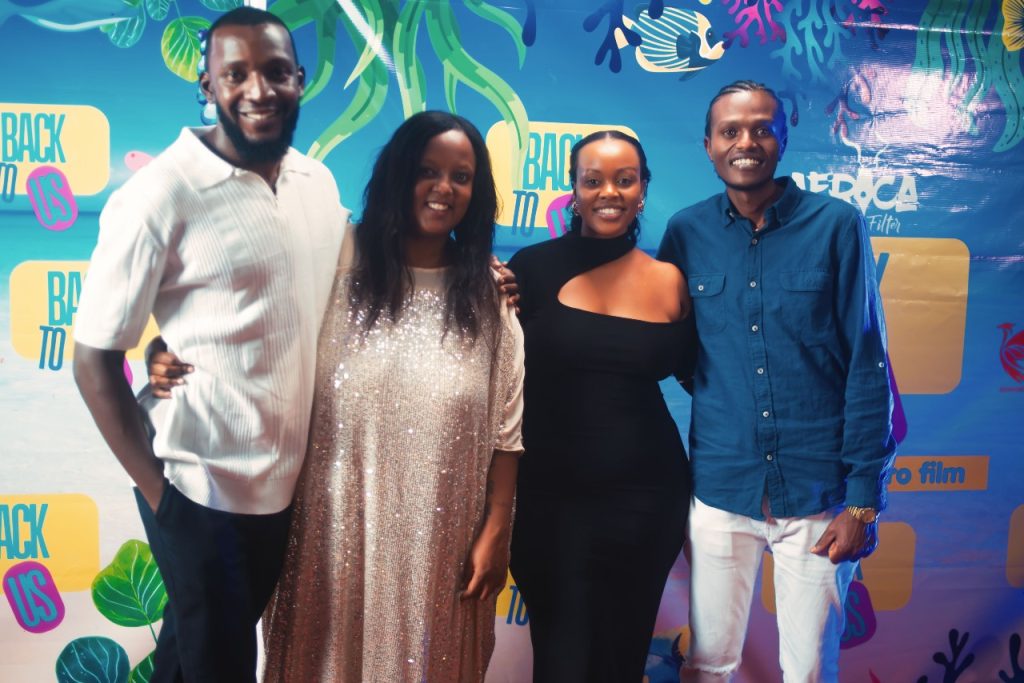
Jenniffer Gatero’s film, “Back To Us’ premiered at the Nairobi Cinema to an enthusiastic Kenyan audience on Saturday.
Shot almost entirely on location in Watamu, the film follows former lovers Amana and Kwame, who must confront their past and face hard truths about their relationship. Brought together on a coastal getaway by their friends, old wounds resurface and unresolved feelings threaten to pull them further apart or bring them back together.

A film only truly comes alive when it reaches its audience.
In addition to its cinema premiere, ‘Back To Us’ debuted with a distribution plan in place so the film could find an audience after it left the cinemas. Film distribution remains one of the main challenges for Kenyan filmmakers.
Speaking exclusively to KBC Digital, Gatero said she made a deliberate effort when it came to the film’s distribution.
“I honestly believe distribution should be part of the conversation from the very beginning, not something you think about once the film is complete,” she said. “As filmmakers, we often focus so much on writing, casting, production, and post that distribution becomes an afterthought, yet it is one of the most important parts of the journey. A film only truly comes alive when it reaches its audience.”
She explained that understanding her audience was among the first things she did when they were thinking about releasing the film.
“For me, having a distribution strategy early was intentional. Before we release anything, we need to know who the audience is, where they are, and how they consume stories,” she added. “Are they cinema-goers, streaming audiences, television viewers, or digital-first audiences on social media?
“Once you know that, you can shape both your marketing and release plan around it. Building Avant Cinema wasn’t an afterthought. It’s something we have been thinking about for years.”
People are discovering stories in short-form before committing to long-form.
In recent years, beyond being a short video sharing app, TikTok has served as a tool where people can watch full movies or series in short snippets. Ms Gatero says she recognises its marketing power.
“Filmmakers absolutely need to pay attention to platforms like TikTok because that is where audiences already are. The way people consume content has changed dramatically. People are discovering stories in short-form before committing to long-form.
“That said, I see TikTok less as a replacement for traditional distribution and more as a discovery and audience-building tool. Snippets can be incredibly powerful for creating intrigue, emotional connection, and conversation around a film. A strong scene, a memorable line, or a moment of tension can make people curious enough to seek out the full project.”
But the ‘Nairobby’ director still thinks it would be best used for visibility and engagement.
“I have thought about it, especially for audience engagement and visibility. For Kenyan filmmakers, we have to be innovative with the tools available to us,” she said. “If snippets can help build anticipation and drive people to the full film, then it is definitely worth exploring strategically.”
The audience on YouTube is already in a long-form content mindset.
While TikTok does have its advantages, YouTube remains a preferred marketing tool for filmmakers, not just in Kenya, but around the world, given its long-form storytelling capabilities and its long-term content value. A sentiment Gatero agrees with.
“Having said that, though, I prefer to use YouTube for marketing because the audience on YouTube is already in a long-form content mindset. Someone scrolling on TikTok could just be mindlessly scrolling and not willing to give any one clip more than a minute or two of their time.”
More support for cinema spaces, more local content quotas on television and streaming platforms
In August of 2025, the Kenya Film Classification Board unveiled the cine-mobile truck, a flagship of the organisation’s Sinema Mashinani initiative aimed at tackling persistent challenges in Kenya’s film industry, chief among them the limited platforms for showcasing local productions. However, more needs to be done.
“There is so much talent and so many important stories being made in Kenya, but many of them struggle to reach audiences at scale. I believe the Government and stakeholders can help by investing in stronger exhibition and broadcast pathways for local content.
“This could mean more support for cinema spaces, more local content quotas on television and streaming platforms, and incentives for private investors to back distribution networks.”
Beyond distribution, programmes that educate upcoming filmmakers on marketing and audience are key to the development of the film sector.
“There also needs to be stronger support for marketing and audience development. Distribution is not only about where the film is shown, but how people find out it exists,” she added. “Funding programs that support promotion, festival submissions, and digital campaigns would make a huge difference.”
Ms Gatero’s suggestions on how the government should step in are based on her own experiences.
“There is a film I did, ‘Nairobby’, that garnered over twenty nominations internationally, and it was disappointing, to say the least, that none of the government bodies I requested assistance from wrote back.”

Returning to the subject of her new film, and its overarching theme, Ms Gatero, who began writing at 18 and is credited on popular TV shows like ‘Changing Times’, says love is a universal language.
“Love is the most universal human experience. No matter where we come from, what language we speak, or what stage of life we are in, love touches all of us. It is constantly evolving in the way we experience it, whether it’s romantic love, familial love, self-love, heartbreak, healing, or forgiveness. There are endless ways to explore it because people are endlessly complex.
“What interests me most is not love in its idealised form, but love in its real form: the misunderstandings, the silences, the vulnerability, and the courage it takes to choose someone again.”
When asked about the lesson of the film, which explores rebuilding a deteriorating relationship, she said it was about “the unsaid.”
“The one thing I want audiences to take away from this film is that love is not only about feelings, it is also about communication, growth, and the willingness to confront what was left unsaid. Sometimes healing begins with a conversation we have been avoiding.”
Funding is one of the hardest parts of filmmaking, especially for independent shows and films
Armed with experience and having navigated Kenya’s still-growing film industry, Ms Gatero did share some advice with upcoming filmmakers.
“My first advice would actually be: before you think about where to take the script, think about how it will reach an audience.
“Funding is one of the hardest parts of filmmaking, especially for independent shows and films, and investors or partners are far more likely to take you seriously if you already understand the business side of your story.”
However, the key takeaway for any budding directors is distribution, distribution, distribution.
“Before asking who to pitch to, build a distribution plan. Ask yourself: who is this for, where will it live, and how will audiences discover it?
“Once you have that clarity, then the next logical step is refining the script into a pitch-ready package, a strong synopsis, logline, mood board, budget estimate, and audience strategy. People do not just invest in scripts; they invest in viable projects.
“A great story is essential, but in today’s industry, knowing how that story will be seen is just as important.”
‘Back To Us’ is available to stream on Avant cinema.