Proposals by the National Treasury to cover 90pc of the Ksh 1.15 trillion projected budget deficit in the next financial year from domestics sources could be counterproductive to the country’s growth plans, experts have warned.
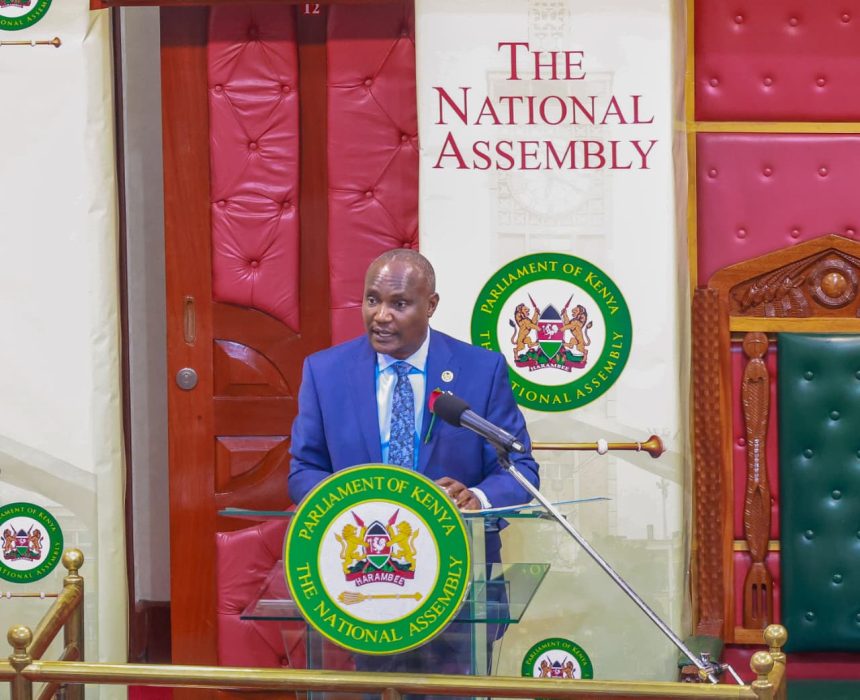
In the Budget Statement presented by National Treasury and Economic Planning Cabinet Secretary John Mbadi on Thursday, the government plans to borrow Ksh 1.03 trillion from domestic sources to plug the budget hole with the remainder at Ksh 116.2 billion being from net foreign financing.

This will complement Ksh 3.6 trillion revenue and Ksh 43.6 billion grants expected to fund the Ksh 4.8 trillion budget for the 2026/27 fiscal year.
However, according to PwC Kenya, the decision could have negative impact on local credit market as well as growth plans.
“While this funding structure potentially supports foreign exchange stability, it raises concerns about credit access, and affordability, for the private sector, which may further limit economic growth and undermine some of the government’s ambitions, such as the growth of the Micro, Small, and Medium Enterprises (MSMEs) sector,” said the firm in its post-budget analysis.
In the current financial year, fiscal deficit including grants is projected to rise to KSh 1.199 trillion, equivalent to
6.4 percent of GDP, from KSh 901 billion in the original budget estimates after additional expenditure of Ksh 368.6 billion in the Supplementary Budget I.
“The fiscal policy for FY2026/27 and the medium term will be anchored on a growth-supportive consolidation path,
aligned to the Government’s priorities under the Bottom-Up Economic Transformation Agenda and the Fourth Medium Term Plan,” Mbadi told the National Assembly.
Treasury further projects fiscal deficit including grants to decline gradually from 5.5 percent of GDP in the FY2026/27 to 3.3pc of GDP in the FY2028/29.
“These challenges must also be viewed within the broader context of the persistent revenue underperformance noted in previous years, as well as heightened geopolitical risks, both domestically and internationally. While the budget projects marginal improvements of the largely stable macroeconomic indices, key vulnerabilities remain,” said the firm.