The loss of indigenous crop varieties and growing dependence on imported commercial seeds are threatening food security and farmers’ control over what they grow.
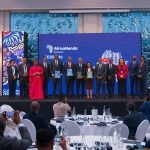
To address these challenges, farmers, policymakers, researchers and development partners gathered in Nairobi for the first Eastern Africa Indigenous Seeds Conference, calling for stronger protection of farmer-managed seed systems, investment in local varieties and policies that safeguard seed sovereignty.

Convened by Seed Savers Network from November 17 to 20, 2026, at the Catholic University of Eastern Africa, the conference was held under the theme “Realizing the Right to Food through Seed Sovereignty.” Participants explored how preserving indigenous seeds, strengthening community seed banks and supporting farmers’ rights to save and exchange seeds can build more resilient food systems.
For Judy Nyokabi Mugo, a farmer and Gender Transformative Approaches (GTA) champion from Gatundu North, Kiambu County, preserving indigenous seeds protects cultural heritage, reduces farming costs and strengthens food security. She learned about traditional seed preservation from her grandparents.
“I have grown these seeds since I was a young girl. My father used to tell us about their importance, and we learned how to preserve them from our grandparents,” she said.
One variety she grows is Gikuyu, an original Kikuyu maize variety that she says is naturally resilient to pests, including fall armyworms, reducing the need for chemical pesticides. She grows it for household consumption and mills it into flour, avoiding the cost of buying commercial flour and expensive hybrid seeds.
She also grows an indigenous bean variety, which produces large beans on tall climbing plants. The beans are valued for their nutritional benefits and are used in traditional Kikuyu dishes such as mukimo.
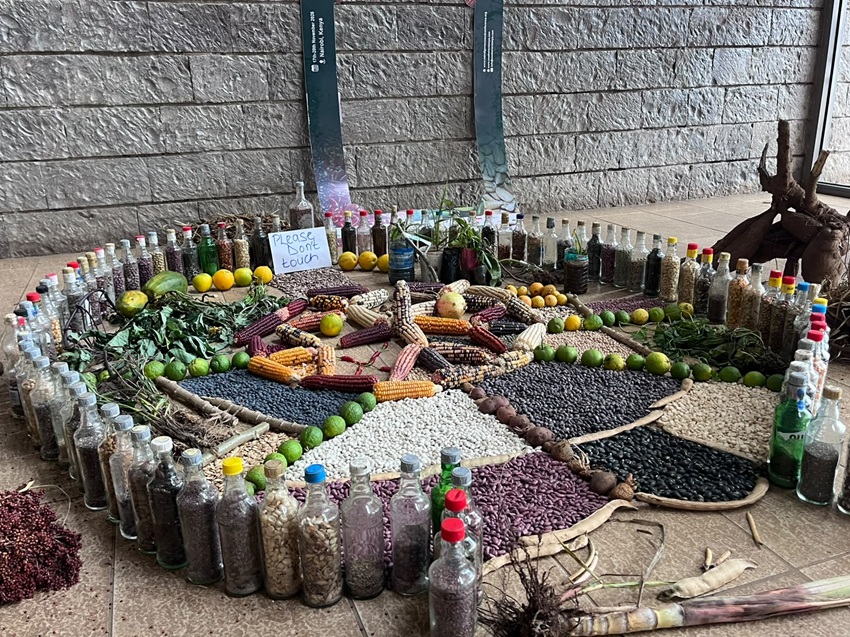
Unlike some commercial varieties that require farmers to purchase new seeds, local varieties can be preserved and replanted. Traditionally, families stored maize seeds in tightly closed granaries. Judy now packs seeds in bottles and mixes them with ash, a method she says helps preserve them for up to a year.
“These seeds are not expensive. They are readily available, but many farmers, especially young people, lack information about them. A seed bank in our community would help farmers access these seeds and understand their benefits,” she said.
Speaking during the conference, Judy said the gathering offered an opportunity to appreciate traditional seeds and pass knowledge to younger generations, particularly about traditional crops and the methods their grandparents used to preserve planting materials.
“Once we lose these indigenous seeds, we lose our identity. These seeds are part of our culture; they tell us where we come from and what our grandparents planted. We do not want to lose that heritage,” she said.
She hopes more communities will establish seed banks to improve access to local varieties, promote crop diversification and strengthen food security.
“This conference has come at the right time. We are happy that people are willing to go back to their roots. The more seed banks we establish in our communities, the better it will be for our farmers and the country’s food security,” she said.
Protecting farmer-managed seed systems
Judy’s call for community seed banks reflects a wider need to protect the farmers and local systems that sustain indigenous varieties. Daniel Wanjama, Director of Seed Savers Network, says governments must recognise and support these farmers as part of efforts to safeguard food security.
Wanjama warned that declining agricultural biodiversity and growing dependence on commercial seeds threaten food security. He said indigenous seeds remain central to food production across the continent, with farmer-managed seed systems supplying about 80 per cent of the seeds farmers use.
“Indigenous seeds are the most important seeds we have on the continent. About 80 per cent of the seeds we use to grow food come from indigenous and farmer-managed seed systems. We cannot afford to continue on a path where these seeds and the farmers who preserve them are ignored,” he said.
Research by Seed Savers Network shows that about 30 per cent of local crop varieties have disappeared over the past 20 years. Wanjama said this loss has reduced farmers’ choices and increased reliance on commercial seeds, some of which require more chemical inputs and fertilisers.
He said indigenous varieties are also important for adapting to climate change because they have evolved over generations to survive in local environments. Their preservation gives farmers access to crops suited to increasingly unpredictable weather conditions.
Kenya’s dependence on imported commercial seeds further exposes its food system to external disruptions. Wanjama said the country imports up to 97 per cent of its commercial vegetable seeds and more than 70 per cent of its maize seeds.
“We are claiming that we want to feed ourselves, yet we are importing a significant proportion of our seeds. If anything happens to the countries supplying us, our food production could also be affected,” he said.
He called on governments to prioritise seed sovereignty, food sovereignty and food safety by protecting farmers’ rights to preserve, exchange and use indigenous seeds.
Wanjama urged stakeholders to turn the conference discussions into practical policies that recognise farmers’ knowledge, protect local seed systems and reduce dependence on external suppliers.
Investment and regional cooperation
Beyond government action and community-level efforts, protecting indigenous seed systems also requires greater investment and regional cooperation, according to Catherine Foss, Director of the Luxembourg Foundation’s East Africa Office in Dar es Salaam.
Foss said indigenous seeds have sustained communities for generations because they are adapted to local climates, environments and food needs. However, she warned that industrial agriculture and policies restricting traditional seed sharing are putting these systems under pressure.
She described the conference as a platform for farmers and other stakeholders to exchange seeds, share knowledge and build partnerships across the region.
“Having indigenous seeds and farmers who have the possibility to exchange them is very important. These are the seeds that have fed humankind since the very beginning,” she said.
Foss cautioned that dependence on commercial hybrid seeds can leave farmers vulnerable, particularly where some varieties cannot be replanted after harvesting. This forces farmers to buy new seeds each planting season, increasing production costs.
She added that some industrial seed varieties require artificial fertilisers and pesticides, raising costs and potentially affecting soil quality. She challenged the view that industrial agriculture is the only way to increase food production, arguing that locally driven and sustainable food systems deserve greater support.
“I think donors now might better understand the importance of indigenous seeds. Going back to the natural way of producing food is the way forward,” she said.
Foss said growing recognition of healthy, naturally produced food could encourage development partners to reconsider their funding priorities and invest in indigenous food systems.
The Luxembourg Foundation supports political education and regional networking, including through its partnership with Seed Savers Network in Kenya. Its work also connects partners from Uganda, Rwanda and Tanzania to exchange knowledge and strengthen collaboration.
She said stronger networks could help farmers advocate for policies that protect indigenous seeds, secure access to land and preserve traditional seed-exchange practices.
Reducing reliance on imported seeds
The need to protect local seed systems also has implications for agricultural sovereignty across the continent. David Ole Sankok, a Member of the East African Legislative Assembly (EALA), called on African countries to reduce their dependence on imported certified seeds and strengthen indigenous seed systems to protect food security.
Sankok warned that reliance on a small number of commercial seed suppliers could expose food production to disruptions. He noted that four major companies control about half of the certified seed business, raising concerns about the continent’s ability to maintain supplies if those companies withdraw or restrict access.
“If these companies decide to withdraw their seeds or create artificial shortages, a significant proportion of our seed supply would be affected. Africa is already a net importer of food, yet we cannot adequately feed our own population,” he said.
He said indigenous seeds, preserved and replanted by farmers for generations, are essential to resilient food systems, particularly as climate change affects agricultural production.
Unlike some certified varieties that cannot be replanted after harvesting, indigenous seeds can be saved and reused, reducing farmers’ dependence on external suppliers. Local varieties are also adapted to their environments and valued for their ability to withstand pests and drought.
“With climate change and global warming, we really need to protect these indigenous seeds. Our local seeds have been replanted for centuries and are resilient to drought and pests,” he said.
Sankok urged African countries to recognise traditional farming knowledge and invest in indigenous seed systems. He said protecting local varieties would strengthen food sovereignty and reduce reliance on imported agricultural inputs.
Story by Victoria Musimbi