Medical Services Principal Secretary Dr Ouma Oluga and Kenya Editors’ Guild President Zubeidah Kananu have called on media houses to give greater attention to maternal, newborn and child health, urging journalists to move beyond reporting deaths and investigate gaps in healthcare delivery that contribute to preventable fatalities.
Speaking during an Editors’ Forum on Maternal, Newborn and Child Health in Nairobi, they challenged newsrooms to use journalism to strengthen public awareness, promote accountability and highlight interventions that can improve the survival of mothers and babies.

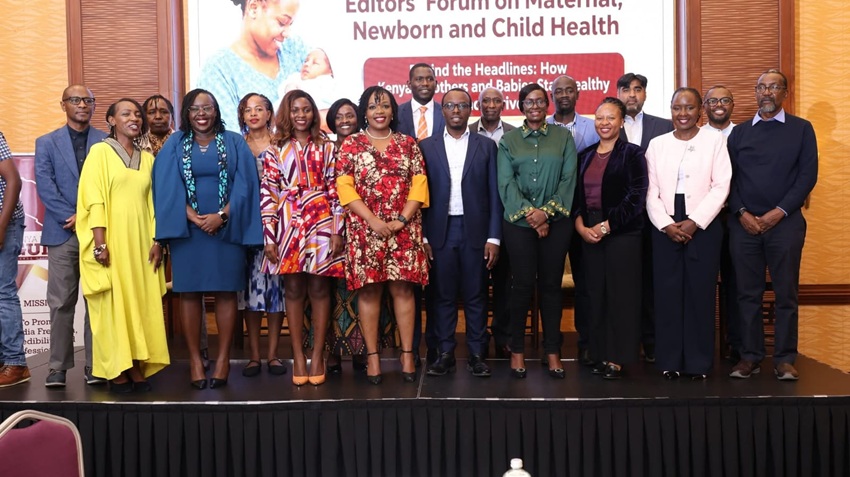
The forum, organised by the Kenya Editors’ Guild under the theme “Behind the Headlines: How Kenya’s Mothers and Babies Stay Healthy and Thrive,” brought together editors, health professionals, researchers and development partners to discuss how media coverage can contribute to better healthcare outcomes.
Kananu said maternal and newborn health should not only attract media attention when tragedies occur but remain a sustained public interest issue requiring consistent reporting and follow-up.
She cited the September 2026 case of Mercy Kanini, a mother from Juja who lost all five babies she delivered prematurely, saying the tragedy raised important questions about the management of high-risk pregnancies, specialised newborn care and the effectiveness of referral systems.
“When the headlines fade, do we continue asking these questions?” she posed.
The Guild president said journalists had a responsibility to investigate what went wrong, what could have prevented such deaths and whether lessons from previous cases were being translated into better healthcare services.
She noted that maternal and newborn health involves a connected chain of care, beginning with maternal nutrition, early screening and antenatal services, through safe delivery and specialised newborn care.
“An expectant mother is not concerned about how many policies we have developed or how many conferences we have held. She wants to receive quality care, survive childbirth and take her baby home alive,” Kananu said.
She further called for equitable access to quality maternity services, regardless of a woman’s financial circumstances or geographical location.
Kananu also challenged journalists to scrutinise government healthcare programmes, citing the Linda Mama initiative, which the media has covered through both its benefits and implementation challenges.
She said reporting should establish whether public commitments, funding and policies were translating into improved services for women and children.
“The true measure of any maternal healthcare programme is not simply how many women are registered or how much money has been allocated. It is whether mothers can access the services promised to them, receive quality care and experience better health outcomes,” she said.
The PS on his side backed the call for sustained media engagement, saying public awareness, accountability and evidence-based reporting were essential to reducing preventable maternal and newborn deaths.
He urged journalists to investigate challenges affecting healthcare delivery, particularly delays in referrals, inadequate emergency obstetric services and shortages of essential medical supplies and equipment.
He revealed that only 37 per cent of health facilities offering delivery services currently provide all seven basic emergency obstetric care functions, pointing to gaps that require targeted investment and closer monitoring.
The statistic highlights the importance of strengthening health facilities’ capacity to manage pregnancy complications and respond to emergencies during childbirth.
Under the Every Woman Every Newborn Everywhere (EWENE) Acceleration Plan, the Government is investing in essential commodities and obstetric and neonatal equipment for 635 health facilities.
Other interventions include establishing simulation centres and skills laboratories, training healthcare workers in emergency obstetric care and recruiting an additional 5,000 midwives.
The National Equipment Service Programme (NESP) is also addressing equipment gaps to improve access to life-saving maternal and newborn healthcare services.
Oluga said the interventions were aimed at strengthening service delivery and ensuring mothers and babies receive timely and appropriate care.
He also highlighted progress in healthcare financing, noting that 33.7 million Kenyans had registered with the Social Health Authority (SHA).
He said the registration data would support evidence-based planning, resource allocation and healthcare financing, while urging the media to encourage more Kenyans to register and acquire national identification documents to facilitate access to healthcare services.
Beyond government interventions, Oluga challenged media houses to make maternal and newborn health education a regular feature in their programming.
He urged radio and television stations to dedicate at least one minute daily to sharing information that could help expectant mothers make informed healthcare decisions.
“You can have one minute every day on all your local radio stations and TV as part of your contribution. Every morning, one minute awareness. It will speak louder than the headlines,” he said.
He particularly emphasised the importance of early antenatal care, completing the recommended eight antenatal visits and attending postnatal appointments to monitor the health of both mothers and their babies.
The call comes as the Ministry of Health continues to emphasise evidence-based interventions to address preventable maternal and newborn deaths.
On November 10, 2026, the Ministry launched two policy briefs focusing on neonatal sepsis and hypertensive disorders of pregnancy, identified as major contributors to preventable maternal and newborn deaths.
The briefs, developed in partnership with the Child Health and Mortality Prevention Surveillance Network (CHAMPS), seek to translate research findings into practical interventions and improve the implementation of existing healthcare policies and clinical guidelines.
Kananu said journalists should also highlight successful interventions, research and innovations that are improving healthcare delivery, arguing that solutions-oriented reporting can help identify approaches that can be sustained and replicated.
She urged editors to use the forum to strengthen relationships with credible health experts, ask difficult questions and identify stories that deserve continued coverage beyond the news cycle.
“We may not be doctors. We may not deliver babies or perform lifesaving procedures. But through the stories we tell, the questions we ask and the accountability we strengthen, we can contribute to a healthcare system that gives every mother and child a better chance,” she said.
Oluga reaffirmed the Ministry’s commitment to providing journalists with timely and accurate information to support informed reporting, constructive scrutiny and accountability across the health sector.
The forum was supported by the Gates Foundation Kenya office and sought to strengthen collaboration between the media, government and health stakeholders in advancing maternal, newborn and child health.
.