The government has increased the health sector budget by Ksh39.1 billion to Ksh177.2 billion in the 2026/27 financial year, up from Ksh138.1 billion in the previous cycle.
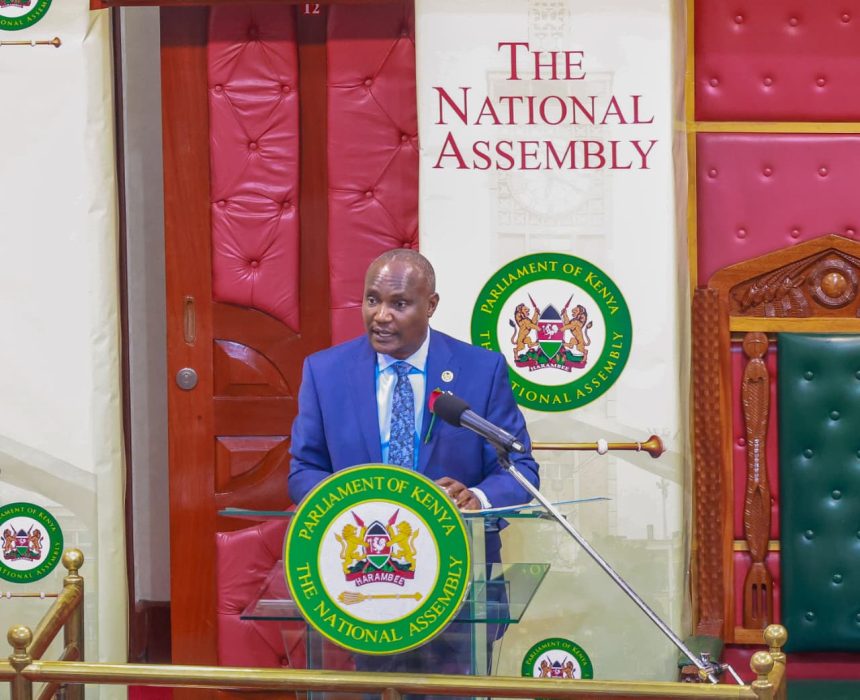
While presenting the Ksh4.8 trillion budget before the National Assembly on Thursday, Treasury Cabinet Secretary John Mbadi said the increased allocations are part of the government’s efforts to strengthen service delivery under Taifa Care and Universal Health Coverage (UHC).

Referral hospitals take largest share
Referral hospitals received the largest share of the health budget at Ksh45.3 billion, up from Ksh42.4 billion in the last financial year, followed by the Kenya Medical Supplies Agency, which has been allocated Ksh20.9 billion compared to Ksh5.2 billion previously.
Mbadi also proposed Ksh19.1 billion for primary healthcare to finance frontline services, up from Ksh13.1 billion last year, and Ksh18.5 billion for the Global Fund to support programmes targeting HIV, malaria and tuberculosis, compared to Ksh17.3 billion in the previous budget.
“As a country, we value the services offered by our health workers. To build workforce capacity, I propose Ksh10.9 billion for the Kenya Medical Training College (KMTC) and Ksh9.3 billion for medical interns,” he said.
The KMTC allocation represents an increase from Ksh8.9 billion in the previous financial year, while funding for medical interns has more than doubled from Ksh4.3 billion.
Additionally, community health promoters will share Ksh3.2 billion, the same amount allocated last year, while a further Ksh396 million has been proposed for their medical insurance cover.
UHC staff salaries have also been allocated Ksh8.6 billion, compared to Ksh6.2 billion that was previously earmarked for coordination and management of the UHC programme.
Funding for vaccines and immunisation has increased to Ksh6.4 billion from Ksh4.6 billion in the previous financial year.
However, the Emergencies, Chronic and Critical Illness Fund is among the few losers in the budget, with its allocation reduced to Ksh3 billion from Ksh8 billion last year.
At Kenyatta National Hospital, Ksh470 million has been earmarked for the construction of a Burns and Paediatrics Centre, while Ksh300 million will go towards renovation works and replacement of obsolete equipment.
Research, cancer care and reproductive health get additional funding
Funding for the Kenya Medical Research Institute has increased to Ksh3.1 billion from Ksh2.7 billion in the last financial year.
The Treasury has also proposed Ksh2 billion for the construction of a new 2,000-bed multi-speciality facility at Moi Teaching and Referral Hospital.
An additional Ksh500 million has been allocated for family planning and reproductive health commodities, unchanged from the previous budget, while the National Blood Transfusion Services (NBTS) will receive Ksh600 million, up from Ksh300 million last year.
The budget further proposes Ksh1.3 billion for the integrated reproductive health programme.
Targeted cancer care investments have also been retained, with Ksh1 billion allocated for the construction of a cancer centre at Kisii Level Five Hospital, Ksh300 million for strengthening cancer services at Kenyatta National Hospital and Ksh150 million for the expansion of the comprehensive cancer centre at Kenyatta University Teaching, Referral and Research Hospital.
Last year, the two referral hospitals received Ksh100 million each for the cancer programmes.