What began a decade ago as an effort to restore the degraded Kaptagat Forest has evolved into a national model demonstrating how conservation can improve livelihoods, strengthen food security and create sustainable economic opportunities for communities living around forests.
Deputy President Prof. Kithure Kindiki said the Kaptagat Integrated Conservation Programme (KICP) had shown that environmental restoration succeeds when communities are placed at the centre of conservation efforts and are allowed to directly benefit from protecting natural resources.

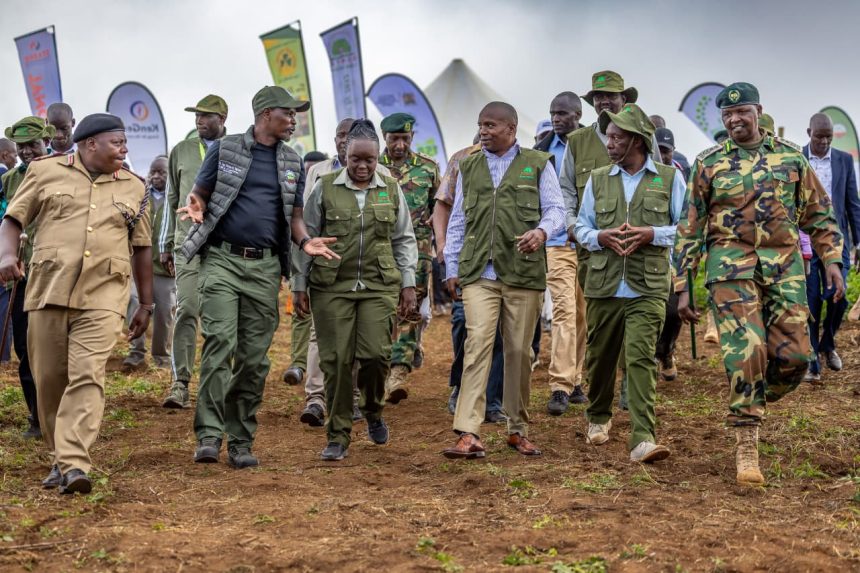
Speaking during the programme’s 10th anniversary celebrations in Elgeyo Marakwet County on Saturday, the Deputy President commended KICP Patron and National Treasury Principal Secretary Dr. Chris Kiptoo for championing a model that integrates ecosystem restoration with livelihood empowerment.
“A good and sound healthy environment is good for the community. Environmental conservation will give us rain and enough water so that our country can have food security and development,” said Prof. Kindiki.
He noted that involving communities living adjacent to forests had transformed conservation from a government responsibility into a shared community mission.
“This project ensures forest-adjacent communities are involved in environmental conservation. It is very important to involve the local community in the conservation of the environment,” he said.
Prof. Kindiki highlighted initiatives such as the distribution of grade dairy cows, access to clean cooking energy and other income-generating projects that have improved household incomes while reducing dependence on forest resources.
“I have seen that the programme gives farmers grade cows so they can get more milk compared to what they are getting. I have seen others are getting cooking gas and many livelihoods that will help them put money in their pockets, pesa mfukoni,” he said.
Forestry Principal Secretary Gitonga Mugambi said the Kaptagat model had already been replicated in 31 sites across the country in line with Kenya’s ambitious target of growing 15 billion trees by 2032.
“To date, more than 231,000 hectares are under rehabilitation and over 31 million trees have been planted in these sections through community participation and partnerships,” said Mugambi, adding that Kaptagat had become a benchmark for community-led restoration efforts.
Reflecting on the programme’s ten-year journey, Dr. Kiptoo said KICP had demonstrated the power of building an economy around conservation.
“Never underestimate an economy powered by the forest. Today, I am proud of what those ten years have given birth to: Mazingira Safi, Maji Safi Nyumbani, Kawi Safi na Pesa Mfukoni. These are community-driven solutions born from listening to the very needs that once pushed people into the forest,” he said.
As KICP embarks on its next decade under the theme “10 to 20: Restore. Sustain. Transform.”, leaders expressed confidence that the Kaptagat model will continue to shape the future of conservation and community development in Kenya.