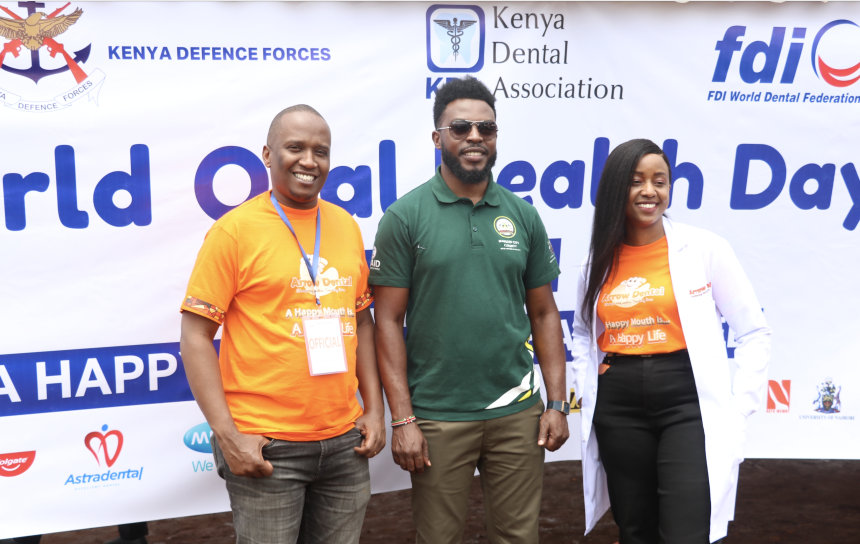
Kenyans celebrated World Oral Health Day, which is marked on 20th March annually, with calls on the government agencies to weed out quack dentists.
Hundreds of dentists and oral hygiene experts joined other Kenyans at the Ulinzi Stadium in Nairobi to commemorate the day by creating awareness on the need for proper oral hygiene.
Dentists disclosed that most Kenyans have neglected oral health, with data from the Ministry of Health showing that 98.1% of Kenyan adults are affected by some form of gum disease, while nearly 46.3% of children aged 5 are suffering from tooth decay.
This year’s theme was “a happy mouth is a happy life”.
Over the past seven months, Arrow Dental Centre, in partnership with Gem Smiles Foundation, has taken this message across the country, engaging over 250 schools and approximately 500,000 students, and reaching millions of Kenyans through community outreach, media, and digital platforms.
Globally, oral diseases affect over 3.5 billion people. Locally, many individuals still present late with advanced dental conditions, often when preventive or restorative care is no longer possible. Low awareness, delayed care-seeking, and persistent myths continue to drive this burden, making prevention and education essential.
This principle guided the school outreach programme. Engagement began by understanding what students already knew, followed by demonstrations on proper brushing techniques and preventive care.
The programme also reached children with intellectual disabilities, ensuring inclusivity in oral health education.
Learning was reinforced through songs, storytelling, and creative expression. The message was translated into multiple local dialects, while the Swahili adaptation, written and directed by Dr Rachel Gichuki Chege, garnered over one million views within a week, demonstrating the power of culturally relevant communication.
Across communities, a consistent pattern emerged: many individuals presented with multiple oral conditions, often in advanced stages.
Dental caries, gum disease, abscesses, and retained roots were common, with many patients having never visited a dentist or having gone years without a check-up.
This reinforced the need for continuous education, demonstration, and early intervention. Oral hygiene practices were demonstrated widely, with toothbrushes and toothpaste distributed, and messages delivered in local languages to ensure understanding across all age groups.
Engagement also highlighted harmful practices such as infant oral mutilation, which pose serious risks to children’s health.
Through respectful dialogue and education, communities were empowered to adopt safer, evidence-based alternatives.
These efforts culminate in a large-scale community dental camp in Kibra, being held today on World Oral Health Day, bringing together healthcare providers, partners, and communities.
Supported by key stakeholders such as the Kenya Defence Forces and the Ministry of Health, this demonstrates the power of collaboration in advancing public health.
Future efforts will focus on underserved populations, including workers in high-risk environments and maternal oral healthcare, alongside the integration of innovation through an AI-powered oral health chatbot designed to improve access to information and guidance.