Kenya will be seeking to increase collaboration with the International Atomic Energy Agency (IAEA) in order to promote peaceful use of nuclear science and technology.
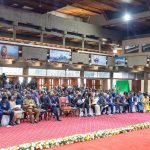
Speaking at the 69th Regular Session of the General Conference of the International Atomic Energy Agency in Austria, Science, Research and Innovation Principal Secretary Prof Abdulrazak Shaukat said partnership with the agency has instrumental in Kenya’s energy diversification agenda targeting nuclear power.
“Guided by the IAEA’s Milestones Approach and international best practice, Kenya is progressing steadily in the development of its national nuclear power programme. We are currently in Phase II, with construction of our first nuclear power plant expected to commence in 2027, and grid connection targeted for 2034,” said Shaukat.
Kenya which is IAEA association country is targeting to develop nuclear power plant in Siaya County which Nuclear Power and Energy Agency (NuPEA) says will generate at least 20,000 megawatts of power by 2040 when ully operational.
Shaukat said Kenya already issued a Request for Information (RFI) to global nuclear technology vendors which will help in selecting a suitable partner and technology to ensure timely delivery of the nuclear power project within budget. Kenya is expected to spend a least Ksh 500 billion in setting up the region’s firt nuclear power plant.
“We appreciate the Agency’s continued support in building human and institutional capacity, and in conducting expert reviews of our national infrastructure. We were honoured to host the inaugural IAEA Small Modular Reactor (SMR) School in Nairobi in May 2025, a milestone that highlighted Africa’s growing interest in innovative nuclear solutions to meet energy, development, and climate goals,” he added.
Shaukat told delegates at the meeting that Kenya is also pursuing the establishment of a Nuclear Research Reactor to enhance research, training, and development.
Kenya is further targeting to deepen collaboration with IAEA in areas such as healthcare where two regional cancer centres have been set up in Nakuru and Mombasa and have provided radiotherapy to at least 5,000 patients within a year. Other areas of strategic partnership include food security and climate adaptation.