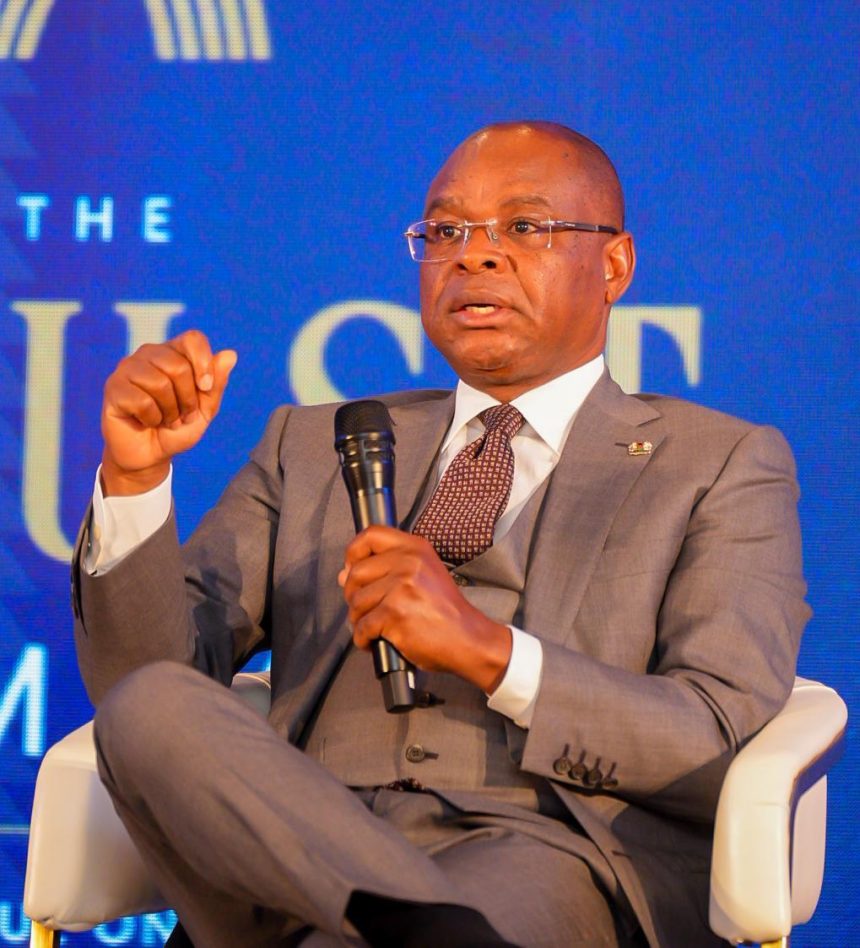
Kenyan leaders, public officials and civil society representatives are calling for greater accountability, meaningful public participation and demonstrable results from public institutions, as the Global Trust Summit in Nairobi turns the spotlight on a growing crisis of confidence in leadership and governance.
Speaking during the opening day of the Trust Summit: Nairobi Dialogue on Global Trust, leaders said institutions could not expect citizens to trust them simply because they hold public office or have legal authority.

Confidence, they argued, depends on whether institutions honour their commitments, respond to complaints, provide credible information and give citizens a meaningful role in decisions affecting their lives.
“This is not a summit of convenience. It’s a summit of necessity,” said Dr Abraham Korir Sing’Oei, Kenya’s Principal Secretary for Foreign Affairs, underscoring the urgency of rebuilding trust in a world grappling with inequality, geopolitical tensions and declining confidence in institutions.
The summit, running from October 21 to 23 under the theme “Weaving Trust: Binding Strands for a Stronger Global Order,” brings together governments, multilateral institutions, business leaders, civil society, academics and young people to explore practical ways of restoring confidence in governance, markets and international cooperation.
The discussions place Kenya’s own governance challenges alongside a wider international question: how can institutions earn public confidence when citizens feel excluded from decision-making, promises go unfulfilled and accountability mechanisms fail to produce results?
The opening discussions placed accountability at the centre of the relationship between citizens and public institutions, with leaders arguing that transparency alone is insufficient unless information leads to action.
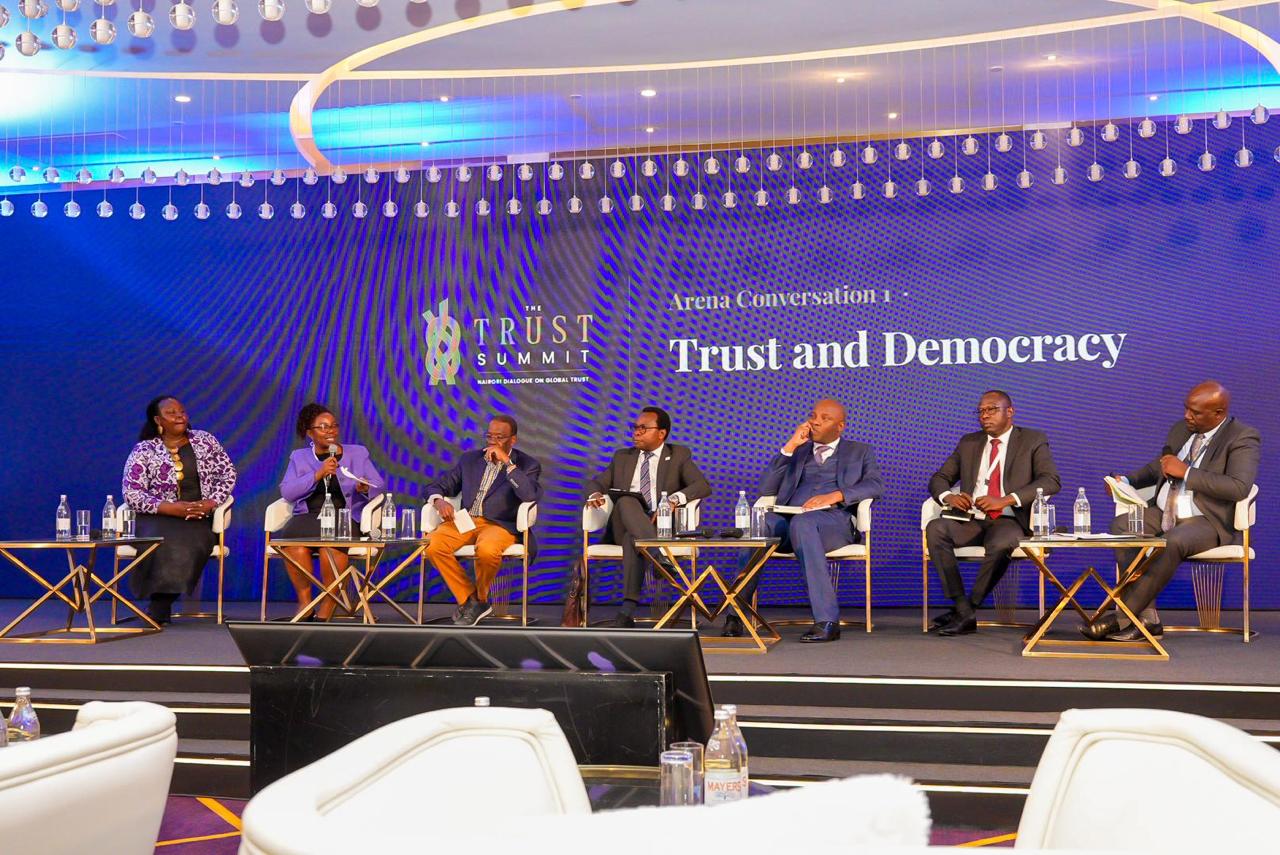
Auditor-General Nancy Gathungu said trust depends on credible, useful information and action throughout the accountability chain.
Her remarks highlighted the importance of ensuring that audit findings, oversight processes and institutional reporting translate into corrective action rather than remaining exercises in compliance.
Dr Priscilla, Director of the Communications Authority of Kenya, said accountability required cooperation across institutions and could not be assigned to a single organisation.
“Trust does not stop with complaints. It stops when the complaint has been resolved,” she said, warning that recurring complaints can deepen public mistrust.
Dorothy Jemator Kimengech, Vice-Chairperson of the Commission on Administrative Justice, said citizens needed to understand what institutions do, including their structures, responsibilities and projects, if they were to develop confidence in them.
The Kenya Bureau of Standards chief executive, Esther Ngari, offered a further perspective on the often-unnoticed relationship between institutional performance and public confidence.
“When standards work, no one recognizes, but when they fail, that is when questions arise,” she said.
The remarks point to a common challenge for public institutions: their credibility is shaped not only by the policies they announce but also by the quality, consistency and reliability of the services they provide.
Felix Koskei, Chief of Staff and Head of the Public Service, reinforced the need for institutions to practise the standards they impose on others.
“A regulator that demands compliance from others must be an example of compliance,” he said.
Charles Owino, the Government Spokesperson, challenged participants to consider not only whether public participation takes place but also how citizens engage with decision-making processes.
“Democracy is always for the public good. Democratic power lies with you, the citizens,” he said.
Duncan Ojwang’, chairperson of the Independent Policing Oversight Authority, said public participation was anchored in participatory democracy and should not be reduced to a contest in which the loudest voices dominate.
“Let us not turn public participation to the noisiest, let it be universal,” he said.
Sheila Masinde, Executive Director of Transparency International Kenya, said public participation should be recognised as a legitimate democratic right rather than treated as an inconvenience by those in authority.
“When I vote for you, I trust that you will deliver in the mandate you are seeking,” she said.
Clarise Ogangah, chairperson of the Kenya National Commission on Human Rights, said citizens did not surrender all their power when they elected leaders. People do not delegate their power fully to their leaders, they exercise it during public participation,” she said.
Caroline Gaita, Executive Director of Mzalendo Trust, warned that participation without a mechanism for responding to citizens risks becoming a symbolic exercise.
“Participation without a feedback loop is not engagement; it’s attendance,” she said.
The discussions underscored a key test for democratic institutions: whether citizens can see how their contributions shape policies, budgets and public services, and whether decision-makers explain what happens after consultations conclude.
The summit also examined how trust is built across regulators, businesses, financial institutions and other organisations whose decisions affect livelihoods and economic opportunity.
Clare Akamanzi, chief executive of NBA Africa, said institutional promises needed to be backed by evidence that the public could assess.
“Announcements are not enough. Do the public believe you will deliver on the promises made to them,” she said.
For the private sector, trust has direct implications for investment, entrepreneurship and economic growth.
Investors need confidence in institutions and markets, while entrepreneurs depend on credible rules, reliable partners and a business environment in which commitments are honoured.
Venture capitalist and startup builder Sean Karanja framed the challenge in terms of the relationship between capital and integrity.
“I want to deploy truthful capital to truthful entrepreneurs,” he said.
The discussions reflect a broader argument emerging from the summit: trust is not simply an abstract measure of public sentiment.
It affects whether citizens cooperate with institutions, whether businesses invest, whether communities accept public decisions and whether international partnerships deliver their intended benefits.
Beyond domestic governance, the summit is addressing inequalities in international decision-making and the implications for Africa’s confidence in the global system.
Africa, home to 54 countries and more than 1.4 billion people, remains without a permanent seat on the United Nations Security Council.
The continent continues to advocate for a stronger voice in international institutions and decisions affecting development finance, debt, climate action and global security.
Sing’Oei has argued that the legitimacy of multilateralism depends on whether international institutions adequately represent the people and countries they serve.
The challenge for Africa, participants are examining, is to move beyond recognition and declarations of partnership towards meaningful influence over decisions and the delivery of commitments.
The discussions also consider how regional cooperation, including through the East African Community and the African Continental Free Trade Area, can strengthen collective agency, expand economic opportunity and build confidence in African-led solutions.
A central objective of the summit is to turn discussions into commitments that can be tracked beyond the Nairobi meeting.
The proposed Nairobi Call to Action on Global Trust is intended to advance an evidence-based approach to rebuilding confidence, including a call for institutions to examine and correct inaccurate assumptions in their data, risk assessments, governance arrangements and public narratives.
The summit is also examining how trust intersects with young people’s participation, gender, disability, displacement, faith, culture and communities that have historically been excluded from decision-making.
Awel Uwihanganye, Chief Executive of The Trust Summit, said rebuilding trust required institutions to recognise Africa’s capabilities and strengthen confidence in its own public systems, including courts, universities, regulators and financial institutions.
He urged young Africans to take an active role in shaping the continent’s future rather than allowing inherited narratives to define their ambitions.
“Let us trust one another until we are given a reason not to,” he said.
Amason Jeffah Kingi, Speaker of the Senate, offered a practical definition of the standard institutions must meet.
“Trust is a belief that my legitimate expectations will be met within a reasonable time,” he said.
As the summit continues through October 23, participants are seeking to establish a framework for monitoring commitments, reporting progress and sustaining accountability after the delegates leave Nairobi.
The central question is whether institutions can translate the language of trust into visible improvements in governance, public services, economic opportunity and international cooperation.
For the leaders gathered in Nairobi, the measure of success will ultimately be what changes for the people whose confidence institutions seek to regain