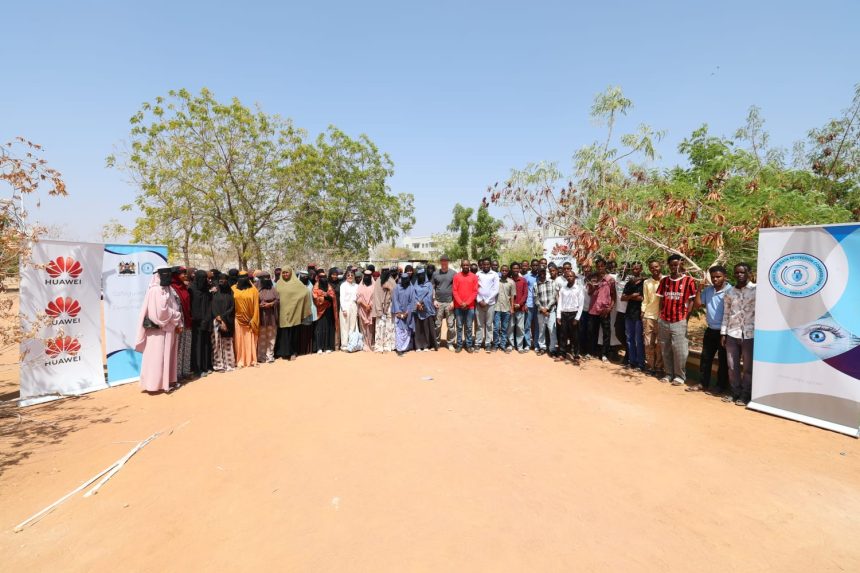
As Kenya observed Safer Internet Day (SID) on 10 February, the Office of the Data Protection Commissioner (ODPC), in partnership with Huawei Kenya and the Ministry of ICT and the Digital Economy, engaged youth in Wajir County through a four-day Data Privacy and Data Protection training programme.
Held between 9th -12th February, the initiative equipped students with practical skills to protect personal data, navigate online risks and participate responsibly in the digital space, aligned with this year’s SID theme, “Together for a Better Internet.”
The programme brought together 200 students, including first-time internet users, with a focus on empowering girls and young women, who nationally face greater barriers to digital access and skills. Studies show that only 35 percent of women in Kenya use mobile internet compared to 50 percent of men, and for every 100 young men with digital skills, only 65 young women have comparable competencies.
Additionally, the training sought to enhance awareness and understanding of data privacy, data protection, and responsible digital citizenship, in line with Kenya’s Data Protection Act, 2019. Participants were equipped with practical knowledge on personal data rights, safe online behaviour, and ethical handling of information in today’s digital environment.
The programme emphasized the importance of empowering young people with the skills and knowledge needed to navigate the digital space safely, particularly as technology adoption continues to grow across the country.
The initiative formed part of Huawei Kenya’s ongoing commitment to digital skills development and the ODPC’s mandate to promote compliance and awareness of data protection laws nationwide.
With girls and young women in frontier counties historically underrepresented in digital literacy, early exposure to online safety and data protection knowledge is critical for their participation in Kenya’s growing digital economy.
The training empowered youth, especially young women, to become digitally confident, reducing vulnerability online while building foundational skills for future economic and entrepreneurial opportunities.
“As more young people come online, especially in regions with growing connectivity, awareness becomes the first layer of protection. Marking Safer Internet Day through direct engagement allowed us to translate rights and responsibilities into practical knowledge,” said Vincent Musyoki, Trainer at the ODPC.
“This collaboration with Huawei Kenya and the Ministry of ICT ensured that every Kenyan understood how to safeguard personal data, reduce exposure to digital harm and seek redress when their rights were violated,” added Musyoki.
For trainees, the training made a tangible difference. Abdimajid Hassan Hussein shared: “I now understand how to protect my personal data and what my rights are online. Learning this during Safer Internet Day showed us that creating a better internet starts with informed and responsible users.”
Muna Hassan, added: “Understanding data protection and online rights is essential for anyone using digital platforms today. This training gave girls and young women the knowledge and confidence to navigate the internet safely.”
Adams Makau, Trainer at Computers for Schools Kenya, underscored the importance of understanding one’s rights and remedies as provided under the data protection laws. He said: “Participants gained a clear understanding of internet safety, data protection principles, and their rights as data subjects. Importantly, they now know how to engage the Office of the Data Protection Commissioner if their personal information is misused.”
The initiative was particularly critical in frontier counties like Wajir, where connectivity is limited and youth, including girls and first-time internet users, face a digital divide.
Early exposure to digital literacy and data protection principles enabled young people to participate safely and responsibly in Kenya’s growing digital economy, which is increasingly mediated by MSMEs, e-commerce platforms, and mobile technology.
With nearly 7.4 million MSMEs employing 14.9 million Kenyans, digital skills and awareness directly influence inclusive economic opportunity, especially for young women who run nearly half of these enterprises but face systemic barriers in financing, markets, and skills.
“Training youth in Wajir was not just about online safety,” said Musyoki. “It is about empowering them to engage in the digital economy, access information, and protect their rights so they can thrive locally and nationally.”
The programme also reflected a broader national priority: bridging the digital divide. As highlighted in national initiatives, half of Kenyans remain offline, leaving many rural and marginalized youth disconnected from education, services, and opportunities. By providing structured digital training, the ODPC, Huawei Kenya, and the Ministry of ICT ensured that no community was left behind, building a pipeline of digitally literate youth who can safely harness technology for learning, livelihoods, and civic participation.
Through this Safer Internet Day engagement, the ODPC, Huawei Kenya, and the Ministry of ICT reaffirmed their commitment to online safety, digital inclusion, and rights-aware internet use across all regions, empowering youth to be confident, responsible, and digitally skilled citizens in Kenya’s expanding digital landscape.