What is being discussed in Lyon this week is not distant from Kenya, it is directly tied to decisions that will soon be tested at home. The One Health summit feeds into the Africa Forward Summit in Nairobi, where global commitments are expected to meet local realities. This raises an important question: will Kenya turn these conversations into action, or will they remain part of a growing list of well articulated intentions.
Kenya does not have the luxury of treating One Health as a concept. It is already a lived reality. Human health, animal health and environmental conditions are deeply interconnected, particularly in pastoral and rural communities. Livestock sustain millions of livelihoods, while climate variability continues to reshape ecosystems and disease patterns. In such a setting, health risks rarely exist in isolation.
Outbreaks such as Rift Valley Fever, Anthrax and Brucellosis make this clear. They move between animals and people, disrupt trade and place pressure on public health systems. Their impact is felt not only in clinics, but in households and markets. Managing these threats requires coordination across sectors that have traditionally worked independently, public health, veterinary services and environmental management.
This is the gap that the One Health approach seeks to address. It offers a shift towards prevention, integration and early detection. It aligns with Kenya’s broader efforts to strengthen preparedness through the National Action Plan for Health Security (NAPHS II). But alignment on paper does not automatically translate to results. The challenge, as always, is implementation.
Kenya has made a practice in defining its priorities. The framework exists, and the direction is clear. What remains is ensuring that these priorities are backed by adequate financing, institutional coordination and technical capacity. Without this, One Health risks becoming another well accepted idea that struggles to take root in practice.
Managing climate related health risks and preventing zoonotic diseases requires sustainable domestic financing alongside proactive global partnerships. The commitments negotiated at the One Health Summit in France are vital as Universal Health Coverage advances. The global frameworks discussed in Lyon directly impact how institutions such as the Social Health Authority can preemptively allocate resources and build resilient safety nets, shifting the focus from crisis response to long-term prevention.
This is why the discussions in Lyon matter. They are shaping how resources for One Health will be mobilized globally. Engagements with institutions such as the World Bank and the Agence Francaise de Development will influence how financing frameworks are structured and which priorities receive support. For Kenya, the task is to ensure that its national agenda is not only represented but positioned for investment.
At the same time, Kenya’s growing role as a regional health hub strengthens its case. Nairobi hosts critical institutions, including the Africa CDC Eastern Africa Regional Coordinating Centre and the WHO Regional Emergency Hub. These platforms provide both infrastructure and influence, placing Kenya at the centre of regional surveillance and response efforts. They also offer a pathway for implementing One Health approaches at scale.
Capacity development will be equally important. Effective One Health systems depend on skilled personnel who can work across sectors, detecting outbreaks early, communicating risks clearly and coordinating responses efficiently. Partnerships with institutions such as the WHO Academy offer the opportunity to strengthen these capabilities, but they must be matched with domestic investment and commitment.
We cannot operationalize the One Health approach without recognizing the backbone of the healthcare system. The integrated surveillance strategies championed in France rely entirely on strengthening Human Resources for Health. The real test lies in ensuring global policies translate into investments that equip county level infrastructure and community health promoters to detect and manage emerging threats at the grassroots level.
Ultimately, the relevance of the Lyon One Summit lies in what happens next. It highlights the importance of prevention, coordination and sustained investment. But these principles will only matter if they are translated into functioning systems that deliver results for better health outcomes
As attention shifts to Nairobi, expectations will naturally rise. The Africa Forward Summit will not just be a continuation of global dialogue; it will be a moment to demonstrate whether commitments can be localized and implemented effectively.
The One Health Summit in Lyon sets the critical policy groundwork that will be directly actionable when global leaders convene in Nairobi for the Africa Forward Summit. There is a clear opportunity to advance a unified, self sustaining health security system and translate global prevention strategies into concrete action.
Kenya stands at an important point. It has the frameworks, the partnerships and the institutional presence to lead in the One Health space, what is needed now is execution.
Because in the end, the value of One Health will not be measured by how well it is discussed, but by how effectively it protects lives, livelihoods and the systems that sustain them.
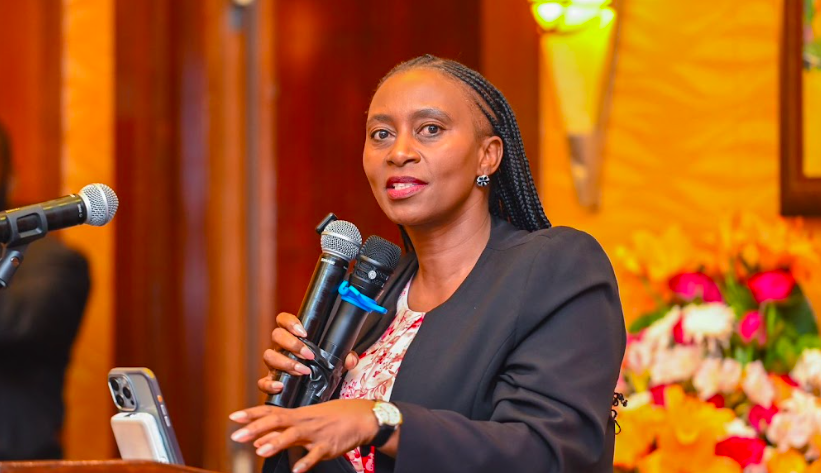
Mary Muthoni is Kenya’s Principal Secretary for State Department for Public Health and Professional Standards