Stakeholders from governance, civil society, and international institutions are calling for immediate and inclusive reforms to bolster democracy in Africa. They emphasize the importance of youth engagement, accountability, and cross-sector collaboration as essential drivers of change.
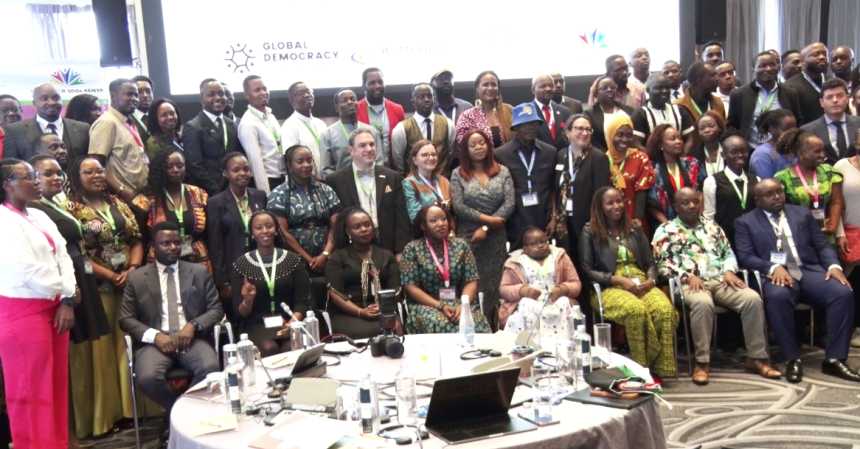
The discussions took place at the Global Democracy Coalition (GDC) Africa Regional Forum in Nairobi, themed “Reclaiming the Democratic Promise: Youth Agency, Digital Resilience, and Combating Kleptocracy in Africa.” The forum convened over 150 participants, including policymakers, civil society leaders, youth organizations, and development partners, to evaluate the state of democratic governance across the continent.
Speakers widely acknowledged that democracy is under sustained pressure both globally and in Africa, marked by rising authoritarian tendencies, governance deficits, and declining public trust.
Kyra Buchko, Co-Executive Director of PartnersGlobal, pointed out that while democratic challenges are prevalent, there is growing collaboration across regions to address them.
“Participants recognize that while challenges are similar across the region, there is a shared willingness to learn from one another—particularly in identifying what works and what does not in addressing threats to democracy,” she stated.
“I think there is a strong sense of urgency regarding current global trends. Coming from the United States, we have seen a significant rise in authoritarian tendencies, and we are increasingly looking to other regions to understand how civil society can mobilize to resist democratic backsliding,” she added
Buchko highlighted corruption and kleptocracy as persistent structural obstacles, warning that they continue to hinder democratic growth and stability across African nations.
At the same time, participants framed the current moment as both a crisis and an opportunity.
Paloma Dallas, a senior program officer with the Charles F. Kettering Foundation, emphasized that despite what global indices describe as a democratic recession, there is an opportunity to rebuild more inclusive systems.
“It is critically important to be here at this moment, especially in a place like Kenya where we are witnessing vibrant youth engagement. The question becomes: how do we harness this energy, learn alongside each other, and foster exchanges across generations and borders?” she asked.
Youth at the center
A recurring theme throughout the forum was the crucial role of youth in shaping Africa’s democratic future, both as a demographic reality and a political force.
Buchko noted that the forum was uniquely energized by young participants, indicating a shift from passive concern to active involvement.
“This gathering stands out because of the energy, intelligence, and commitment of the youth… the level of engagement here suggests a shift toward action,” she stated.
Gloria Wawira, Chief Executive Officer of the National Youth Council (NYC), underscored the urgency of translating youth presence into genuine civic participation, especially in electoral processes.
“Young people must show up—physically register, vote, and participate. Civic responsibility extends beyond holding leaders accountable; it includes personal accountability,” she remarked.
Despite youth constituting the majority of Africa’s population, speakers noted a persistent gap in participation, particularly in voter registration and formal political engagement.
The forum stressed the need for meaningful inclusion, ensuring that citizens—especially young people and marginalized groups—play a significant role in decision-making.
Dallas stressed that democracy must move beyond procedural exercises like elections to address the realities of daily life.
“It is not just participation, but meaningful participation—ensuring people have a real role in shaping democracy. This is particularly important for young people,” she asserted.
“What is encouraging is witnessing a new generation redefining participation, pushing boundaries, and asking fundamental questions about what democracy and self-governance should look like,” Dallas added.
Her perspective echoed broader calls to redefine democratic practices in ways that prioritize inclusion, equity, and responsiveness to citizens’ needs.
Participants repeatedly underscored dialogue as a cornerstone of democratic renewal, especially in bridging divides across generations, regions, and institutions.
Mary-Yvonne Ododah, Chief Executive Officer of the Nuru Trust Network, highlighted the importance of inclusive engagement across sectors and communities.
“Democracy is for everyone—whether in civil society, government, or grassroots. It applies to all,” she stated.
She further stressed the necessity of consultation across Africa’s diverse contexts.
“Different sectors may have varying understandings of democracy, but we must come together to align our perspectives. This way, we can ensure governance and accountability across the private sector, grassroots communities, and beyond. That is why diverse voices matter,” Ododah explained.
Similarly, Jaco Roets from Accountability Lab Global emphasized the significance of intergenerational dialogue in rebuilding trust.
“Intergenerational dialogue is critical—not only between youth and elders but also between citizens and governments. Strengthening these relationships can rebuild trust and improve governance outcomes,” he noted.
The forum also explored the dual role of technology in democracy, serving as both an enabler of civic engagement and a potential tool for repression.
Participants highlighted the increasing importance of digital resilience, particularly in combating misinformation, protecting civic space, and fostering youth-led innovation.
Ododah pointed to emerging grassroots solutions, including digital platforms developed by young innovators aimed at enhancing accountability and civic participation.
She said the tools, now gaining traction with international partners, demonstrate the potential of technology-driven approaches to bolster democratic governance at the community level.
A key outcome of the forum will be actionable recommendations that will contribute to global policy processes.
Buchko noted that insights from the Nairobi convening will inform the Global Democracy Coalition’s annual report, which will be presented to institutions like the United Nations and the African Union.
The forum also reinforced the significance of partnerships between state and non-state actors, including civil society, regional bodies, and international organizations, in advancing democratic reforms.
Wawira highlighted the role of such platforms in facilitating knowledge exchange and coalition-building.
“This is a two-way engagement—learning from peers while also contributing national experiences,” she stated.
While participants acknowledged that forums alone cannot resolve systemic governance challenges, there was consensus that such platforms play a catalytic role in shaping long-term reform trajectories.
Roets emphasized the need to focus on actionable solutions.
“The path to democratic consolidation is complex and long… the focus should shift from identifying problems to collectively defining and pursuing solutions,” he remarked.