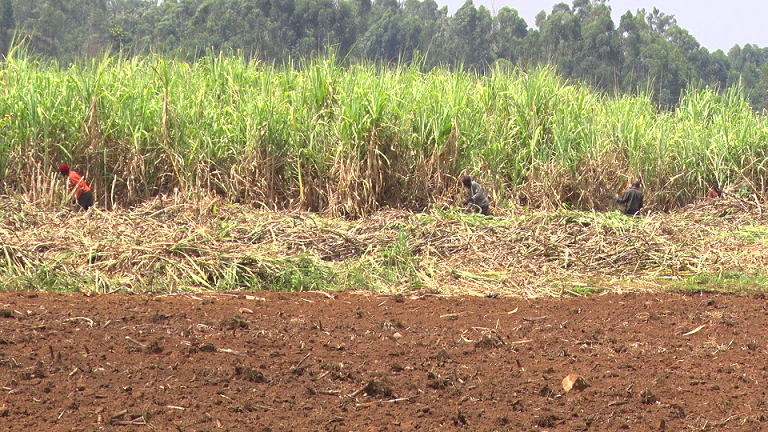
The Kenya Sugar Board (KSB) has issued sugar millers across the country with a seven-day notice to pay farmers for the sugarcane already delivered to factories.
According to the board, millers who fail to clear their payments to farmers risk attracting penalties, including interest on delayed payments.

KSB CEO Jude Chesire warned that days when farmers waited indefinitely for payment after delivering cane must come to an end, with contracts now providing clear sanctions against millers who violate the standard seven-day payment period.
KSB says it is also closing in on weighbridge malpractices which millers use to undercut farmers who end up losing up three tonnes of cane per trailer.
Chesire says to address weighbridge malpractices, KSB KSB is procuring mobile weighbridges which will be used to independently verify cane weights and strengthen enforcement.
This comes as the government initiates tougher enforcement regime to protect growers from exploitation and increase farmers’ income.
The government has also invested in cane-testing units as the industry moves towards a payment system that considers quality and sugar content rather than relying solely on weight.
Millers have further been directed to establish clear cane harvesting frameworks by September 10 this year in a bid to help streamline harvesting, transportation and delivery and end delays that leave mature cane deteriorating in farms.
The tough farmer-protection measures come as Kenya’s sugar industry records a significant production recovery from 611,576 MT last year to reach 528,875 MT in seven months of the year to July 2026.
Nonetheless, Kenya still remains sugar deficient given that annual demands stands at 1.2 million metric tonnes against a consumption of 1.216 million metric tonnes last year.
The board says to bridge the deficit, Kenya imported 477,551 MT of sugar last year from he COMESA and EAC regions.
The Ministry of Agriculture and Livestock Development through KSB is also pushing for increased cane acreage and productivity, better milling efficiency, value addition and expanded domestic refining capacity to progressively reduce the country’s dependence on imports.