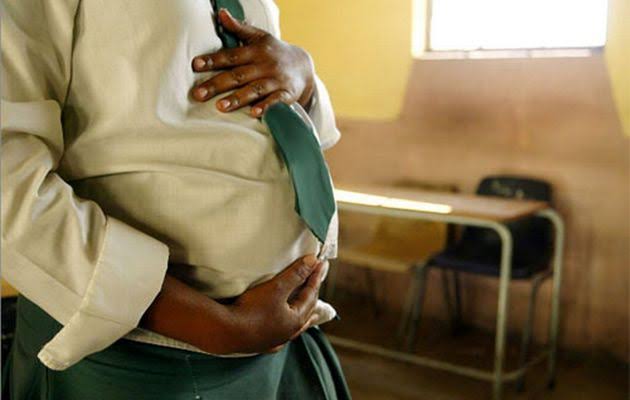
Teenage pregnancies in the country have declined from 14.8 per cent in 2022 to 11.9 per cent in the latest survey, although girls from poorer households remain more affected than those from wealthier families.
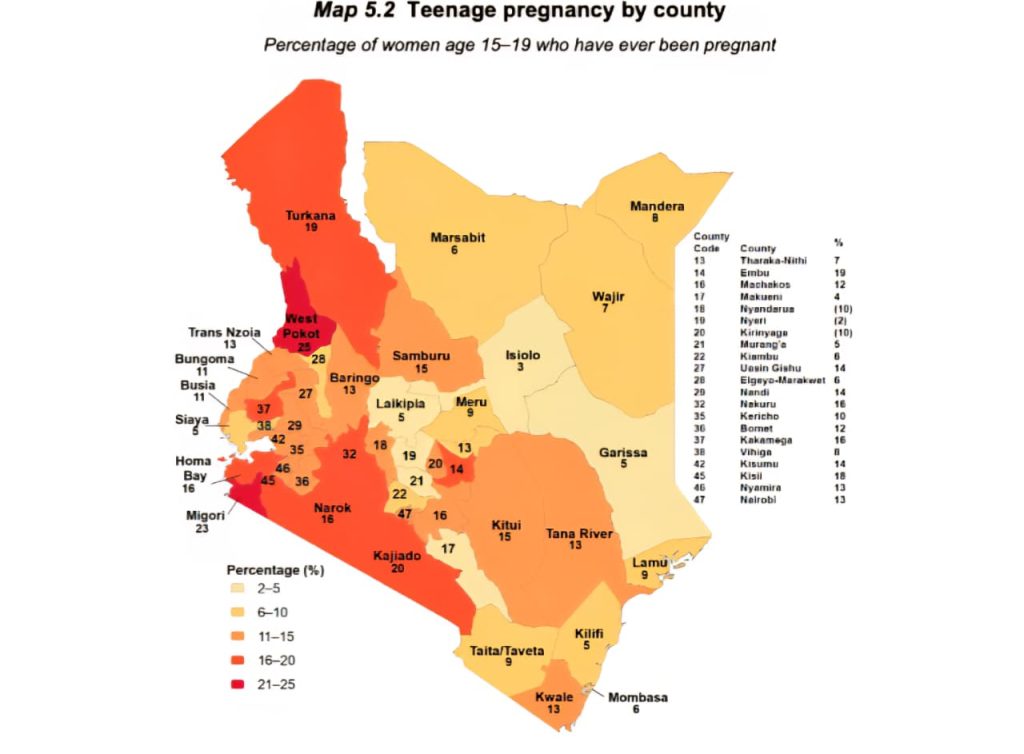
The 2025-26 Kenya Mini Demographic and Health Survey (KMDHS), released by the Kenya National Bureau of Statistics (KNBS) on Tuesday, shows that teenage pregnancies remain more common in rural areas and vary across counties.

“The rate of teenage pregnancy is roughly three times higher among women in the lowest wealth quintile than among those in the highest wealth quintile (15% versus 5%),” the survey indicates.
Teenage pregnancies are also more common in rural areas, where 13 per cent of girls aged 15-19 have ever been pregnant, compared with 11 per cent in urban areas.
Across the counties, West Pokot recorded the highest rate at 25 per cent, followed by Migori at 23 per cent and Kajiado at 20 per cent while the lowest rates were recorded in Isiolo at 3 per cent and Makueni at 4 per cent.
Garissa and Murang’a recorded 5 per cent each.
Fertility rate declines
The survey further shows that Kenya’s fertility rate has declined to 3.1 children per woman, from 3.4 in 2022.
The findings indicate that women are having fewer children on average, with births also being spaced further apart.
However, access to and use of family planning methods remain areas of concern.
Overall, 76 per cent of currently married women have a demand for family planning, meaning they either use contraceptives or want to use them to delay or stop having children.
However, 16 per cent want to delay or stop having children but are not using any contraceptive method.
Speaking during the launch, Acting KNBS Director General Benjamin Avusevwa said the mini survey was designed to provide updated indicators between the 2022 Kenya Demographic and Health Survey and the next full survey.
“We are a bridge between the 2022 KDHS and the next KDHS in the near future,” Avusevwa said, noting that the findings would support policy formulation and planning at both national and county levels.
United Nations representative Dr Neema Kimambo who also spoke on behalf of the World Health Organisation (WHO), noted that the value of the survey lay in translating reliable data into decisions that improve people’s lives.
“Reliable evidence must lead to better decisions and better lives. Behind every indicator is a person, a mother seeking better health care,” Kimambo said.
She added that investment in reliable data was essential in guiding resource allocation and assessing whether policies were achieving their intended purpose.
The 2025-26 KMDHS is Kenya’s first mini demographic and health survey and the eighth demographic and health survey exercise since 1989.
Conducted between November 2025 and February 2026, it provides an interim update to guide national and county planning as the country prepares for the next full survey.