At the break of dawn, a weary figure stepped out of his home in Bondo, carrying a small bag and a heavy burden. Forty-seven-year-old teacher George Ouma boarded a matatu to Kisumu, hoping the journey would finally bring answers after months of silent suffering.
For nearly two years, George had endured relentless pain that slowly upended his life. Sleep became impossible as he woke every hour to urinate, making four to six painful trips to the bathroom each night. A burning sensation accompanied every visit, while persistent testicular pain lingered long after. By morning, he was exhausted, struggling to find the energy and focus needed to teach his students.

Behind the closed doors of his home, another storm was brewing.
His wife struggled to understand why the man she had shared her life with had suddenly withdrawn from intimacy. The affection they once enjoyed had disappeared, replaced by awkward silence, unanswered questions and growing suspicion.
“She thought I was cheating on her,” George says, his voice barely above a whisper.
“She kept asking why I no longer wanted to be close to her. She believed I was seeing younger women and had contracted a sexually transmitted infection. Every time I tried to explain that I was in pain, she thought I was lying.”
The accusations became frequent. Arguments replaced laughter around the dinner table. Their marriage, once built on trust, slowly began to crumble
“There were days I thought I had lost my family,” George recalls. “I was in pain every day, but the emotional pain was worse. I felt helpless because I couldn’t explain what was happening to my body. I stopped talking to friends. I became withdrawn. I was slipping into depression.”
Like many men, George suffered in silence. Embarrassed by symptoms affecting his urinary and sexual health, he delayed seeking treatment, hoping the problem would disappear. Instead, the pain worsened, the frequent urination intensified, and his confidence faded.
Relief finally came during a visit to Inuka Hospital in Bondo, where he learned of a free urology medical camp in Kisumu
“When I heard the camp would be in Kisumu, I immediately decided I would go,” he says. “I felt safer seeking treatment away from home. I didn’t want to meet people I knew because I feared they would judge me or start rumours. Men’s health is something many people don’t talk about.”
When he arrived at the hospital premises, he was met by a sight he never expected.
Hundreds of men had already formed a queue stretching across the compound. Some leaned quietly against the walls. Others sat patiently on benches, avoiding eye contact, each carrying a burden hidden beneath ordinary smiles.
By mid-morning, nearly 200 men had turned up for the free urology screening. Standing among the crowd, George realised his suffering was far from unique.
“Looking around, I understood I wasn’t the only man carrying this burden,” he says. “For the first time, I didn’t feel ashamed. I felt hopeful.”
Fear and uncertainty
Among those waiting for screening is 62-year-old retired civil servant Dennis Oloo Okello from Nyando.
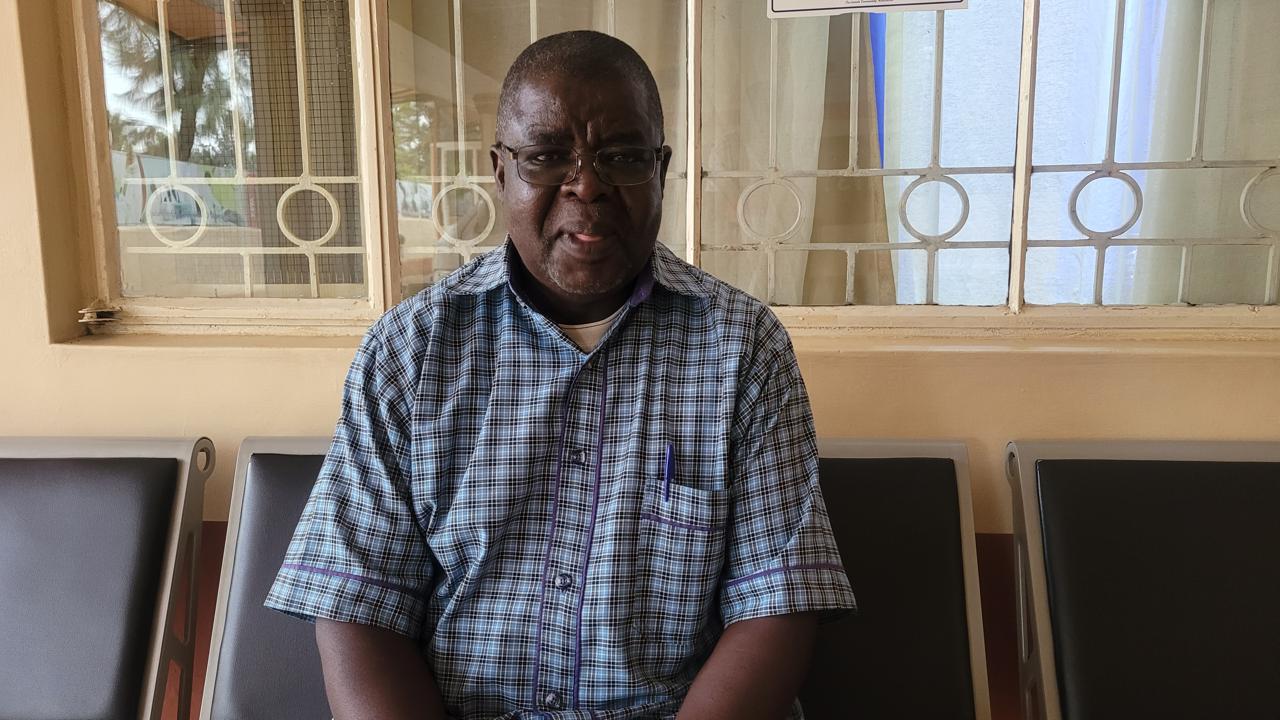
Unlike many men weighed down by fear and uncertainty, Okello moves confidently through the hospital compound, greeting familiar faces and reassuring those in line. He has travelled with five men from his village, determined that they all undergo screening before symptoms become life-threatening.
“I keep telling men there is no shame in being examined,” he says. “The real shame is waiting until the disease has spread and there is little doctors can do.”
His conviction comes from experience. Years ago, Okello developed frequent nighttime urination, a weak urine stream and the constant feeling that his bladder had not emptied completely. Like many men, he dismissed the symptoms as part of ageing.
“I kept telling myself it was normal,” he recalls. “I delayed seeking treatment because I thought nothing could be done.”
A routine medical check-up proved otherwise. Doctors detected the problem early and started treatment before serious complications developed.
Today, Okello has become a health advocate in his community, urging men to stop suffering in silence.
“Many men would rather suffer in silence than admit they have a problem regarding their sexual health”, he observes.
Younger men
Urologist and general surgeon Dr Oduru Chal warns that delayed treatment remains one of the biggest challenges in managing urological diseases.
Dr Chal urges men and even younger people to seek medical attention if they experience frequent urination, especially at night, difficulty passing urine, a weak urine stream, a burning sensation during urination, blood in the urine, pain in the lower abdomen or testicles, or the feeling that the bladder has not emptied.
“These symptoms should never be dismissed as a normal part of ageing. Early screening helps us determine whether the condition is benign or something more serious, such as prostate cancer.”
Dr Chal notes that urological conditions also affect younger people through urinary tract infections, kidney stones and other disorders. He also emphasises prevention through healthy lifestyles, including eating fruits and indigenous vegetables, staying hydrated, avoiding smoking and limiting alcohol consumption.
He says community medical camps are helping bridge the gap by bringing specialist services closer to underserved communities while encouraging men to seek care before complications arise.
Psychological burden
The psychological burden is equally significant.
According to Dr Linnet Akinyi, a psychologist at Avenue Hospital, fear, stigma and isolation remain some of the biggest barriers preventing men from seeking early urological screening.
She says many men associate urinary and sexual health problems with shame, fearing they will be labelled unfaithful or accused of contracting sexually transmitted infections. As a result, many withdraw from their partners, families and social circles, choosing to suffer in silence rather than seek medical help.
“The fear of being judged, rejected or abandoned often keeps men away from hospitals. Instead of talking about their symptoms, they isolate themselves, and this can lead to anxiety, depression and strained relationships,” says Dr Akinyi.
She urges families and communities to break the stigma surrounding men’s health, emphasising that urological conditions are medical illnesses, not a sign of infidelity and that early screening
The outreach comes at a time when access to urological services remains limited. According to the Ministry of Health’s 2024 Service Availability and Readiness Assessment (SARA), only 32 per cent of health facilities offer screening, diagnosis and treatment services, with PSA testing being the most commonly available screening method. The findings highlight major gaps in access, particularly in rural areas.
Inuka Hospital hopes to narrow that gap through regular community outreach. The hospital plans to make the urology medical camp an annual programme and gradually expand it beyond Kisumu County.