There was a time when a trusted few wrote the story of Kenya. The journalist with the notepad. The editor behind the heavy desk. The broadcaster leaning into the microphone at Kenya Broadcasting Corporation at exactly seven o’clock.
They were the gatekeepers. Imperfect, yes. Sometimes slow, sometimes cautious. But they carried a weight: the weight of verification, the burden of truth, the duty to distinguish fact from rumour before ink touched paper or sound filled the airwaves.

That time has passed. The gate is gone.
Today, the most powerful printing press in Kenya is not housed in any industrial area. It is the smartphone in your palm. The broadcast studio is no longer confined to official buildings; it lives on your WhatsApp status, your TikTok video, your X post.
We have all become editors. We have all become publishers. And every day, with a thumb swipe and a tap, we write new pages of Kenya’s story.
But here is the uncomfortable question we have not yet answered collectively: Do we know the rules of this new newsroom?
More specifically, do we understand the differences among misinformation, disinformation and fake news, and the harm each poses?
Let us be clear. Misinformation is false information shared without harmful intent. A relative forwards a health alert that turns out to be untrue. They meant well.
Disinformation, however, is deliberately created and spread to deceive. It is a weapon. And fake news, a term often misused, refers to fabricated content designed to look like legitimate journalism.
All three poison our public square. But disinformation is the most dangerous because it is intentional. It is a lie with a mission.
For decades, the Kenya Yearbook Editorial Board has operated on a principle that today’s digital world often finds inconvenient: pause before publishing.
Before any fact, image, or narrative enters the permanent record of this nation, we ask three questions:
Is it true?
Is it fair?
Does it honour the dignity of the Republic and its people?
These questions are not bureaucratic delays. They are the foundation of information ethics. And in today’s digital economy, they are more necessary than ever.
Speed has become the dominant virtue of the digital space. Algorithms reward the first, not the accurate. The forward button on WhatsApp is faster than the delete button.
And in that split second between receiving information and sharing it, we have seen the consequences of careless or malicious publishing.
We have seen disinformation about abductions spark unwarranted panic. We have seen manipulated images of political leaders deepen ethnic mistrust. We have seen rumours escalate tensions before facts have time to breathe.
In this new environment, the citizen cannot verify everything on their own. That is why trusted national institutions matter now more than ever.
At the Kenya Yearbook Editorial Board, verification is not a slogan. It is a discipline. When we publish data on school enrollment, healthcare access, infrastructure development or national progress, that information is the result of months of cross-referencing with ministries, counties and independent sources.
When you see a Kenya Yearbook publication, you are not consuming opinion. You are engaging with a verified national record, an information asset designed to stand the test of time.
For decades, the Kenya Yearbook Editorial Board has been the custodian of Kenya’s development story. Today, Kenyans themselves are shaping the nation’s digital footprint through daily online activity. Every post and message contributes to how Kenya is recorded and remembered.
This is why information ethics is no longer optional. It is a shared responsibility between institutions and citizens.
But credibility alone is no longer enough.
Today, a fabricated screenshot can reach a million Kenyans before lunch. A viral voice note can outrun months of verified research.
The challenge before us is not just to produce accurate information, but to ensure that accurate information moves at the speed of modern communication.
That is why the Kenya Yearbook Editorial Board is expanding its mandate beyond documentation into leadership on national information ethics and literacy.
We are strengthening our role as more than publishers. We are positioning ourselves as conveners, educators, and custodians of responsible information use in the digital age.
Our work increasingly includes making verified national data more accessible digitally, supporting public education on information literacy, and contributing to national conversations on ethical communication.
Because information ethics is no longer the responsibility of journalists alone. It belongs to every Kenyan.
Information ethics in the digital economy demands three disciplines from every citizen.
First, verify before you disseminate. If you cannot confirm information by checking against an official or credible source, do not share it. That simple pause is the first line of defense against misinformation.
Second, seek context before judgment. A video without a date is not evidence. A screenshot without a source is not truth. Disinformation thrives on fragments stripped of context.
Third, prioritise dignity before engagement. Before posting that image, allegation or forwarded voice note, ask yourself: Would I say this to the person’s face? If the answer is no, you are likely holding information that does not belong in the public domain.
The most dangerous actor in Kenya’s digital space is not always the one who invents a lie. Often, it is the well-meaning citizen who forwards misinformation without verification because it confirms what they already believe.
It is also the malicious actor who creates disinformation knowing that once released, no editor can fully recall it.
We have all forwarded something we later regretted.
The pressure to be first, to be relevant, to appear informed, is immense. But the cost of that speed is rising. Trust is eroding. Public confidence is weakening. And the distance between rumour and reality is shrinking.
Every social media user today is an editor without a manual.
That is precisely why institutions like the Kenya Yearbook Editorial Board must step forward, not only as publishers of verified records, but as leaders in shaping the ethical use of information in Kenya’s digital future.
Our commitment is clear. Beyond our annual publications, we are investing in public education, digital accessibility, and national awareness on information responsibility.
We are working to ensure that verified information is not just available, but reachable, shareable and trusted.
Because if truth does not travel at the speed of a WhatsApp message, the lie will win.
We are not asking Kenyans to stop being active, engaged, vocal citizens. Democracy depends on information flowing freely. But democracy also depends on that information being real.
The difference between a functioning republic and a collapsing one is often just the distance between a rumour and a fact.
The next time your thumb hovers over the forward button, remember: you are not just a user. You are an editor. You are a publisher.
And the Kenya Yearbook Editorial Board exists to provide the national standard against which information can be measured.
Before you share, ask:
Would this pass KYEB’s three tests? Is it true? Is it fair? Does it honour the dignity of Kenya?
Let us make every share a page we are not ashamed to read ten years from now.
That is information ethics. That is our shared responsibility. And it begins with each of us.
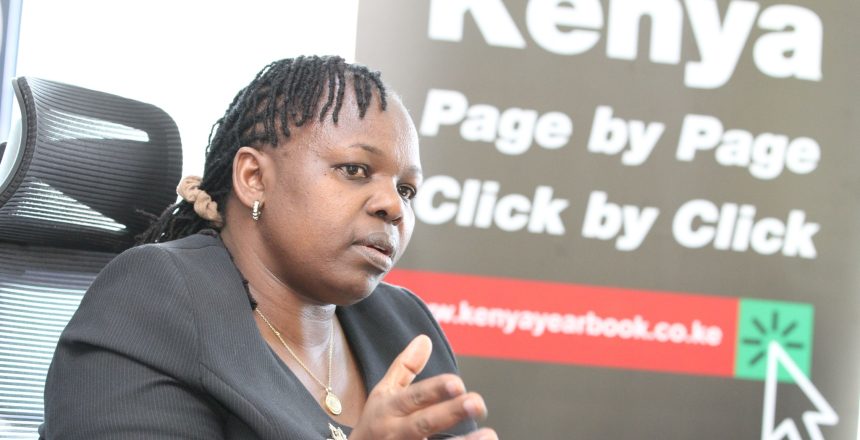
Lilian Kimeto is the CEO of the Kenya Yearbook Editorial Board