
A major achievement has been reached in the growth of African AI and data science talent, and Kenya is at the forefront – with the release of the Zindi Employability Report for Kenya 2025.
Developed with Dalberg Data Insights and the International Centre for AI Research Ethics (ICAIRE), this pioneering report is the first of its kind to measure how an online skills platform can change employment opportunities for Kenyan youth into one of the fastest-growing sectors, artificial intelligence.

Nearly 1 in 5 Kenyan Zindi users have progressed their careers within just three years of joining, the report shows. This milestone is a testament to the platform’s profound contribution to connecting learning with employment, making Kenya a global leader in Africa’s Age of Intelligence economy.
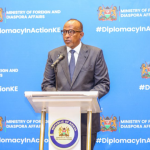
Reflecting on this major milestone, Kenya’s Special Envoy on Technology, Ambassador Philip Thigo noted that “Africa is stepping into the Age of Intelligence with its most valuable asset: its people. By 2030, half of all new entrants into the global labor force will come from sub-Saharan Africa. This is not just a demographic fact – it is a historic opportunity.”
“At the heart of the AI stack – talent, data, compute, and use cases – talent remains the decisive foundation Talent is still the critical base of the AI stack (without talent, data remains raw, compute sits idle and use cases are irrelevant,” he added

The report’s key takeaways highlight that real career advancement on Zindi is not solely determined by competing, but also by contributing actively in various ways. For those that do not complete all of their information, there is only a 3% chance of career advancement while the other loses an opportunity. Competing in four or more challenges increases one’s odds of getting a job by over 400%, and collaborative activities such as joining teams, and engaging in community discussions triple employment opportunities.
Moreover, the report dispels the myth that only leaderboard winners have success recipes. Instead, it shows a deep pool of talent surfacing ambitious data challenges and test projects that overcome not only game design but coding across languages, engineering solution development and staged deployment – with Zindi as the great leveling force in Kenya’s AI scene.
According to Thigo, “Africa’s talent will not sit back and wait to be included – it will contribute to the global AI economy from day one”. This is a clear message for Kenyan employers; outside of the normal academic qualifications and leaderboard champions rich in job-ready AI skilled professionals remain underutilized. By adopting these community-driven platforms, companies are able to tap into a resilient and innovative workforce that is well-prepared to address the reality of data.
The report’s findings also provide lessons for policy makers and educational institutions. Community-driven, hands-on skill-learning models such as Zindi’s are scalable solutions for youth unemployment and capacity building. This is also not just training individuals, it’s about creating innovation which further enables Kenya to be the central hub for AI talent on the continent.
Finally, this is much more than a data report, it’s an urgent call to action. As Ambassador Thigo writes, “Given the space and opportunities, our youth can drive solutions that count for the continent and beyond.”