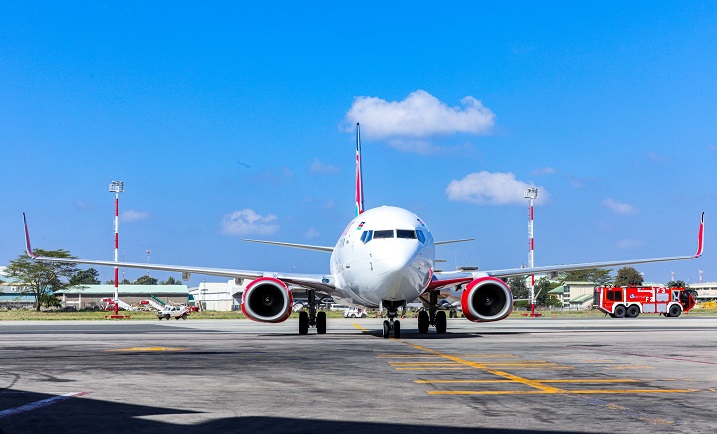
Kenya has commenced plans that will see the country’s largest aerodrome, Jomo Kenyatta International Airport (JKIA) transformed into a fully integrated aviation-led economic hub.
Through the State Department of Aviation and Aerospace Department, the government has invited bids for the Proposed Design, Development and Modernization of Jomo Kenyatta International Airport (JKIA) which targets to position the facility as regional aviation hub.

According to the tender document, interested bidders are required to have a minimum access to at least Ksh 100 billion in cashflow within the last six months through available, liquid assets, unencumbered real assets, lines of credit, and other financial means.
Roads and Transport Cabinet Secretary Davis Chirchir said the new development is expected to address significant congestion the facility faces during peak operating hours especially the runway system, passenger terminal facilities, and apron areas which continue to affect JKIA’s operational efficiency amid growing cargo and passenger traffic.
“Kenya Airports Authority (KAA) intends to develop an Airport City and a Special Economic Zone (SEZ) to position Jomo Kenyatta International Airport as a fully integrated aviation-led economic hub of national and regional significance. The Airport City and SEZ will maximize the economic value of the airport beyond aeronautical operations by attracting logistics, trade, manufacturing, business, and service-oriented activities that benefit from direct proximity to air transport,” said Chirchir.
An Integrated Master Plan and Feasibility Study for JKIA by KAA shows that the facility currently handles an estimated 8.93 million passengers annually which exceeds its intended capacity of 7.5 million.
JKIA also operates one runway which lacks capacity to handle future traffic at the facility.
“The forecast period spans from 2025 to 2045 and projects an increase from 8.93 million passengers in 2025 to approximately 22.31 million by 2045, reflecting an overall growth rate of 4.6pc. Air cargo at JKIA is expected to grow from 407,214 tons in 2025 to 860,400 tons in 2045, more than doubling the volume over the forecast period” added Chirchir.
The development include upgrading of the existing runway, expansion of existing passenger terminal facilities, digitization and modernization of passenger processing systems and optimization of existing vehicle parking facilities to improve capacity.
KAA also targets to among others, develop a new passenger terminal to accommodate additional 10 million passengers annually and upgrade and develop new taxiways.
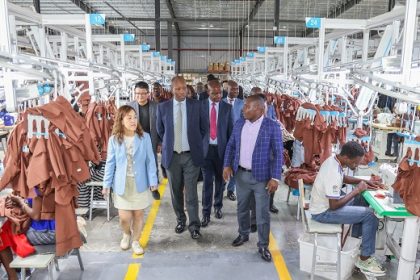
As a Special Economic Zone, JKIA is also projected to support high-value, time-sensitive and export-oriented industries including air cargo logistics, agro-processing, pharmaceuticals, light manufacturing, e-commerce fulfillment, and regional distribution.
Interested bidders are also required to submit a tender security of amounting to Ksh 2.5 billion.