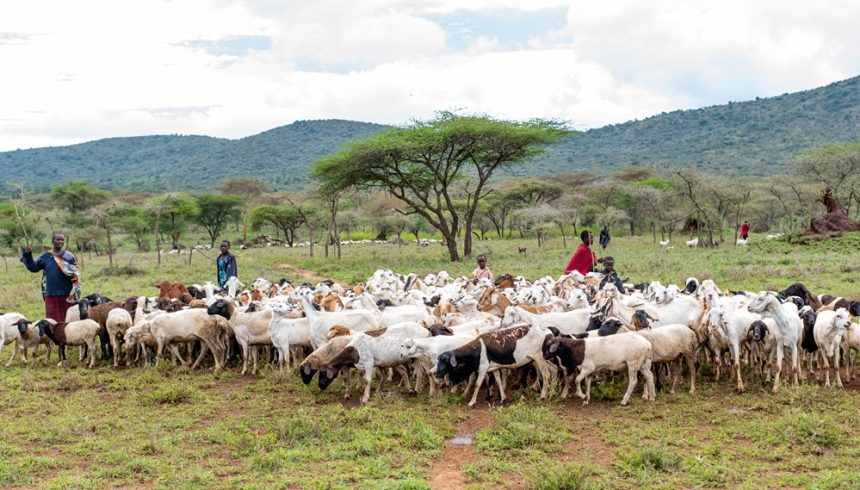
Drought is the leading contributor to livestock deaths in Arid and Semi-Arid Lands (ASALs) in Kenya. According to a recent National Drought Management Authority report (NDMA), drought conditions continued to worsen across most ASAL counties, driven by persistent hot and dry weather throughout January 2026.
Mandera, Wajir, Kwale, and Kilifi were classified in the Alarm phase, while thirteen counties—including Turkana, Marsabit, Samburu, Isiolo, Baringo, Laikipia, Tharaka, Kajiado, Taita Taveta, Kitui, Tana River, Garissa, and Lamu were categorised in the Alert phase; Embu, Narok, and West Pokot were in Pre-Alert, and only Nyeri, Meru, and Makueni remained in the Normal phase. These NDMA classifications were based on environmental, production, access, and utilization indicators falling outside normal thresholds.

Kenya has continued to experience a severe recurring drought crisis between 2021 and 2025 with the ‘greatest drought’ in 40 years marked in 2021-2023 which caused livestock death (approximately 13.2 million). After a brief respite in 2023, drought conditions returned in 2024 and intensified sharply in late 2025 and early 2026 due to the failure of the October-December (OND) rains leaving millions at risk of food insecurity, water shortages and livestock losses especially across ASALs counties.
In Kajiado, the drought has decimated pastures, forcing pastoralist communities into a desperate exodus in search of grazing land and water for their animals. According to NDMA, the county lost 38.8% of its livestock population, 252,592 out of 652,856 between September and November 2022. This is not an isolated event but part of a worsening cycle of climate change induced extreme weather conditions and resultant disasters affecting pastoralist livelihoods across Kenya’s ASALs. For pastoralist communities, livestock represents their entire wealth, social status and cultural identity.
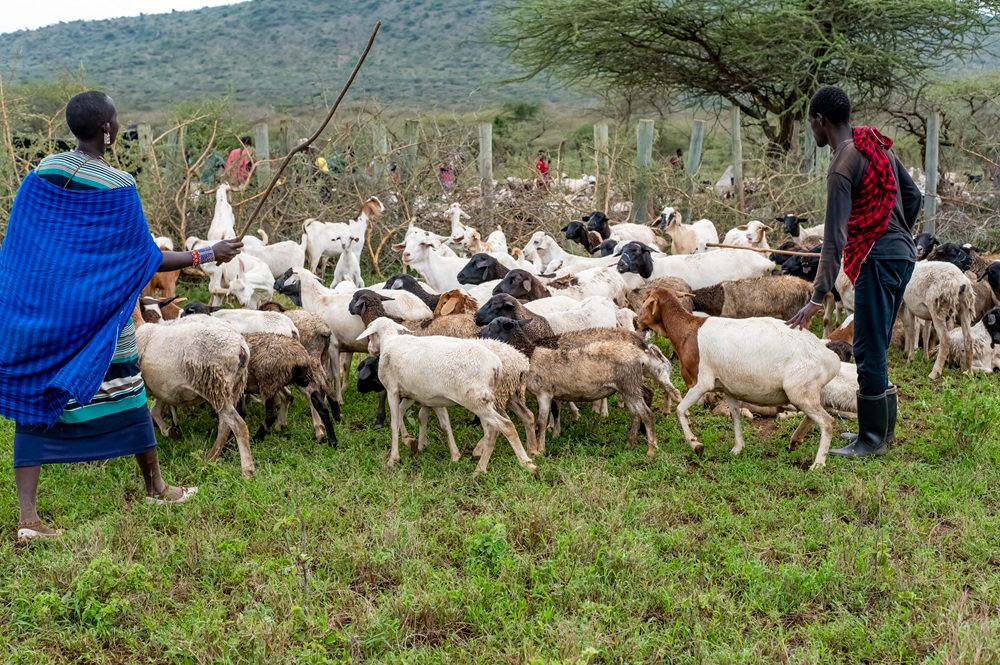
According to the Kenya National Livestock Research Agenda (2025-2035), presently, the major constraints besetting Kenya’s livestock industry include diseases, malnutrition, mismanagement, and low inherent productivity. The present production level is estimated to be one third of that which should be obtained from existing stock. Basically, the country is losing 70% of the realized potential of the livestock sector.
Other constraints include increasing human population leading to pressure on agricultural land and negative ecological outcomes; unsustainable land and environment management practices; dependency on unreliable rain-fed agriculture; inaccessible and high input costs; climate change resulting in severe, erratic weather patterns, and emerging pests and diseases. Moreover, decreasing access to production resources such as, credit and technology amidst increasing poverty levels and distorted market value chains is also negatively impacting on livestock production.
The report also notes that to increase livestock productivity, research must include improvements in breeding and husbandry. Further, the adoption of emerging livestock technologies and innovations coupled with streamlining of livestock value chains can lead to increased productivity and quality along livestock value chains.
As one of the solutions to address pastoralist resilience and livestock system strengthening in Kenya, the Kenya Pastoral Market Development (KPMD) Program, implemented through the Strathmore Agri-Food Innovation Centre (SAFIC) at Strathmore University, aims to strengthen livestock value chains and improve livelihoods for pastoralist communities by connecting producers to more efficient and inclusive market systems.
Within this program, LiveMo Investments Ltd, a livestock and meat enterprise serves as a private-sector partner (off taker) working directly in the livestock value chain—sourcing, processing, and supplying livestock and meat products while linking pastoralist farmers to reliable markets.
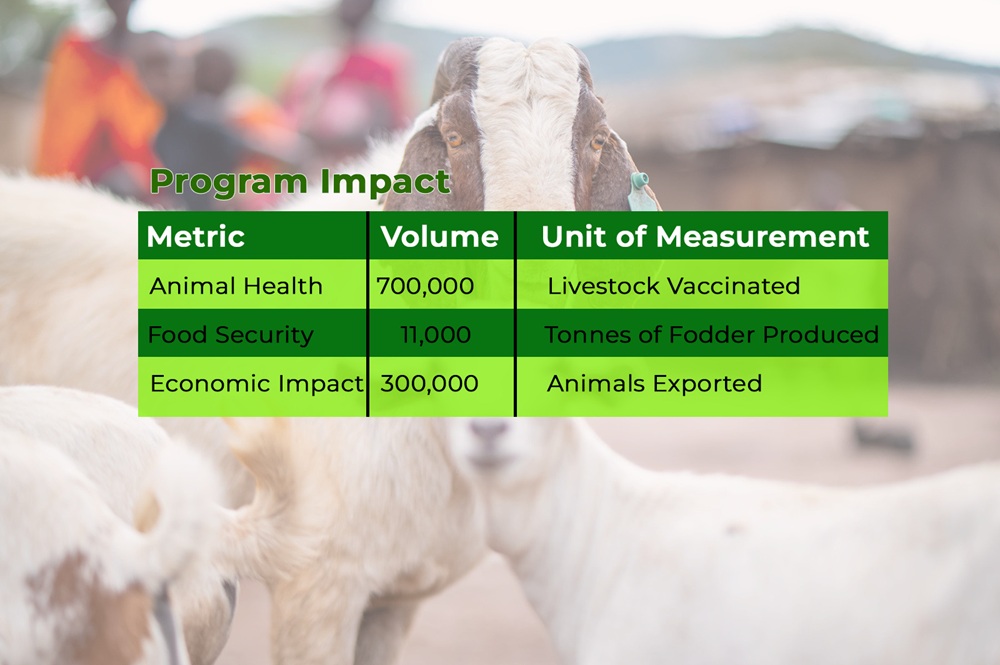
In this way, the KPMD program provides the broader framework for market development, interventions, and innovation, while Livemo plays a practical role in implementing market-based solutions that help pastoralists access buyers, improve productivity, and increase the value of their livestock.
‘The KPMD program was designed to address long-standing challenges faced by pastoral communities using data-driven and market-focused strategies and aims to enhance livelihoods, bolster economic sustainability, and strengthen resilience among pastoral communities. Here in Kenya, the program enables effective access to quality input and offtake markets. Under KPMD we have 8.8 million pastoralists,’ explains Prof. Ruth Kiraka, Associate Professor, Strategy and Entrepreneurship, Strathmore University.
The programme has introduced fodder aggregation and storage models that are acting as a buffer as drought persists. Instead of watching animals die during a dry spell, pastoralists are now treating grass as a harvestable crop. LiveMo manages 868 acres of which 518 acres are currently planted with fodder, with 76 acres in Kajiado and 100 in Laikipia. The smale scales farmers affiliated to them have 643 acres of fodder.
Under their program, 13,000 households have been registered; with 54% of the members being women.
Below, Livemo Fodder Production Lead Gilbert Wang’ombe tells us more:-
In Livemo, pasture/fodder development, training focuses on sustainable pasture management, high quality fodder production, and efficient feeding strategies to improve livestock nutrition and productivity
Below, LiveMo Project Management Lead Lisa Beryl shares more insights:-
Kenya’s domestic meat consumption is significantly higher than its exports, with annual demand estimated at over 304,150 tons while the Gulf region is a key export market notably, the United Arab Emirates, Saudi Arabia, Bahrain, South Sudan, Oman, Qatar and Kuwait. In the first half of 2025, Kenya’s goat meat exports to the UAE reached KShs5.47 billion, representing a 5.8% rise from KShs5.17 billion in the same period in 2024. The National Population and Housing Census of 2019 showed that Kenya’s animal resource base comprised 2.2 million dairy cattle, 559,000 dairy beef, 13 million indigenous cattle, 19.3 million sheep, and 28 million goats.
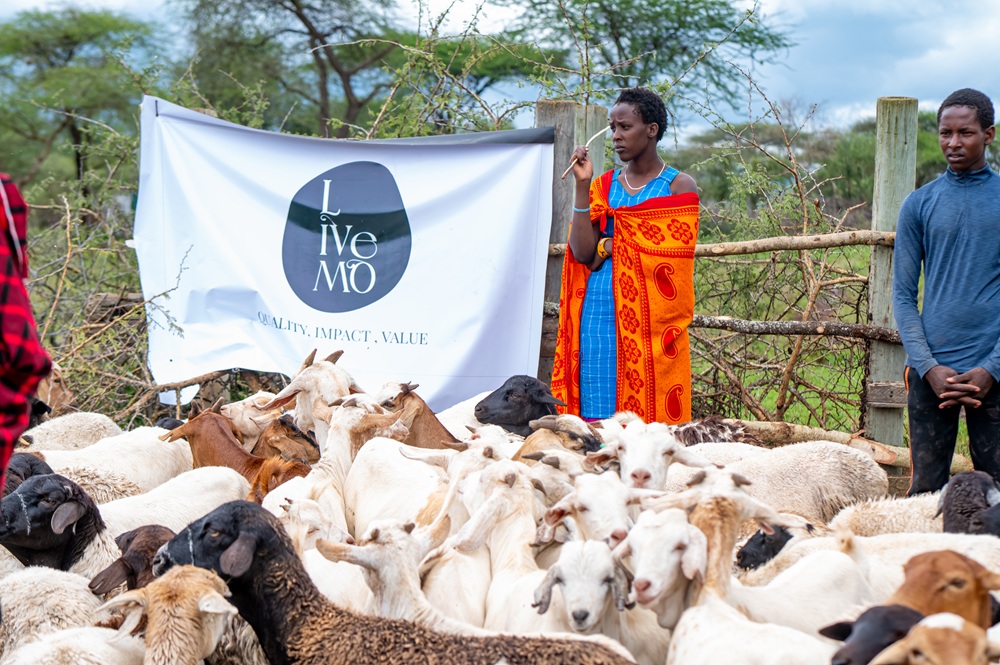
The Kajiado county government has been making strides in the control and treatment of Contagious Caprine Pleuropneumonia (CCPP), a highly contagious, often fatal bacterial disease affecting goats and Foot and Mouth disease, a highly contagious viral infectious disease of cattle, sheep, goats and pigs. For animal health experts in LiveMo, it’s a race against time to prevent cross-border diseases with vaccinations taking place after every six months.
Below is a video showing a vaccination exercise taking place.
Farmers also receive guidance on best animal husbandry practices, genetic selection and breeding techniques to ensure healthier and more productive animals. Goat farmers are provided with Boer bucks to improve their stock by obtaining hybrid goats that are fast maturing, provides quality meat and are diseases resistant in addition to being tolerant to heat stress.
With 54% of people registered being women, LiveMo is committed to promoting gender equality in agriculture by proving women farmers with skills, resources, and opportunities needed to actively participate in and benefit from livestock farming. Women are now moving from the periphery to the center of the livestock value chain. It’s not just about making cheese anymore; it’s about controlling the pricing.
“They say when you empower a woman, you empower a community or a society, but what does this actually mean in practice? Through our KPMD program, we are working directly with directly with pastoralists’ in ASALs counties in Kenya and we are looking to work with women especially because women take care of the small ruminants that’s the sheep and the goats. By working with the women who are able to buy these animals at a young age, they take care of them and sell them at a good price and they are able to increase their incomes,” said Prof. Ruth Kiraka
“Through this program we’ve been able to increase the incomes of these women by over 40%, so they are better off economically than they were before the program. Most of these pastoral households are also polygamous, so it’s the responsibility of the women to take care of her own children, educate them, clothe them and make sure they have good healthcare and basically well taken care of, When a woman is empowered and able to do all of these things, her family is uplifted.” She added.
Selina Ruth, one of the breeding beneficiaries shares her story:-
“By equipping farmers with the necessary tools and knowledge, LiveMo empowers them to optimize their farming operations, increase their profitability, and contribute to a more sustainable and prosperous agricultural industry.” Muthoni Kioria, Managing Director of Livemo Investments.
Operating in a traditionally male-dominated sector, Muthoni has built LiveMo into a women-led agribusiness driving real innovation in pastoral livestock markets — advancing climate-smart practices and positioning Kenya more competitively in regional and global meat trade.
The Kenya Pastoral Market Development (KPMD) program is demonstrating a transformative approach to addressing the cyclical drought crises that have devastated Kenya’s ASAL counties. By connecting pastoralists to reliable markets, introducing fodder aggregation and storage models, and providing critical animal health interventions, the program is building resilience against the climate-induced. The programme has also contributed to a notable reduction in Gender-Based Violence incidents, as economic independence shifts power dynamics within households and reduces women’s vulnerability.
Furthermore, by promoting sedentary livelihoods through fodder cultivation and market integration, the initiative is gradually reducing harmful nomadism. This shift carries profound social benefits—men no longer need to stay away from their families for extended periods in search of pasture—and environmental advantages, as controlled grazing patterns replace the overgrazing that degrades fragile ASAL ecosystems.
Below, Prof. Ruth Kiraka, Associate Professor, Strategy and Entrepreneurship, Strathmore University shares more on the KPMD program.