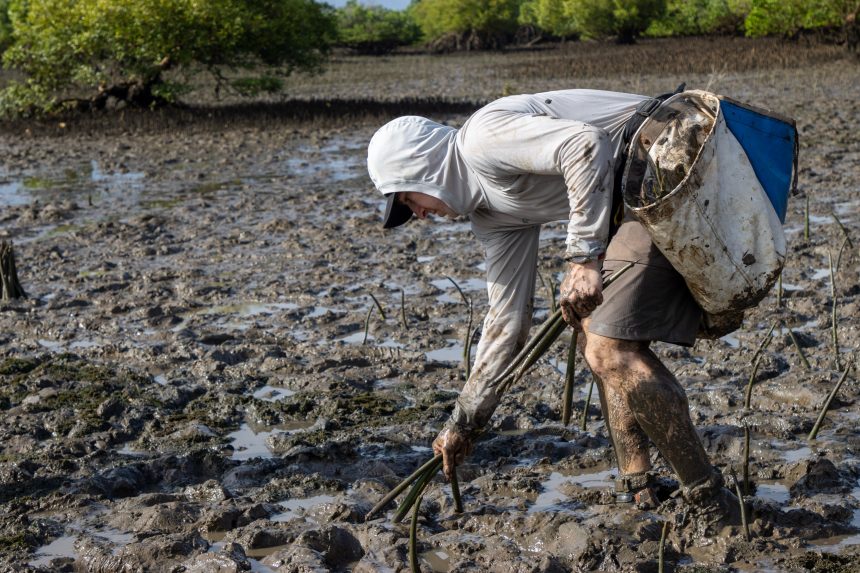
Canadian environmental advocate and record holder for the most trees planted by an individual in a single day, Antoine Moses, is in Kenya for a 24-hour mangrove planting attempt targeting a new world record of 40,000 mangrove propagules at Mirarani Site in Tudor Creek, Mombasa County.
The challenge, running from 30 April 2026 (06:30 AM) to 1 May 2026 (06:30 AM), brings together government institutions, conservation organisations, and global partners in one of East Africa’s most ambitious coastal restoration efforts.

Welcoming Moses, Victor Mwanga, Founder and CEO of EarthLungs Reforestation Foundation, said the initiative blends environmental ambition with human impact.
He stated: “I am proud to officially welcome Antoine Moses to Kenya for his first-ever visit, as he undertakes a historic attempt to set a new world record by planting 40,000 mangrove trees within 24 hours.”
Mwanga said EarthLungs is providing technical leadership to ensure ecological success beyond symbolism.
He said: “As the host organisation, EarthLungs is honoured to provide technical support grounded in our practical experience in mangrove ecosystem restoration.”
He added that the focus is long-term ecological integrity, not short-term visibility.
To ensure high survival rates, EarthLungs has deployed structured restoration systems including site preparation, spacing protocols, and post-planting monitoring.
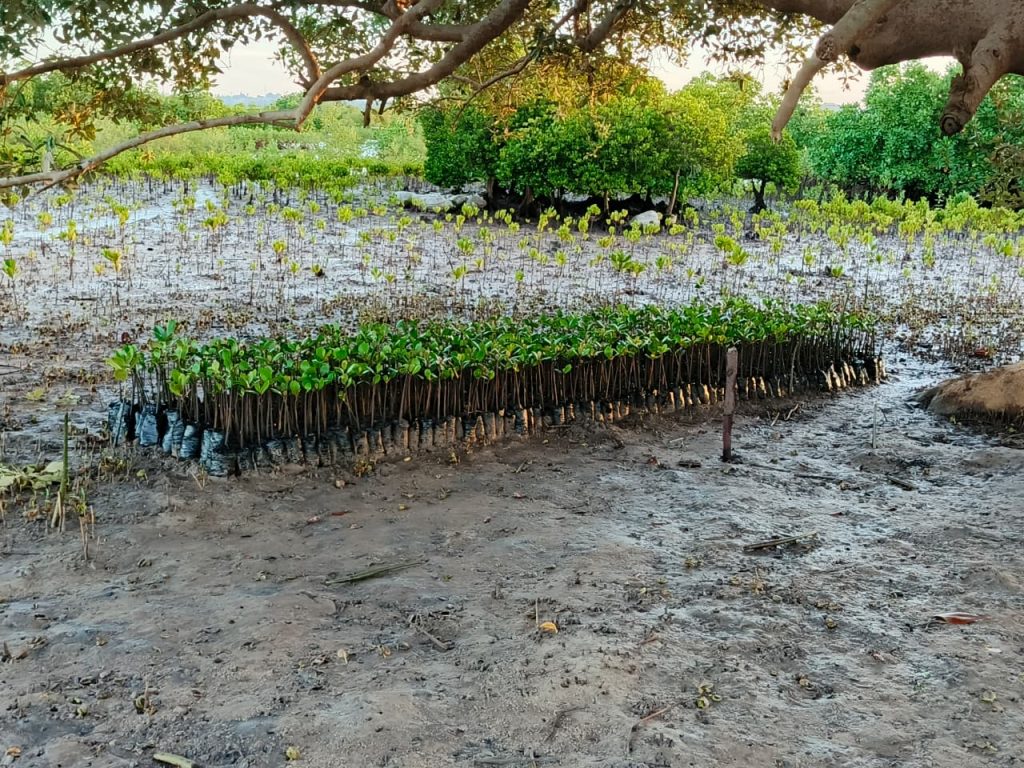
Mwanga noted: “We are fully committed to ensuring that this initiative achieves a survival rate of more than 85%, supported through proven restoration methodologies, transparent monitoring systems, proper site preparation, correct spacing, and sustained post-planting care.”
The initiative is also anchored in Kenya’s broader ecosystem restoration agenda, linking global climate action with community participation.
He further said conservation must deliver social value alongside environmental outcomes: “Through this model, we continue to demonstrate that ecosystem restoration is not only an environmental responsibility but also a pathway to dignified livelihoods through our principle of Decent Wages for Decent Lives, where communities are empowered as custodians of nature.”
The record attempt is being implemented with the Kenya Forest Service, the Ministry of Environment, Climate Change & Forestry, and Canadian partner Veritree, positioning Kenya as a hub for nature-based climate solutions.
The targeted mangrove species, Rhizophora mucronata, Ceriops tagal, Avicennia marina, and Bruguiera gymnorhiza, are critical for stabilising coastlines, supporting fisheries, and storing carbon.
Kenya’s mangrove ecosystems span over 64,000 hectares, but face growing pressure from pollution, overharvesting, and climate change, making restoration increasingly urgent.
The initiative supports the Government’s 15 Billion Trees Programme, aimed at expanding forest cover, creating green jobs, and strengthening climate resilience.
Mwanga concluded: “Kenya is showing the world that restoration can be both scientific and deeply human.”