Deputy President Kithure Kindiki has revealed that President William Ruto has directed him and a team of Cabinet Secretaries to convene urgent talks with transport operators, manufacturers and other stakeholders as the government moves to address rising fuel prices linked to global oil market disruptions caused by the ongoing Iran conflict.
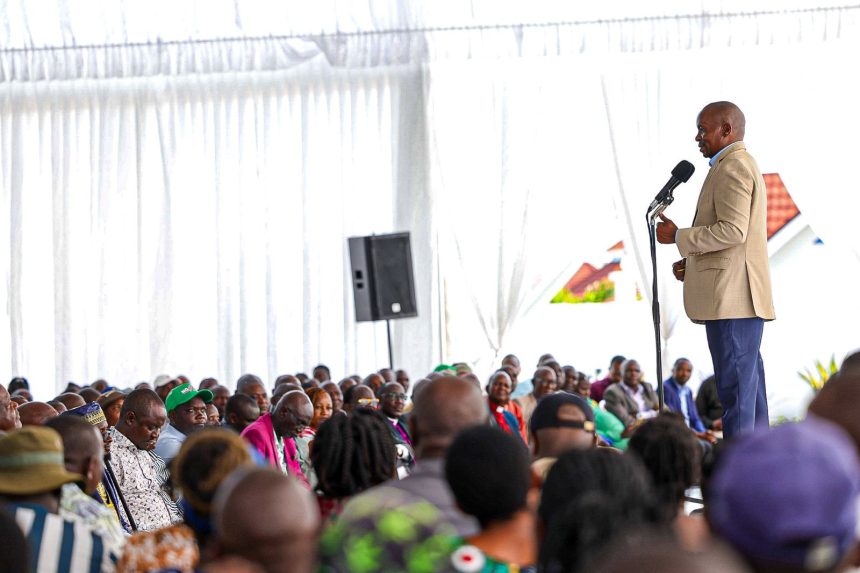
Speaking on Monday during a consultative meeting with grassroots leaders from Tharaka Constituency at his Irunduni residence in Tharaka-Nithi County, Kindiki said the President, who is currently in Azerbaijan, had instructed him alongside Cabinet Secretaries John Mbadi, Davis Chirchir, Opiyo Wandayi and Kipchumba Murkomen to immediately engage stakeholders in the petroleum and transport sectors in search of practical solutions to stabilise fuel prices.

The Deputy President said the government was aware of the burden high fuel costs were placing on households, businesses and the transport sector, but insisted that the current situation was part of a wider global crisis affecting economies across the world.
Kindiki noted that before the recent geopolitical tensions, government interventions under President Ruto’s administration had lowered fuel prices from about Sh218 per litre to nearly Sh171 per litre.
“Through deliberate and innovative strategies, the Government, under the leadership of President William Ruto, had managed to lower fuel prices significantly before the conflict escalated,” Kindiki said.
He defended the government’s fuel stabilisation measures, saying reductions in VAT on petroleum products from 16 per cent to 8 per cent, together with increased allocations to the fuel stabilisation fund, had cushioned Kenyans from a more severe economic shock.
According to him, fuel prices could have surged to between Sh300 and Sh400 per litre without those interventions.
“Government measures had prevented fuel prices from soaring to unprecedented levels,” he said.
Kindiki also challenged critics to acknowledge that rising fuel costs were being experienced globally due to disruptions in international oil supply chains.
“This is not a Kenyan problem alone. Countries across the world are facing similar pressure because of global geopolitical tensions,” he said.
At the same time, the Deputy President warned against violent protests, looting and destruction of property, saying such actions would only worsen the country’s economic situation.
“Economic sabotage, looting and violent protests cannot resolve the fuel challenge,” he warned.
He further revealed that the National Infrastructure Fund, which currently holds Sh350 billion, will finance water, energy and infrastructure projects in arid and semi-arid areas beginning next year.