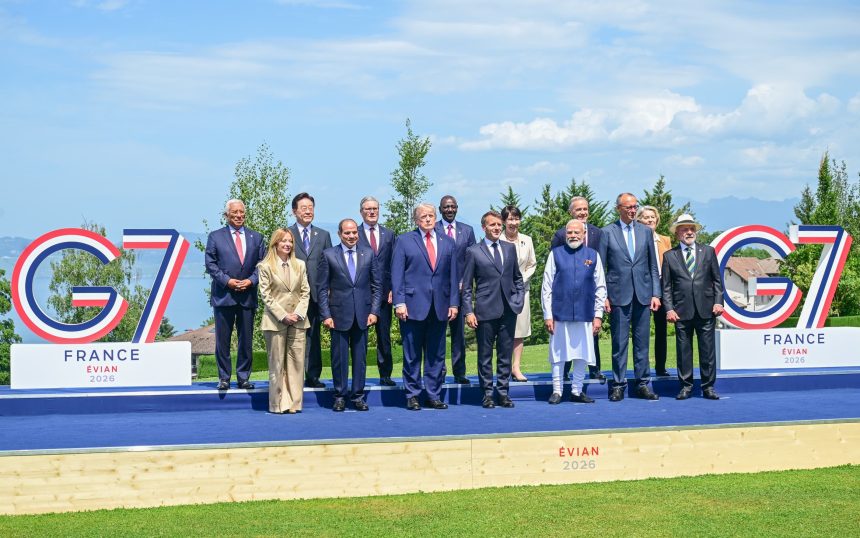
G7 leaders have committed to a coordinated global health response to contain the Ebola outbreak in the Democratic Republic of Congo (DRC) and Uganda while accelerating efforts to tackle the growing burden of cancer worldwide.
The commitments were made during the G7 Summit in Evian, France, bringing together leaders from the Group of Seven countries Canada, France, Germany, Italy, Japan, the United Kingdom and the United States alongside partner countries including Kenya, Brazil, Egypt, India and the Republic of Korea.

In a joint declaration, the leaders said the re-emerging Ebola outbreak in the Democratic Republic of the Congo and Uganda presents a major health security risk, calling for urgent cooperation to prevent further transmission.
They expressed concern over the loss of lives and the impact of the outbreak on affected communities, noting that response efforts have been complicated by the outbreak’s location in an isolated, conflict-affected area in eastern DRC.
The leaders said containing the virus will require effective contact tracing, infection prevention and control, laboratory testing, quarantine and isolation measures, border surveillance and community engagement.
They committed to mobilising support for the development and delivery of vaccines, diagnostics and treatments to fight the outbreak.
“We are resolved to providing and mobilizing support for a coordinated global response to facilitate the development and effective delivery of dedicated vaccines, diagnostics and treatments to fight this outbreak over the next months,” the declaration reads.
“The G7 affirms its support for the humanitarian reset led by the UN Office for the Coordination of Humanitarian Affairs and its plan to reach 87 million people with lifesaving aid in 2026. G7 members have provided over two thirds of the funding raised so far this year, and we call on other countries to join our efforts.”
The summit also called for improved coordination among response actors to avoid duplication and ensure a faster response, while urging all parties in eastern DRC to honour peace commitments to help address challenges created by ongoing conflict.
“We call for all parties to honour their commitments and fully implement the Washington Accords for Peace and Prosperity and the Doha Framework.”
Additionally, the leaders committed to intensifying the global fight against cancer, warning that the disease remains a growing health challenge.
They noted that cancer kills nearly 10 million people globally each year and warned that new cases are projected to rise by 80 per cent by 2050 due to population ageing and environmental and behavioural risk factors.
“We reaffirm our commitment to accelerate the fight against cancer,” the leaders said, adding that progress must be accelerated through stronger research cooperation and faster translation of scientific advances into patient care.
The G7 committed to strengthening international collaboration on cancer research, including improved access to data on paediatric, adolescent and young adult cancers, while promoting responsible use of artificial intelligence and digital technologies in diagnosis and treatment.
The leaders also pledged to intensify efforts against cancers with poor prognosis by supporting research, expanding screening programmes and improving early diagnosis to increase survival rates.
They further committed to supporting stronger health systems capable of delivering quality cancer care for all, including through the development of comprehensive cancer centres and wider access to evidence-based treatment.