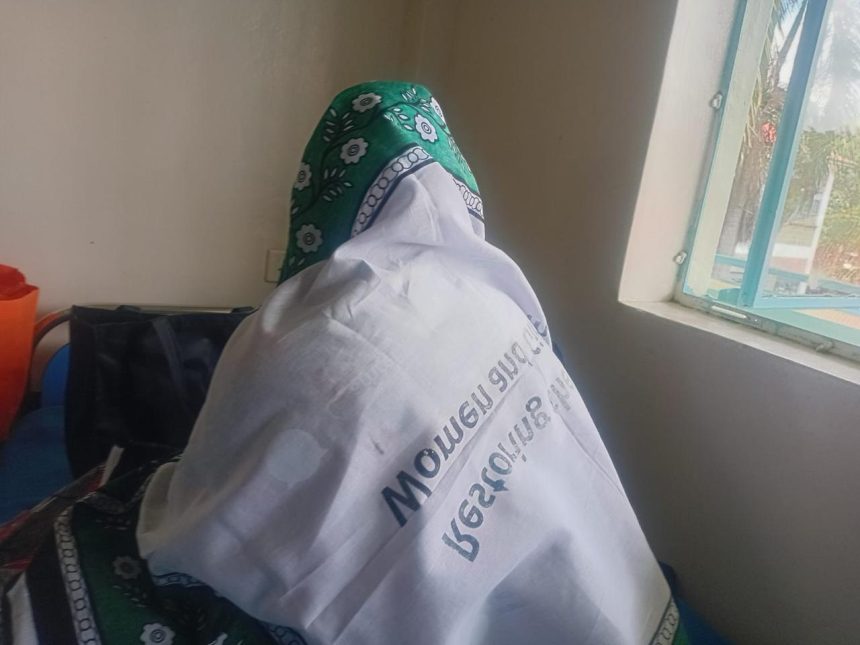
For 46 years, Alice Atieno lived with a condition she did not understand and could not control.
A childbirth injury that occurred in 1980 left her leaking urine and stool, forcing her into decades of shame, isolation and rejection. She stopped moving freely in public, withdrew from society and watched relationships around her slowly change.

The turning point came when she heard of a free fistula screening camp at Jaramogi Oginga Odinga Teaching and Referral Hospital (JOOTRH) in Kisumu.
“I felt something pushing me from within telling me to go,” Alice recalls.
That decision would end nearly five decades of suffering.
Alice was 20 years old when she went into labour at her rural home in Lela, present-day Maseno. Her labour began unexpectedly while she was on her way to the market, but after three days of prolonged labour, her family sought help from a traditional birth attendant known locally as Mama Onyango.
The baby was eventually delivered safely, and Alice named her son Jabez Onyango after the biblical figure Jabez, whose story is associated with pain and hardship.
But while her family celebrated the arrival of the newborn, Alice’s health was deteriorating.
She struggled to walk after delivery. Unknown to her family, the prolonged labour had caused severe internal damage, leading to obstetric fistula, a condition caused by prolonged obstructed labour that creates an abnormal opening between the birth canal and the bladder or rectum, resulting in uncontrolled leakage of urine or stool.
“The only thing they told me was to be patient because every woman goes through the same pain,” she says.
In the days that followed, Alice realised something was wrong.
Whenever she used the toilet, she noticed faecal matter mixed with urine. She hoped the condition would heal with time, but instead the leakage continued and the smell became unbearable.
The condition gradually pushed her away from society.
She says some neighbours avoided her while others treated her differently. Within her own family, she felt misunderstood.
Her mother-in-law accused her of being unhygienic, while her marriage began to deteriorate.
Seeking comfort, Alice joined the Legio Maria Christian community, hoping prayers would heal what many people in the community believed was a curse.
“The church members accepted me when everybody else had abandoned me,” she says.
However, she was discouraged from seeking medical treatment and continued relying on prayer.
Years later, her husband relocated to Nairobi and started a new life, leaving Alice behind in the rural home.
“He would occasionally visit, but my presence irritated him. Most of the time, I felt like I had already died,” she recalls.
For decades, Alice carried the physical and emotional burden of a condition that doctors say is treatable.
Her life changed after she heard an announcement about a free fistula treatment camp.
At JOOTRH, doctors confirmed she had lived with untreated fistula for decades. Although her case was complicated, surgeons successfully repaired the damage.
“Today I can go to the toilet without fear or shame. For the first time in many years, I feel human again,” she says.
Alice’s story mirrors the experiences of many women across Kenya who continue living with obstetric fistula due to delayed access to healthcare, stigma and misinformation.
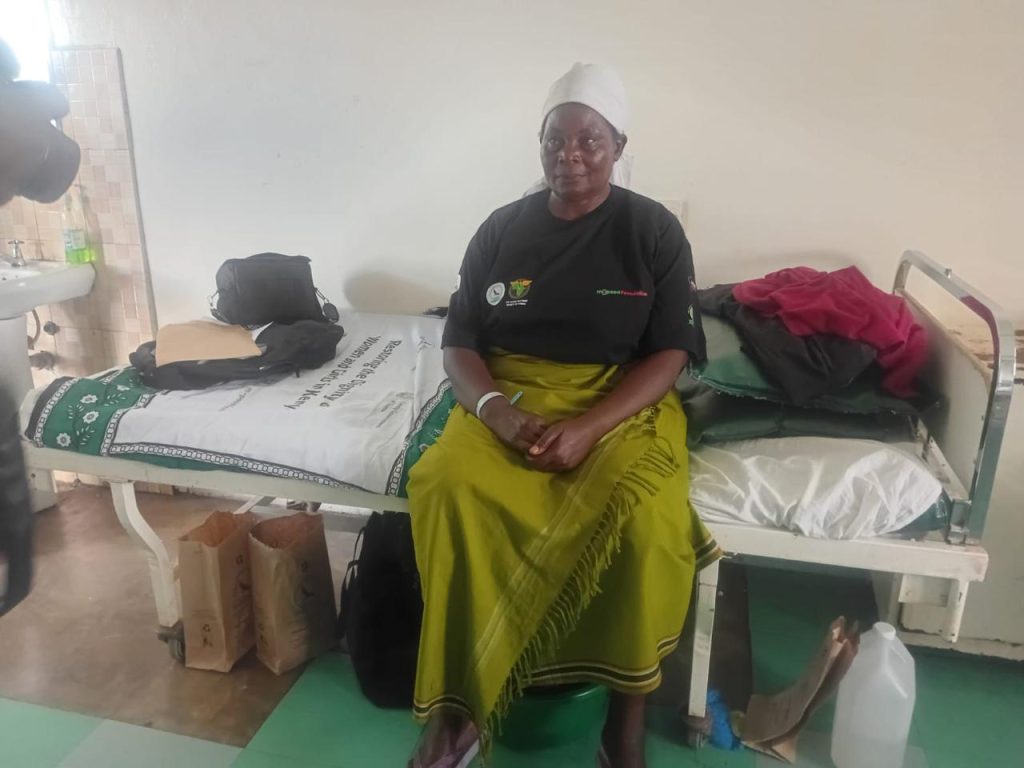
On a nearby hospital bed, a 39-year-old mother of three from Chulaimbo village in Kisumu West Sub-county was undergoing treatment after living with the condition for 17 years.
Her ordeal began in 2008 during the post-election violence, when insecurity and blocked roads made it difficult to access medical facilities.
When labour intensified, she sought help from a traditional birth attendant and delivered a baby girl weighing 4.2 kilogrammes.
During delivery, she suffered a severe injury, but the attendant applied traditional herbs and assured her that she would heal.
She did not.
For years, she experienced leakage and social isolation.
“I used to pass gas through my vagina accompanied by traces of faeces,” she says.
The condition affected her confidence and strained her marriage.
“My husband kept telling me that I was no longer like other women. Those words wounded me deeply because he openly cheated on me, yet he was the reason I developed the condition,” she says.
She remained silent until a Community Health Volunteer visited her home and told her that treatment was possible.
Unable to afford surgery, she had accepted the possibility of living with the condition permanently until she learnt about a free fistula medical camp.
Registered as patient number 247, she underwent a successful two-hour surgery.
“Now I feel like a woman again,” she says.
For 17-year-old Mercy Onyango, fistula came with the challenges of becoming a mother while still in school.
Mercy, a Form Three student at Nyamasaria Secondary School, gave birth last year to a baby girl weighing 3.7 kilogrammes.
The child’s father, a 24-year-old college student, disappeared shortly after the birth.
But the teenage mother faced another challenge, fistula.
“Since I gave birth, I have been leaking urine,” she says.
Doctors explain that teenage mothers face a higher risk because their bodies may not be fully developed for childbirth, increasing the likelihood of complications during labour.
The condition forced Mercy to wear adult diapers and avoid returning to school because she feared ridicule from classmates.
Her dream of continuing education was interrupted until her mother took her to the fistula camp, where she underwent corrective surgery.
“I feel like I have been reborn. Now I have the strength to raise my daughter and continue with my life,” she says.
According to psychologist Linnet Anyango from Avenue Hospital in Kisumu, many fistula survivors require emotional support even after successful surgery.
She says years of stigma and rejection often leave survivors battling depression, anxiety and low self-esteem.
“Medical treatment restores the body, but survivors also need emotional healing, family support and reintegration into society,” she says.
Anyango says supportive communities, counselling and access to healthcare are critical in helping survivors rebuild their confidence and return to normal life.
Resident gynaecologist at JOOTRH Dr Paul Mitei says the hospital has performed fistula repair surgeries on more than 3,000 patients over the past five years.
He says outreach programmes and medical camps supported by partners have helped reach women who would otherwise struggle to access specialised treatment.
“Many women who could not afford or access care have been able to receive life-changing surgery,” he says.
JOOTRH Chief Executive Officer Dr Joshua Okise says the hospital continues receiving patients from several counties, including Turkana and West Pokot, seeking specialised fistula treatment.
He attributes the growing number of patients seeking care to increased awareness and partnerships supporting outreach programmes.
Through the Safaricom Foundation, Safaricom has partnered with the Flying Doctors Society of Africa to support free fistula treatment camps targeting women in high-burden counties.
Safaricom Brand and Communications Manager Zizwe Awuor Mvundla says the programme aims to ensure women affected by fistula access treatment regardless of their financial situation.
“Every woman deserves the opportunity to live a dignified life free from the burden of obstetric fistula,” she says.
Data from the Ministry of Health shows obstetric fistula remains a maternal health challenge in Kenya, with an estimated 3,000 new cases reported annually.
Western Kenya continues to record a significant burden due to prolonged labour, delays in accessing emergency obstetric care, poverty and limited awareness.
Although thousands of repair surgeries have been conducted through government and partner-supported initiatives, health experts say prevention remains key.
They say expanding access to skilled birth attendance, strengthening emergency maternal care and addressing stigma will be essential in ensuring fewer women suffer from a condition that is preventable and treatable.