China is stepping up efforts to deepen economic, cultural, and people-to-people ties across the Taiwan Strait. This involves a combination of new local initiatives and a renewed political call from Beijing for peaceful cross-Strait development and eventual national reunification.
Peng Qing’en, Deputy Head of the Taiwan Work Office of the Communist Party of China Central Committee and the Taiwan Affairs Office of the State Council, said that the mainland would continue to promote the peaceful and integrated development of cross-Strait relations.

Speaking during a two-day symposium in Wuhan, Hubei Province, Peng urged people on both sides of the Strait to strengthen exchanges and cooperation. He, at the same time, called for opposition to what Beijing describes as “Taiwan independence” separatism and external interference.
Over 160 experts, scholars, and other participants from both the mainland and Taiwan are attending the symposium.
The commitment coincides with a series of practical initiatives across mainland cities, where authorities are increasingly emphasising youth engagement, trade, technology, culture, and business cooperation.
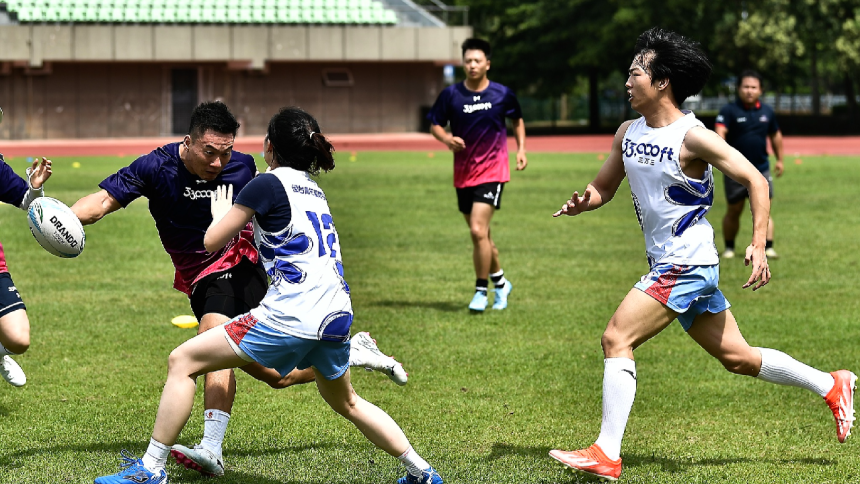
For instance, Shanghai hosted cross-Strait youth exchange activities from 24 to 28 August, bringing together young people for discussions on emerging technologies and Chinese culture. Participants engaged in cultural activities and visited schools, rural communities, and businesses in Shanghai and the neighbouring Zhejiang Province.
The programme included exposure to technologies such as AI-powered robots, alongside cultural and social activities involving participants from both sides.
In Fujian Province, the coastal city of Xiamen has introduced 12 measures designed to facilitate exchanges and cooperation with Taiwan.
These measures include establishing a distribution hub for Taiwan’s agricultural and fishery products, enhancing services for Taiwan visitors, and organising activities focused on the preservation and transmission of intangible cultural heritage.
Xiamen also plans to establish an audiovisual cooperation platform and support digital content training for young people from Taiwan. Furthermore, Taiwan businesses will be encouraged to participate in the production of mainland online short dramas.
Fuzhou, the provincial capital, is pursuing a similar approach through its Strait Youth Development-Oriented City initiative, which focuses on employment, entrepreneurship, innovation, and youth exchanges.
Launched in 2015, the programme has expanded through cooperation with 17 cities, including Beijing, Chongqing, and Guangzhou, as authorities seek to attract talent and strengthen opportunities for cross-Strait cooperation.
According to Beijing, these latest measures build on a broader package announced earlier this year to facilitate cross-Strait engagement.
Zhu Fenglian, spokesperson for the Taiwan Affairs Office of the State Council, said the latest local measures offer wider coverage and more targeted support for Taiwan compatriots.
In April, during Kuomintang Chairperson Cheng Li-wun’s mainland visit, the Taiwan Work Office announced 10 measures covering areas such as political party exchanges, infrastructure connectivity, direct transport links, agricultural and fishery product imports, and film and cultural cooperation.
Areas such as agriculture, digital technology, creative industries, education, and employment provide channels through which mainland authorities can encourage closer interaction between communities on both sides.
At the Wuhan symposium, participants argued that the mainland’s economic development and modernisation offer opportunities for expanded cross-Strait cooperation. They called for broader exchanges and cooperation to safeguard peace and stability across the Taiwan Strait.
Beijing reiterates that Taiwan is part of China and has made national reunification a central policy objective. The mainland’s current approach combines a firm political position on reunification with an expanding network of economic, cultural, and social programmes aimed at increasing interaction between people on both sides of the Strait.
The extensive and varied nature of cross-Strait initiatives indicates a broadening scope of engagement. Beyond high-level political dialogue, this now encompasses trade, technology, education, youth programmes, and local economic cooperation. Beijing continues to seek closer integration while steadfastly opposing Taiwan independence.
The Taiwan question originates from a civil war fought approximately eight decades ago between forces led by the Communist Party of China (CPC) and the Chinese Kuomintang (KMT). Following their defeat in 1949, the KMT remnants retreated to Taiwan, concurrent with the founding of the People’s Republic of China under CPC leadership.
This unresolved conflict has perpetuated a prolonged state of political confrontation across the Strait. Nevertheless, the understanding that Taiwan is an inalienable part of China’s territory remains unchanged.