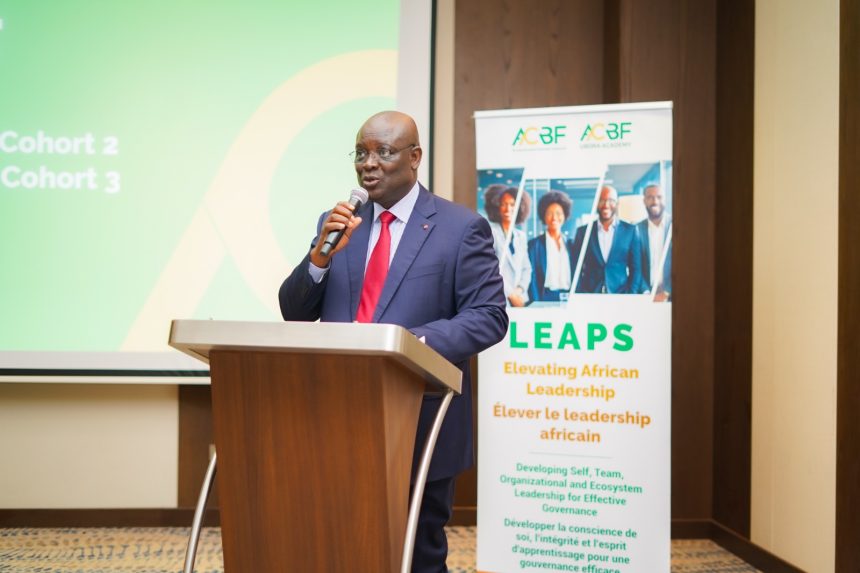
African governments have been urged to invest in leadership alongside technical expertise to ensure public sector and public financial management reforms translate into lasting institutional change.
Speaking during a webinar on Leading Public Sector Transformation in Africa: Leadership Lessons from the LEAPS Programme, African Capacity Building Foundation (ACBF) Executive Secretary Mamadou Biteye said leaders must go beyond understanding systems and develop the ability to inspire people, build trust, navigate competing interests, manage resistance and sustain momentum when reforms become difficult.

“Public sector reform is rarely held back by a lack of good ideas. More often, the real challenge is our ability to lead change by bringing people together, building trust, overcoming resistance and sustaining momentum,” Biteye said.
The virtual forum brought together public officials, public financial management practitioners, development partners and alumni of the Leadership Excellence in Africa’s Public Sector (LEAPS) Programme to share experiences on the role of leadership in driving institutional transformation.
Biteye noted that as the African Capacity Report has consistently highlighted, leadership, alongside coordination and implementation, remains one of Africa’s most critical capacity challenges.
He highlighted the positive impact of the LEAPS programme, saying it had expanded steadily since its initial pilot phase.
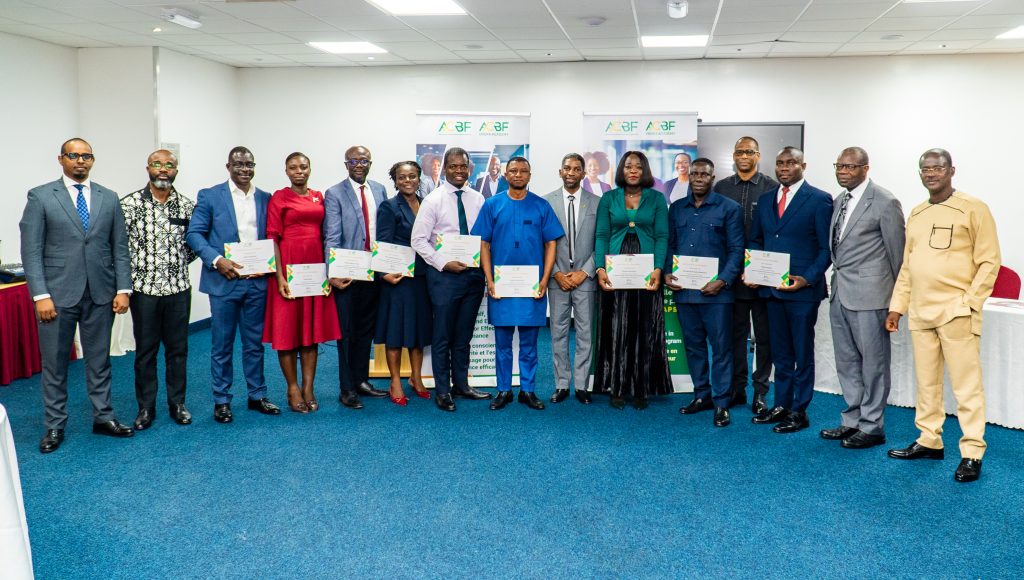
“The programme was first piloted in Côte d’Ivoire, Kenya, Senegal, Zimbabwe, The Gambia, Nigeria and Tanzania. Representatives from the African Union Commission joined the second cohort, while Ethiopia became the ninth country to join in the third cohort. Early evidence from LEAPS alumni is encouraging.”
He said participants in the first cohort had translated leadership learning into institutional improvements, including stronger decision-making, improved team cohesion, better coordination and more effective stakeholder engagement.
On his part, Adil Ababou, Senior Program Officer in Development Policy and Finance at the Gates Foundation, noted that many public sector reforms fail to achieve lasting results not because of a shortage of good ideas, but because of challenges in leading change.
“The first is that institutions and systems do not reform themselves. People lead reforms. And many of the most difficult challenges facing public finance officials are not purely technical questions. They are questions of leadership: How do you build consensus around a difficult reform? How do you manage resistance to change? How do you work across institutional boundaries? How do you maintain momentum when political or economic circumstances change?” Ababou noted.
The African Capacity Building Foundation, with the support of the Gates Foundation, established the Leadership Excellence in Africa’s Public Sector (LEAPS) programme and the Enhancing Leadership and Governance in Public Financial Management in Africa Programme.
According to Ababou, the programme was built around a simple yet powerful insight.
He noted that technical expertise is necessary, but said it is not sufficient to deliver complex institutional reforms.
“Leaders must understand systems, but they must also inspire people, build trust, navigate competing interests, manage resistance and sustain momentum when reforms become difficult,” he noted.
He cautioned that leadership cannot remain an individual capability emphasizing that successful reform requires teams, institutions and networks of officials who are able to work across the administrative silos that often characterise government.
“One of the messages I have emphasized in previous LEAPS engagements is that the program should extend well beyond the individuals directly participating in it. Successful reform requires teams, institutions and networks of officials who are able to work across the administrative silos that often characterize government,” Ababou said.
He lauded ACBF’s role in the implementation of the programme saying, “What I think ACBF has done particularly well is to avoid treating leadership as a classroom subject. LEAPS connects individual development to real institutional problems, combines learning with sustained coaching and peer exchange, and asks participants to apply what they learn within their own institutions.”