Kenya will continue to play its leadership role in regional peace and security efforts while supporting global interventions within the challenging global security landscape.
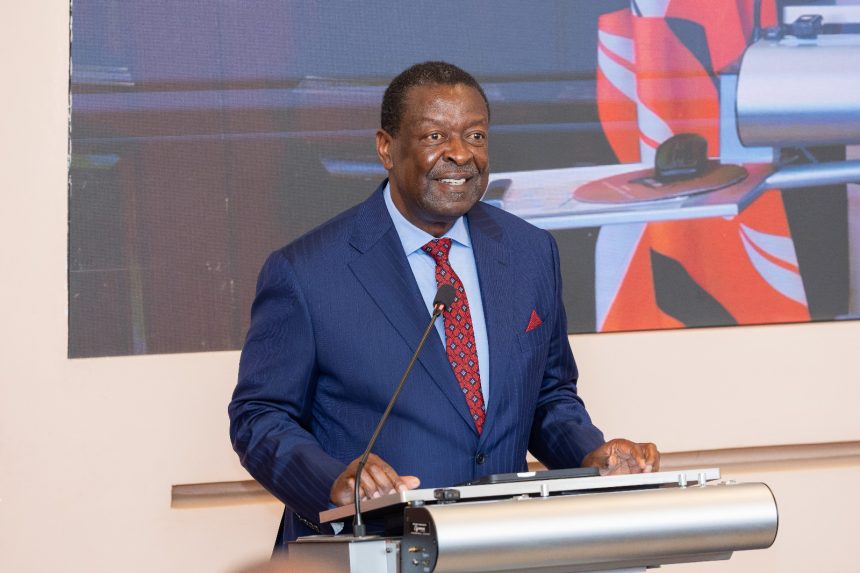
Prime Cabinet Secretary Musalia Mudavadi has said Kenya’s efforts backed with robust diplomacy and strategic partnerships remain essential not only for the nation’s stability but for the broader Horn of Africa, East Africa, and the Great Lakes regions.

He noted that while Africa continues to advance in areas such as economic growth, democratic governance and regional integration, the continent remains challenged by persistent insecurity, governance deficits, and socio-economic inequalities.
“Protracted conflicts, intensified activities of non-state armed groups and transnational organized crime continue to undermine state authority and hinder development in several regions.” he regretted.
He added that Africa’s strategic significance has become both a source of opportunity and vulnerability, requiring a deliberate and coordinated effort to strengthen governance, resilience, and regional leadership.
“Africa’s vast natural and mineral wealth, coupled with a dynamic and rapidly growing youthful population, positions the continent as the next frontier for global development and investment. Unfortunately, these attributes have drawn the attention of traditional and emerging powers alike, who seek to deepen their influence through strategic partnerships, infrastructure financing, and security cooperation.” he explained.
“The resulting competition among external actors can, and already has, exacerbated existing political and economic tensions. If not managed through transparent, inclusive, and locally driven approaches, these tensions can spark both intra and inter-state conflicts.” Mudavadi warned.
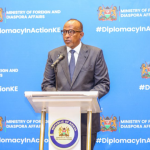
Mudavadi also the Cabinet Secretary for Foreign and Diaspora Affairs was speaking during a lecture of opportunity at the National Defence College in Karen, Nairobi.
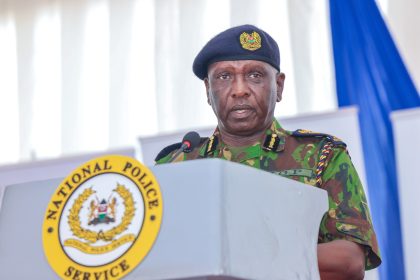
The lecture was titled “The Role of Kenya’s Foreign Policy in Regional Peace and Security and the Contemporary Strategic Environment.” This was at the invitation of the Commandant of National Defence College – Kenya (NDC-K) Lieutenant General Juma Shee Mwinyikai.
He noted that close home; Eastern Africa represents one of the most strategically sensitive and geopolitically active sub-regions on the continent as the region is punctuated by a complex mix of inter- and intra-state conflicts, cross-border tensions, and the threat of violent extremism, particularly from groups like Al-Shabaab.
Further, the ongoing conflict in Sudan, political tensions in South Sudan, security instability in Somalia, and the situation in Eastern DRC have had significant implications for regional peace and security.
“Overall, the intersection of global power competition with local and regional dynamics in Africa, and particularly in Eastern Africa, demands coherent, multi-dimensional approaches that integrate diplomacy, security, development, and governance.” noted the Prime CS
“Strengthening regional cooperation, enhancing international cooperation, and fostering inclusive political settlements are crucial for navigating the complexities of the evolving strategic landscape.” he added.
Mudavadi said Kenya under President William Ruto continues to support regional institutions such as the East African Community (EAC), the International Conference on the Great Lakes Region (ICGLR) and the Intergovernmental Authority on Development (IGAD).
“These institutions play a vital role in conflict prevention and regional integration, though their effectiveness is often constrained by limited financial capacity and political divergence among member states.” he noted.
Mudavadi further regretted that the conflicts have exposed the limitations of international diplomacy in resolving protracted crises and have weakened confidence in global governance institutions, diverted international attention and resources from other pressing priorities.
“The result is an increasingly complicated environment in which the pursuit of peace and stability requires greater diplomatic agility, strategic foresight and international cooperation.” Mudavadi told the cohort of Senior Military Officers, their equivalents from the Civil Service, the Private Sector and participants from neighbouring countries who are undertaking their studies under the Course No. 29 of 2026/2027 at the National Defence-Karen, during a lecture.
As the Cabinet Secretary for Foreign and Diaspora Affairs, he outlined to the participants, Kenya’s revised Foreign Policy 2024 anchored on Sessional Paper No. 1 of 2025, that adopted a new strategic framework to effectively respond to the contemporary global dynamics while advancing the country’s national interests.
Mudavadi outlined the eight strategic focus areas of the Kenya Foreign Policy 2024 namely; Peace and Security Diplomacy, Economic and Commercial Diplomacy, Socio-Cultural Diplomacy, Diaspora Diplomacy, Digital Diplomacy, Environmental & Climate Diplomacy, Global Health Diplomacy and Global Governance & Multilateral Diplomacy.
“These focus areas reflect Kenya’s proactive approach to navigating the evolving global landscape, aiming to safeguard its sovereignty, promote economic prosperity, and enhance its influence on the international stage.” he noted.
He explained that Kenya’s experience demonstrates that peace and security cannot be achieved through military preparedness or diplomatic engagement in isolation. They require a deliberate combination of national resilience, defence capability, sustained diplomacy, regional cooperation, effective institutions and international solidarity.
“We must therefore continue to invest in the partnerships, institutions and capabilities that enable us to anticipate threats, prevent conflict and support peaceful political settlements. We must also remain steadfast in advocating a global governance system that is fairer, more representative and better equipped to address the challenges of our time.” Noted the Prime CS
“For Kenya, foreign policy is not simply an instrument for managing relations between states. It is a means of protecting our sovereignty, creating opportunities for our people, safeguarding our development ambitions and contributing to a more peaceful and secure world.” he added.