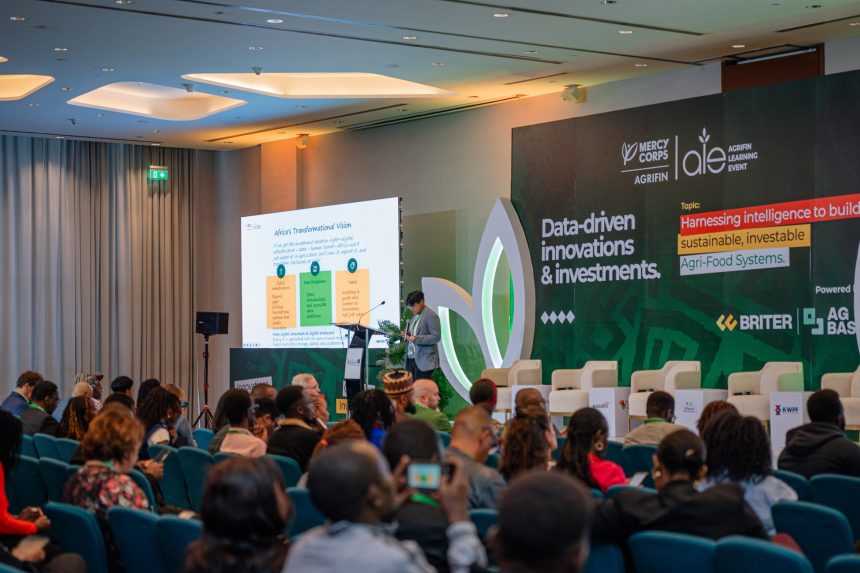
Africa’s digital agriculture sector is shifting its focus from innovation and pilot projects to sustainable business models capable of serving millions of smallholder farmers.
The transition will take centre stage at the 10th AgriFin Learning Event (ALE 10), scheduled for October 27, 2026, in Nairobi under the theme “Leveraging Evidence for Connected, Scalable and Inclusive Digital Agriculture”.

The event will bring together stakeholders across agriculture, finance, technology and development to examine what has worked, what has not, and what must change for digital agriculture to deliver lasting value.
According to a statement, the convening marks a decade of learning and a pivotal moment for the sector, as advances in artificial intelligence, data infrastructure and climate services create new opportunities while raising important questions about commercial viability, inclusion and the long-term sustainability of digital solutions.
It also marks the close of the AgriFin Digital Farmer II (ADF II) phase of Gates Foundation funding.
Agtech investment landscape
The recently launched Agtech Investment in Emerging Markets report, commissioned through Mercy Corps AgriFin’s AgBase programme and developed by Briter and ISF Advisors, provides an evidence base for examining these challenges.
The report tracks US$4.39 billion in agtech funding across 17 emerging markets between 2023 and the third quarter of 2025, covering more than 900 deals, 700 funded companies and 900 funders.
The findings point to an agtech investment landscape that has stabilised following the post 2022 correction, but with an uneven recovery across markets. Rather than a single, uniform sector, emerging markets comprise diverse investment environments, each with different capital structures, levels of commercial maturity and business model viability.
The report shifts attention from whether agtech can attract investment to a more consequential question: which markets and business models are proving viable, what types of capital do they need, and under what conditions can they grow sustainably? The analysis draws on AgBase, Briter’s sector-specific data and intelligence platform focused on agtech and foodtech ecosystems in emerging markets.
The database covers investment activity, funders, deal flows, sector dynamics and market trends across more than 70 markets, with information on over 1,500 capital providers and 3,500 ventures.
At ALE 10, these questions will be explored through sessions on translating evidence into next-generation partnership models and unlocking capital for agricultural technology businesses and agricultural small and medium-sized enterprises.
The discussions will consider how financing can be better matched to business needs and maturity, how development funding can help establish evidence and unlock markets, and how investors and partners can support solutions with credible pathways to sustainability.
Further, ALE 10 will examine how collaboration between technology providers, financial institutions, governments and development partners can strengthen these connections and create more effective service delivery models.
The programme will also explore how public and private actors can work together to sustain weather and climate services at scale. These services are particularly important in helping farmers manage production risks and make informed decisions in increasingly uncertain conditions.
Their long-term delivery, however, may require financing models that recognise both their commercial potential and their wider public benefits.
By bringing these issues together, the event will explore how digital agriculture can move beyond isolated applications towards connected ecosystems that are more accessible, inclusive and sustainable.
AI in agriculture
Data, AI and the systems needed for scale As digital agriculture evolves, the ability to use data effectively and responsibly is becoming increasingly important.
Trusted data ecosystems can support agricultural finance by improving information flows and decision-making, while sustainable digital payment systems can help strengthen financial inclusion. ALE 10 will feature masterclasses on trusted data ecosystems for agricultural finance, sustainable agri-payment ecosystems and digital safety and security.
An AI showcase will highlight emerging applications, while a farmers’ experience centre and marketplace exhibition featuring more than 15 exhibitors will offer participants an opportunity to engage with practical solutions and innovations in the sector.
These activities will connect discussions about investment and partnerships with the technologies and systems shaping agricultural service delivery.
They will also bring attention to the importance of digital safety, responsible data use and inclusive approaches that respond to the needs of farmers and the businesses serving them. The central consideration is how emerging technologies can move beyond experimentation to solve practical problems, strengthen service delivery and create value that can be sustained.
A decade of evidence and the decisions ahead Since 2012, Prosper Global AgriFin has worked with financial institutions, agtech companies, digital platforms and governments to expand access to digital financial and agricultural services for smallholder farmers across Africa and Asia.
Through its programmes and partnerships, it has reached more than 18 million smallholder farmers. Under the AgriFin Digital Farmer II programme, 7.6 million farmers were registered, exceeding the programme target of five million.
These results demonstrate the reach digital approaches can achieve while reinforcing the importance of understanding what happens beyond registration: whether farmers continue using the services, whether the services meet their needs, and whether the businesses and institutions providing them can sustain delivery.
The 10th AgriFin Learning Event will provide a platform to examine these questions and identify practical next steps.