Behind every kilometre of tarmac is a sequence of technical processes that determine the strength, durability and safety of a road.
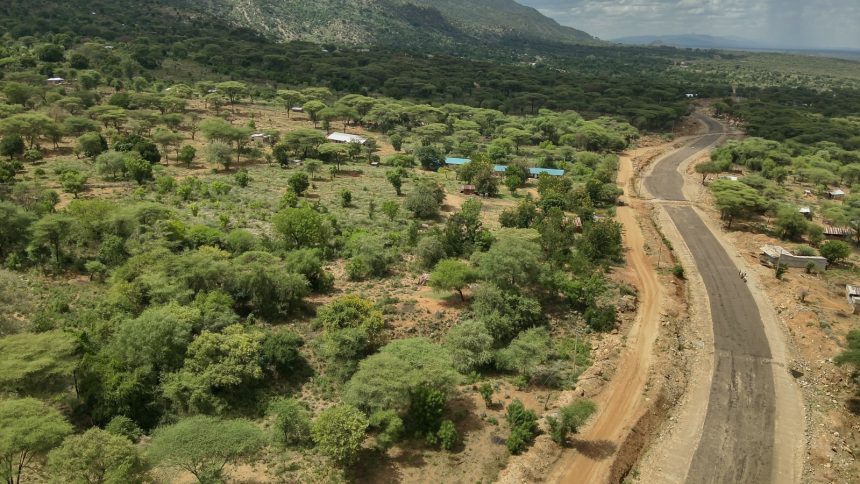
Along the Kopasi River–Lomut–Sigur–Marich Pass Road, engineers and laboratory personnel are working to ensure that the ongoing upgrade meets the required construction standards while opening up a strategic transport link across the North Rift.

The 31.4-kilometre Lot Three section runs from Kopasi River through Lomut and Sigur to Marich Pass. It is part of a wider transport corridor connecting Nakuru to communities in Baringo and West Pokot.
Engineer Julius Owino, an Engineer working with the Kenya National Highways Authority (KeNHA), oversees key technical aspects of the project, including geometric design, culvert levels and bridge works.
The section includes three major bridges: Parkino Bridge, measuring 50 metres; Chepkuikui Bridge, also 50 metres; and the 131-metre Murunji River Bridge.
The project has achieved 56.5 per cent progress, with approximately 12 kilometres already tarmacked. Earthworks are 90 per cent complete, placing much of the construction activity at an advanced stage.
Quality assurance is central to the process. Josephine Naliaka, a laboratory technician attached to the project, says her responsibility is to ensure that materials used in construction comply with KeNHA specifications.
Her work includes testing gravel and monitoring stabilisation, where cement is added to strengthen the road material.
“We make sure the cement we put is enough, the water moisture is right, and the compaction of the material meets the specification and standard of the road,” she explains.
She says the road’s classification determines the standards that materials and construction processes must meet, particularly given the expected traffic levels.
The objective, she adds, is to deliver a road that can withstand regular use and serve communities reliably over time.
Engineer Owino says the project is financed entirely by the Government of Kenya through the Development Fund, rather than donor funding. It has also created employment opportunities for local residents, while construction materials, including aggregates and rock, are sourced within the locality.
Beyond the technical works, the highway is expected to change how people and goods move across the region. Motorists travelling from Lodwar towards Nakuru and Nairobi currently often pass through Kapenguria and Eldoret. Once the improved route is complete, they will have a more direct alternative through Baringo.
Engineer Owino estimates that the route will shorten the journey by about 70 kilometres and save between two and three hours, reducing fuel costs and easing pressure on other sections of the road network.
The improved connection is also expected to support farmers and livestock keepers by making it easier to transport mangoes, goats and cattle to markets, including Nairobi.
Security is another anticipated benefit. Better access will enable security personnel to reach remote locations more easily when incidents occur.
Josephine says the construction standards matter because the completed road will serve a busy transport corridor. Her laboratory checks help ensure that the materials incorporated into the road meet the required specifications.
As construction continues, the combination of engineering supervision, material testing and local participation is shaping a road designed to do more than connect destinations.
The Kopasi River–Lomut–Sigur–Marich Pass Road is expected to improve regional mobility, support trade and strengthen access to communities that have long faced transport challenges.