Livestock stakeholders in North Eastern Kenya have welcomed two proposed new policies to address perennial problems facing the region.
Speaking in Garissa County during a stakeholder consultation workshop, organized by the State Department for Livestock Development on Livestock Policy and Veterinary Policy, farmers said the policies will provide a comprehensive framework for addressing longstanding challenges facing the sector and improve the livelihoods of millions of pastoralists.

The department is conducting a public participation to collect views, technical recommendations and proposals for incorporation into Session Paper No. 2 on the Veterinary Policy and Session Paper No. 3 on the Livestock Policy.
If adopted, the policies are expected to strengthen disease control, improve livestock productivity, enhance access to markets and build resilience against the effects of climate change.
The farmers, veterinary officers, livestock experts and other industry players particularly singled out proposals to establish strategic livestock feed reserves, rehabilitate degraded rangelands, strengthen disease surveillance and introduce livestock insurance as critical interventions that could transform livestock production in the arid and semi-arid regions.
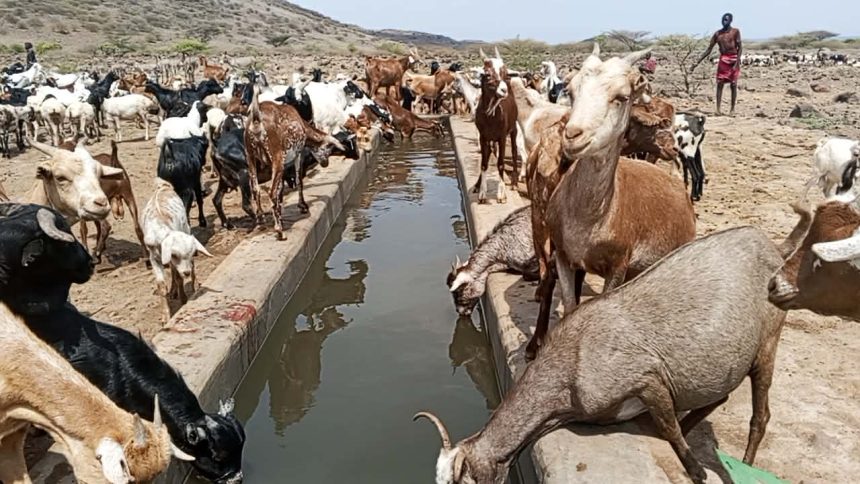
Participants said the proposed policy interventions were particularly timely for the region, which continues to grapple with recurrent drought, dwindling pasture and water resources, livestock diseases and limited access to reliable markets.
Abdi Bashir Maalim, from the Department of Livestock in the Wajir County Government, said the proposed establishment of strategic livestock feed reserves would be a major breakthrough for pastoral communities that regularly lose their animals to prolonged drought.
He noted that climate change remained one of the biggest threats to livestock production in the region, with recurrent droughts depleting natural grazing resources and exposing pastoralists to devastating livestock losses.
“One of the major issues this policy seeks to address is livestock feed shortages. The establishment of strategic livestock feed reserves will be a game changer for Northern Kenya because it will ensure that farmers and pastoralists have access to animal feeds during drought and other emergencies,” he said.
He said controlling these diseases was essential not only for improving livestock productivity but also for enabling Kenyan livestock and livestock products to meet regional and international export market requirements.
He further welcomed proposed rangeland rehabilitation programmes, including reseeding degraded grazing areas and supplying farmers with certified pasture seeds.
“The policy proposes land restoration interventions, including reseeding programmes and the provision of certified pasture seeds to support the regeneration of degraded rangelands. These interventions are particularly important for counties in Northern Kenya, where livestock production is heavily dependent on natural grazing resources,” he said.
Dr Luke Kamau, a veterinary officer with the Wajir County Government, who said the two policies would strengthen county governments’ capacity to deliver essential veterinary and livestock production services.
Kamau said the proposed frameworks would help clarify and reinforce the respective responsibilities of county veterinary and livestock production departments, particularly in disease surveillance, animal welfare, disease control and veterinary public health.
“The two policies will go a long way in strengthening the capacity of county governments to deliver these essential services. Their implementation will significantly improve how we respond to livestock diseases, report outbreaks, conduct disease surveillance and deliver animal welfare services,” he said.
Kamau added that improved veterinary services would also strengthen food safety and security by enhancing measures to prevent and control zoonotic diseases, which can be transmitted from animals to humans.
He said county veterinary officers played a critical role in inspecting and certifying animal products to ensure they met the required safety standards for human consumption.
At the national level, Thomas Ogola, from the Directorate of Livestock Policy, Research and Regulation at the State Department for Livestock Development, said the two policy documents were being developed to address structural and emerging challenges that had constrained the growth and competitiveness of the livestock industry.
Ogola said the Veterinary Policy would focus on animal health, welfare, disease prevention and surveillance, food safety and veterinary public health, while the Livestock Policy would address production, productivity, marketing, infrastructure and the overall sustainability of the sector.
He identified emerging and re-emerging livestock diseases, inadequate resources for surveillance, limited diagnostic capacity and challenges in delivering veterinary services as some of the major constraints the proposed policies seek to address.