The national examination papers have printed locally for first time in 65 years, saving the country Ksh1.5 billion, President William Ruto has said.
The announcement comes as a record 3.6 million learners the first ever largest cohort sat the Kenya Primary School Education Assessment (KPSEA), Kenya Junior School Education Assessment (KJSEA) national assessments and Kenya Certificate of Secondary Education (KCSE) examinations which conclude this week.

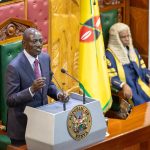
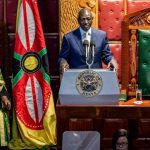
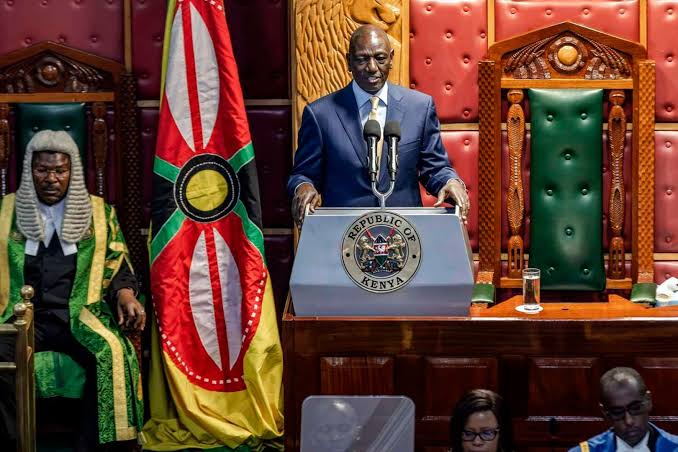
Speaking during the State of the Nation Address at Parliament, Ruto questioned why the country had previously relied on overseas printing of examination papers despite having the capacity to print its own currency locally.
“The question I asked our ministry officials is this: If we are printing currency in Kenya, why can’t we print exams?” he posed.
He said the decision to print the papers locally had saved the country close to Ksh1.5 billion that would otherwise have been spent.
The President also said the examinations had been conducted in a calm and orderly environment without the intimidating security deployments witnessed in previous years.
“The examinations have been conducted in a calm and orderly atmosphere, free from the anxiety, tension and intimidating security deployments of the past. This is how it should be. Examinations are a normal part of learning, not a security operation or a matter of life and death. They should assess our children’s progress, not instil fear about their future,” said Ruto.
Teacher Recruitment
On teacher recruitment, Ruto said the government had employed 100,000 teachers over the past four years and planned to recruit an additional 20,000 next month to address staffing shortages and strengthen learning.
He said the investment in education was aimed at easing the financial burden on parents while ensuring learners had access to adequate teachers and quality learning facilities.
The government has also built 23,000 classrooms and is constructing and equipping 1,600 laboratories to expand access to learning and reduce pressure on communities to finance essential school infrastructure.
The President further announced that the national education allocation had increased from Ksh521 billion in the 2022/2023 financial year to KSh784 billion in the current financial year.
He said the resources must reach schools promptly and be managed responsibly, warning that parents should not be required to shoulder public education obligations through unauthorised charges.
“Our objective is to make education accessible and affordable while preparing children for better income opportunities. Every child who remains in school, acquires useful skills and enters productive employment strengthens both the household and the nation. Investment in education is also an investment in addressing the cost of living,” Ruto said.
Higher education funding
The President described education as one of the most powerful instruments for equalising opportunities, saying the government was addressing inequalities in access to quality education through teacher recruitment, classroom construction and expanded student accommodation.
On higher education funding, Ruto said the government had initially reformed the funding model to provide greater support to students from less privileged families but acknowledged that tuition costs remained a barrier for many.
“In higher education, we initially reformed funding to provide greater support to students from less privileged families. But we recognised that even with this support, tuition costs still remained a barrier for many,” he said.
He said the government had consequently proposed further reforms through the Tertiary Education, Placement and Funding Bill, 2026, currently before Parliament.
Under the proposed legislation, no student admitted to a university, Technical and Vocational Education and Training (TVET) institution or Kenya Medical Training College (KMTC) would miss classes because their parents could not afford tuition fees.
“We have therefore gone further. Under the Tertiary Education, Placement and Funding Bill, 2026 before this Parliament, we are proposing that going forward, no student admitted to our universities, TVET institutions or Kenya Medical Training Colleges will miss class on account of inability of their parents to pay,” Ruto said.