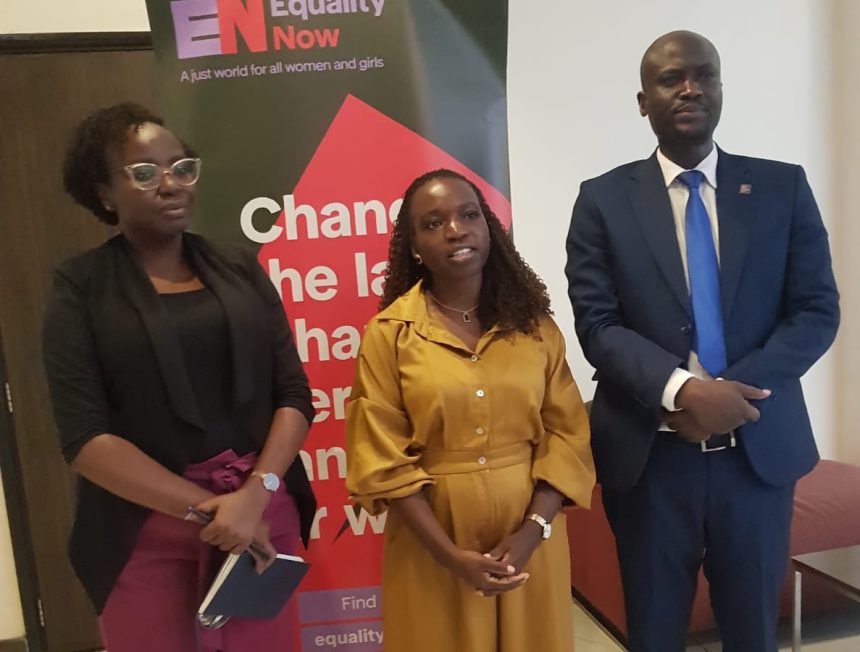
Efforts to strengthen the administration of justice for survivors of sexual and gender-based violence (SGBV) have received a boost following the roll-out of new Standard Operating Procedures (SOPs) aimed at addressing gaps in the investigation, prosecution and determination of SGBV cases across the country.
The rollout, which brought together members of Court Users Committees (CUCs) from approximately 14 counties in the Lake Region, seeks to ensure that cases of rape, defilement and other forms of sexual and gender-based violence are handled through a coordinated, survivor-centred approach.

The framework is designed to address challenges that have seen many reported cases fail to progress from health facilities and police stations to prosecution and the courts, often allowing perpetrators to evade accountability.
Speaking during a sensitisation meeting in Kisumu, John Paul Murunga, Associate Director in Gender-Based Violence at Equality Now an NGO an international non-governmental organisation (NGO) that advocates for the protection and promotion of the rights of women and girls and works to end legal and systemic discrimination and gender-based violence said the SOPs were developed in response to persistent gaps within the justice chain that undermine access to justice for survivors.
Murunga said the procedures seek to clarify the responsibilities of different actors, including police officers, investigators, prosecutors, judicial officers, medical practitioners, children’s officers and psychosocial support providers.
“We are sensitizing CUC members from the Lake Region, with almost 14 counties represented, so that they understand their specific roles in this framework and the work on SGBV to ensure that survivors access safe justice that respects their dignity and security,” said Murunga.
He noted that despite the existence of the Sexual Offences Act and other legal safeguards, many cases continue to fall through the cracks, with investigations sometimes inadequately conducted and cases failing to reach the courts.
Murunga cited statistics indicating that only one in four survivors of sexual and gender-based violence report their experiences, raising further concern over the low number of cases that ultimately result in perpetrators being held accountable.
He observed that some survivors seek medical attention following violations but never proceed to report the cases to police, while others encounter challenges during investigations and prosecution.
The SOP rollout is therefore expected to establish a more coordinated referral and response system, ensuring that cases are followed through from the point of reporting to the conclusion of court proceedings.
The procedures also seek to prepare survivors for the justice process by ensuring they understand what to expect when reporting to police, accessing court services and giving testimony.
Murunga said the initiative had already been extended to other regions, including the Coast, Garissa, Central, Meru and Eastern regions, where similar gaps in the handling of SGBV cases had been identified.
He expressed optimism that the involvement of judicial officers and other justice-sector stakeholders would strengthen implementation and improve accountability.
Bringing community voices into the justice system
Beyond strengthening coordination among justice-sector institutions, the SOP review also incorporated recommendations from communities and county governments, whose voices had previously been inadequately represented in the justice process.
Sharon Amendi, who works in the gender and community engagement space at Kisumu Medical Education Trust (KMET) partner organisation, said the engagement was informed by gaps identified through working with communities and schools on SGBV prevention and response.
She said the organisation contributed to the development of the framework by presenting recommendations gathered from community engagements, helping ensure that the procedures reflect the realities faced by survivors.
“Through our engagement, we have realised that there are gaps in terms of how SGBV cases are being handled, right from the community up to the justice level,” said Amendi.
She noted that the review brought community and county government representatives into the process, strengthening their role in addressing SGBV, including the establishment of safe houses and providing information that could support court proceedings.
Amendi said the rollout would be cascaded to specific court stations, where different actors would be expected to work together to ensure survivors receive comprehensive support.
She emphasized that the response must extend beyond the judiciary to include medical practitioners, psychosocial support providers and children’s officers.
“The survivor should be able to access services that respect their dignity, ensure their confidentiality and respond to the trauma they go through. This process is not a one-person show; it is not just for the judiciary, but for all the actors within that space,” she said.
She expressed hope that the new procedures would reduce institutional gaps and excuses among duty bearers while ensuring survivors are treated with dignity throughout the justice process.
Addressing impunity and strengthening accountability
The rollout comes amid growing national concern over sexual and gender-based violence, including rape, defilement, child marriage and other forms of violence against women and girls.
Murunga said the failure to hold perpetrators accountable in previous cases had contributed to repeat offences, with some offenders allegedly targeting multiple victims.
He said effective implementation of the SOPs would help close loopholes in the justice chain and strengthen public confidence in the legal system.
The sensitisation meeting brought together stakeholders from the judiciary, Office of the Director of Public Prosecutions, police, civil society organisations, children’s services and other legal and justice-sector institutions.