Persistent inequalities, inadequate financing and barriers to quality education continue to deny many Kenyan children equitable learning opportunities, particularly those from marginalised and vulnerable communities.
Members of the Elimu Bora Working Group, alongside other participants, are urging the government to turn its education commitments into concrete policy, legislative and budgetary measures to ensure no learner is left behind.

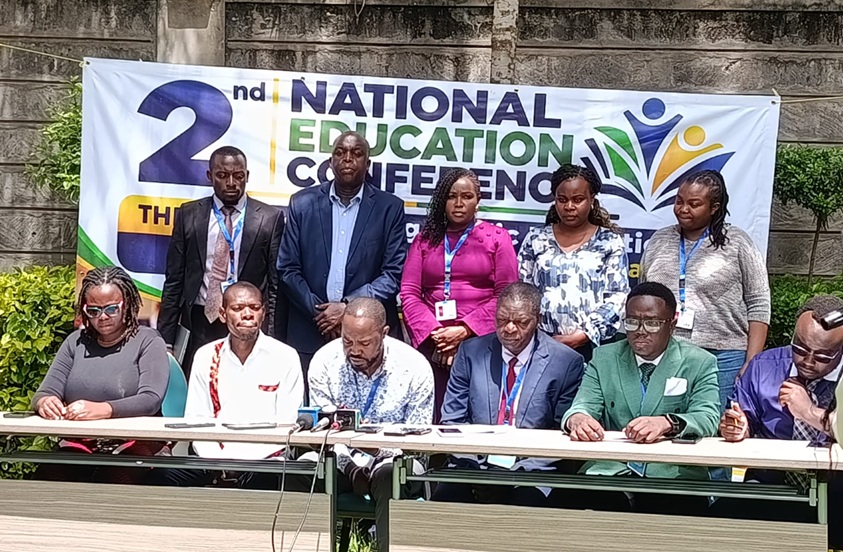
The call was made during the 2nd National Education Conference 2026, held under the theme Reclaiming Public Education: Accelerating SDG 4 Implementation and Reducing Inequality in Kenya.
The two-day meeting was jointly sponsored by the East African Centre for Human Rights (EACHRights), Oxfam Kenya, the Institute for Social Accountability (TISA), the Kenya Human Rights Commission (KHRC), the Regional Education Learning Initiative (RELI) and Akili Dada.
Speaking during the event, Ray Orek, National Student Caucus Coordinator, called for targeted interventions to address inequalities affecting learners across the country.
He said persistent disparities continue to deny children equitable educational opportunities, particularly those in arid and semi-arid areas, children with disabilities, girls, those living in poverty, street-connected children and other vulnerable groups.
“These limitations further hinder their social mobility and future economic opportunities, further perpetuating cycles of poverty and inequality,” he said.
Orek emphasised the need for education financing and policy reforms that prioritise learners who are furthest behind and address the barriers preventing them from accessing quality education.
The inequalities affecting learners are also reflected in the financial pressures facing families and the challenges schools encounter in maintaining adequate teaching staff.
Silas David Buhatsa, Chairman of the Parents Association of Kenya under the Ministry of Education, urged the government and the Teachers Service Commission (TSC) to provide a clear roadmap for absorbing teachers employed by Boards of Management (BOM).
He said parents, schools and teachers remained uncertain about the number of teachers to be recruited, available resources and implementation timelines.
“Schools, parents and teachers have not received sufficient information on how many teachers will be absorbed, what resources are available and the implementation timelines,” he said.
Buhatsa called for a transition plan that safeguards teachers’ livelihoods, ensures continuity of learning and reduces the financial burden on parents.
He also called for stronger enforcement of laws against illegal school levies, warning that unauthorised charges continued to prevent children from poor and vulnerable households from accessing free basic education.
He urged the Ministry of Education to act on the Parliamentary Committee on Education’s report on illegal levies, provide an update on action taken against school heads found culpable and outline plans for addressing the issue in the coming year.
Beyond access, Buhatsa emphasised the importance of ensuring learners acquire foundational competencies, saying education must equip children with the knowledge, skills and values needed to contribute to society.
“Every child must have access to meaningful learning opportunities that equip them with the knowledge, skills, values and competencies necessary to thrive in life and contribute to society,” he said.
These concerns formed part of a wider set of recommendations presented by Gilbert Onyango, Executive Director of the East African Centre for Human Rights and a member of the Regional Education Learning Initiative (RELI).
He presented a joint statement outlining seven priority actions to strengthen public education and accelerate progress towards Sustainable Development Goal 4 on quality education.
The statement urged the national government, Parliament, all 47 county governments, the Teachers Service Commission, development partners, civil society organisations, communities and citizens to work together to address persistent challenges facing the sector.
“We call upon the Government of Kenya, Parliament, County Governments, the Teachers Service Commission, development partners, civil society organisations, communities, and all citizens to work together to strengthen public education and accelerate progress towards SDG 4,” Onyango said.
The statement further argued that adequately financing public education should be treated as a matter of national interest because of its role in advancing equality, human dignity, social and economic development, and constitutional rights.
“Budgetary decisions must therefore reflect the urgency of investing in education and must not undermine the country’s commitment to equitable access to quality learning for every child,” Onyango said.
The stakeholders called for equitable, adequate and predictable funding that responds to learners’ needs, particularly in marginalised and underserved communities, in line with Article 203 of the Constitution.
“We call for greater transparency and accountability in education financing,” Onyango said, adding that the government should develop a clear, adequately financed plan for absorbing all teachers employed by Boards of Management.
On illegal school levies, the joint statement called for stronger enforcement of existing laws to protect children from families unable to afford additional charges.
“We call on the Ministry of Education and all relevant institutions to strengthen enforcement of existing laws and policies to ensure that no child is denied access to education because of their family’s inability to pay unauthorized fees,” Onyango said.
The statement also highlighted the need to improve foundational learning, welcoming President William Ruto’s commitment at the Kenya Comprehensive Schools Heads Association (KECSHA) Conference to ensure every Kenyan child can read, write and count by the end of Grade Three by 2030.
However, the stakeholders said the commitment must be supported by legislation, policy frameworks, implementation plans and adequate financing to translate it into measurable progress.
“We therefore call on the Government to translate this commitment into law, policy, and budgetary allocations, accompanied by annual public reporting on progress toward ensuring that every child can read, write, and count by the end of Grade 3,” Onyango said.
They further noted that achieving the target would require sustained investment in early-grade learning, teacher preparation and support, learning assessments, teaching and learning materials, remedial programmes and targeted assistance for learners falling behind.
The joint statement also called for stronger legal and policy frameworks to support education reforms and guarantee every learner’s right to education. With seven education bills currently before the National Assembly, Onyango urged lawmakers to publish the public participation report and recommendations before proceeding on their December recess.
Other priorities included targeted interventions to reduce inequalities and support marginalised learners, as well as annual public reporting on progress towards the 2030 foundational learning target.
“The future of Kenya depends on a public education system that is equitable, inclusive, adequately financed, and focused on learning. The time to move from commitments to implementation is now,” Onyango said.
The joint statement was issued by the East African Centre for Human Rights (EACHRights), the Institute for Social Accountability (TISA), Akili Dada, the Regional Education Learning Initiative (RELI) Africa, the Kenya Human Rights Commission (KHRC), the Elimu Bora Working Group and the Global Initiative for Economic, Social and Cultural Rights, among other organisations.
Story by Victoria Musimbi