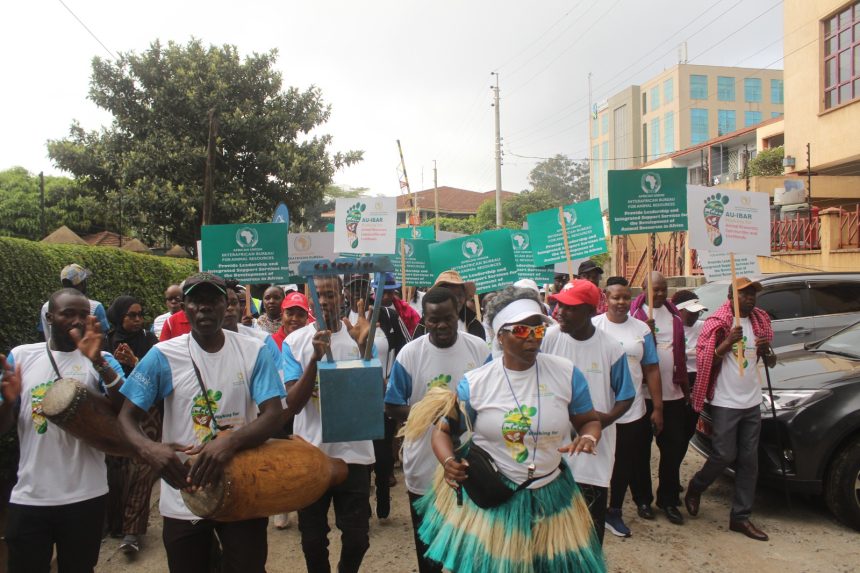
The African Union, Inter-African Bureau for Animal Resources (AU-IBAR) is working towards transforming the livestock sector into an integrated regional livestock value chains.
The Director of the African Union Inter-African Bureau for Animal Resources (AU-IBAR) Dr. Huyam Salih, says the transformation will see member states have their private and public investments leading to livestock trade corridors, “where big investments from infrastructure, logistics, cold chains, vaccination, animal health services, feed and fodder, breeding services are contributing to the growth of the sector.

Dr. Salih who spoke during the AU-IBAR Awareness and Visibility Walk, themed: Walking for Animal Resources, Communities and Livelihoods, in Nairobi, said investment in the sector is aimed at increasing livestock intra-African trade by at least 10 percent.
Dr. Salih said intensification of efforts to radicate Peste des Petits Ruminants (PPR) across the continent by 2030, is aiming to protect millions of livestock and secure rural livelihoods, adding that, the successful eradication of rinderpest is an historic triumph for global veterinary science and a blueprint for eliminating other devastating livestock diseases across Africa.
We are also supporting transformation for fisheries and aquaculture and looking for implementing our transformational program within the captured fish, supporting small-scale fishermen and women and also supporting aquaculture value chain to fill the gap that we have in the continent because we are still importing a lot from outside, said Dr. Salih.
A Senior Deputy Director of Veterinary Services in the State Department for Livestock Development, Dr. Sabenza Wekesa, has said the government is working towards transforming the livestock sector, which she said plays a crucial role in enhancing food security in the country.
Dr. Wekesa who spoke after completing the 5-kilometer AU-IBAR Awareness and Visibility Walk, themed: Walking for Animal Resources, Communities and Livelihoods, said the government is working to increase the livestock sector’s contribution to the Gross Domestic Product from 12 to 20 per cent noting that the sector is key to improving livelihoods.
“We are pushing livestock sector’s contribution to GDP from 12% to 20% and that is our vision for now, said Dr. Wekesa and added, “we are scaling up vaccinations in livestock against foot and mouth diseases, against PPR, against many other transboundary animal diseases and we are also investing in genetics, in feeds, in traceability through the animal traceability system which we are using to identify animals and trace them and also to open up lucrative markets for our farmers and the community at large.”