On June 10, the United Nations headquarters in New York will host the inaugural commemoration of the International Day for Dialogue among Civilisations, a date that did not exist on the global calendar a year ago. Established by consensus at the 78th Session of the UN General Assembly through a resolution championed by China, the observance represents a noteworthy diplomatic achievement.

We are living through an era of renewed civilisational insecurity. Geopolitical conflicts are increasingly framed through cultural and historical lenses. Migration debates are recast as existential struggles over identity.

Across continents, political movements invoke the language of civilisation not as a basis for engagement, but as a justification for exclusion. In such an environment, the significance of China’s Global Civilization Initiative (GCI) lies in its attempt to institutionalise an alternative framework for international relations.
At its core, the initiative advances a proposition that is both ancient in origin and contemporary in relevance; that human civilisation is inherently plural. As President Xi Jinping has observed, “The world we live in is diverse and colourful. Diversity makes human civilisation what it is, and provides a constant source of vitality and driving force for world development.”
This reflects a direct challenge to hierarchical conceptions of global development that have long shaped international discourse. For generations, the dominant assumption has been that societies advance along a singular path defined largely by Western historical experience. The GCI rejects that premise. It argues instead that civilisational diversity constitutes a strategic asset for humanity rather than an obstacle to be overcome.
Viewed alongside the Global Development Initiative, the Global Security Initiative, and China’s broader proposals for reforming global governance, the GCI forms part of an increasingly coherent intellectual architecture underpinning Beijing’s international engagement. British scholar Martin Jacques has argued that these initiatives collectively represent the most comprehensive articulation of contemporary Chinese foreign policy.
China is no longer engaging the world solely through the language of trade, investment and infrastructure. It is increasingly engaging through ideas, values and civilisational narratives, a far more ambitious undertaking with potentially far-reaching implications.
This shift is particularly significant for countries across Africa, Asia, Latin America and the Middle East. For much of the modern era, global conversations about civilisation, modernity, and progress have been disproportionately shaped by institutions and intellectual traditions centred in Europe and North America. China’s approach seeks to widen that conversation. Through platforms such as the Ancient Civilizations Forum, the Conference on Dialogue of Asian Civilizations, and the Alliance for Cultural Heritage in Asia, Beijing is helping construct a wide-reaching infrastructure for cultural diplomacy.
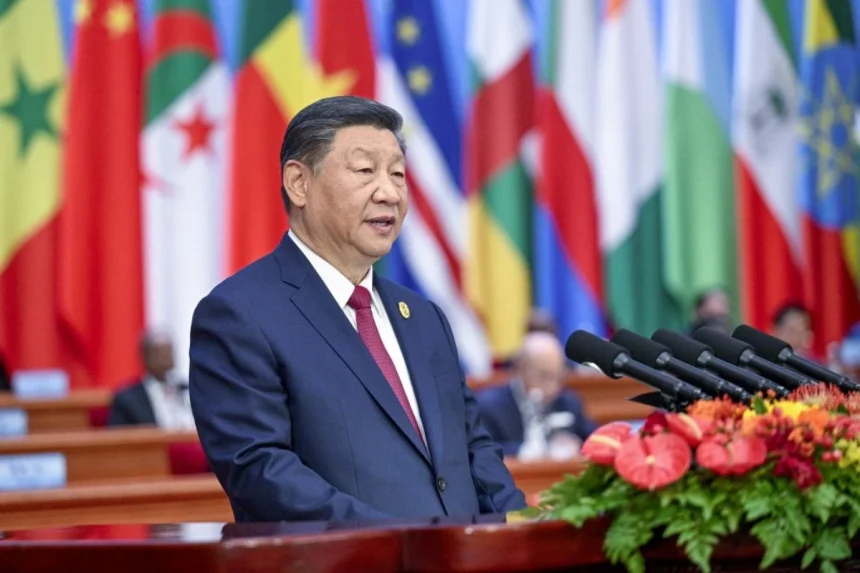
These initiatives reflect an emerging vision of a multipolar cultural order in which cities in the Global South are active participants in defining humanity’s shared future. The importance China attaches to this agenda was evident at the 2024 Forum on China-Africa Cooperation, where President Xi placed the “Partnership Action for Mutual Learning among Civilizations” at the forefront of ten major partnership actions for modernization — ahead of trade, industrial cooperation, infrastructure development and technological exchange. Sustainable partnerships, in this view, are built first upon mutual understanding and respect, rather than conditionality and prescription.
None of this suggests that civilisational dialogue alone can resolve the profound fractures confronting the international system. The world’s historical grievances, cultural tensions, and geopolitical rivalries remain substantial. Yet the GCI contributes to the conviction that genuine dialogue across civilisational boundaries remains both possible and necessary. Its central principles — mutual respect, extensive consultation, joint contribution and shared benefit — offer a framework for addressing global challenges in a world where no single civilisation possesses a monopoly on wisdom.
The inaugural International Day for Dialogue among Civilisations may ultimately be seen as an early marker of a broader transformation in global affairs; the gradual emergence of a more pluralistic conception of world order, one in which cultural confidence is balanced by cultural humility.
The more consequential question is whether those who overlooked it understand the significance of the conversation now taking shape, or whether they will discover, too late, that a new vocabulary of international engagement has been developing beyond the boundaries of their attention.
The writer is an expert in China-Africa relations