The Kenya Private Sector Alliance (KEPSA) has raised concerns over overlapping regulations, multiple levies, administrative delays, and political uncertainty in the country, warning that this is eroding investor confidence.
According to the Alliance, this, coupled with the rising cost of doing business, has led to investment decisions being redirected elsewhere.

The Alliance is now calling on the Senate and Counties to address the ease of doing business, high levies, and the rising cost of production as one way of addressing the challenges.
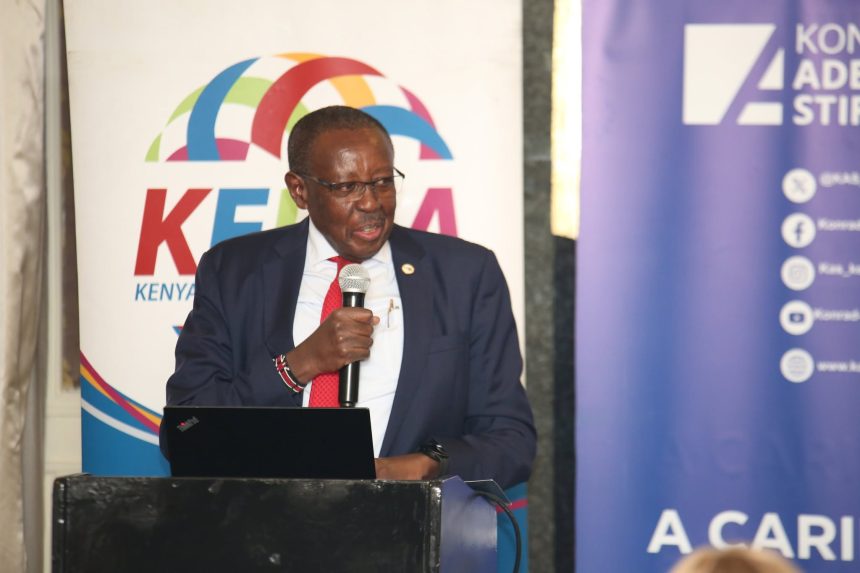
This emerged during the Senate Liaison Committee engagement with members of KEPSA in Sawela Lodge in Naivasha, where the rising cost of fuel and electricity dominated the meeting.
According to KEPSA Chairman Engineer James Mwangi, the country had progressive laws that supported business and strengthened governance, but the challenge lay in their implementation.
He noted that investors were attracted to environments where policies were clear, regulations were consistently applied, and institutions functioned efficiently.
“Businesses thrive when approvals are timely, compliance requirements are straightforward, and government processes facilitate rather than frustrate enterprise growth,” he said
The Chairman said that there was a need to move from policy formulation to effective implementation as the country had untapped potential.
“Reliable roads, efficient logistics systems, affordable energy, access to water and quality digital connectivity are essential ingredients for economic growth,” he said.
Addressing the Senators, he said that the country had witnessed growth in local economies, expansion of infrastructure, and increased participation of citizens in development.
“The private sector looks to the Senate as a strategic partner in championing reforms that can help improve the business environment and strengthen investor confidence,” he said.
On his part, Deputy Speaker in the Senate Kathuri Murungi said that the collaboration between the Senate and KEPSA has produced tangible results.
He noted that 15 years after devolution, investors continued to face unpredictable licensing regimes, multiple levies, fragmented regulations, delayed payments, and bureaucratic bottlenecks.
“These challenges stifle innovation, discourage investment, and undermine the very promise of devolution, and we must fix the red tape that is choking our counties to unlock their full potential
as hubs of agribusiness,” he said.
Murungi, who also chairs the liaison committee, added that the Senate was keen to transform agribusiness in counties by tackling high input costs, climate resilience, and market fragmentation.
Konrad Adenauer-Stiftung (KAS) Programme-Coordinator Victor Oteku said that they were committed to strengthening democratic governance, supporting effective devolution, and promoting the principles of the Social Market Economy.
“As Kenya seeks to accelerate economic growth and attract investment, counties must become more competitive, efficient, and business-friendly,” he said.