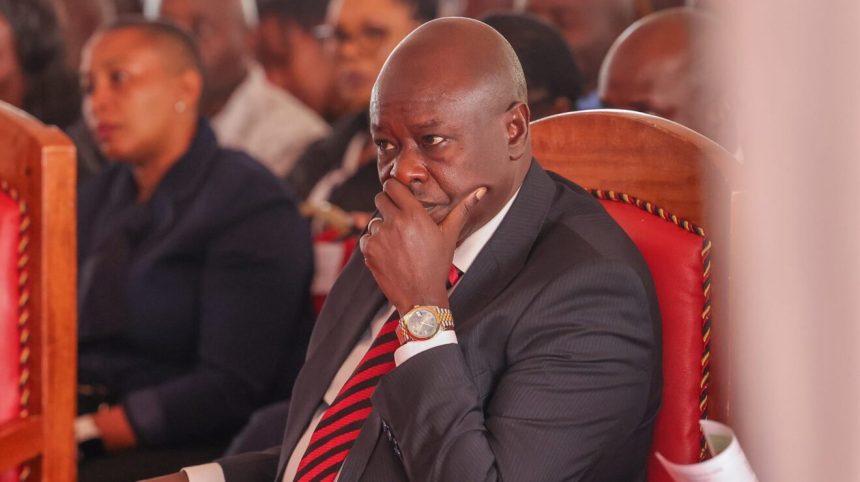
A three-judge bench of the High Court has called on Parliament to promptly enact a clear statutory framework for the impeachment of a Deputy President under the Constitution, in a landmark judgment stemming from petitions challenging the removal of former Deputy President Rigathi Gachagua.
In its comprehensive 350-page ruling, delivered by Justice Eric Ogola on Monday, the court emphasised a constitutional gap in the current legal framework. It noted the necessity for Parliament to establish structured procedures to guide impeachment proceedings involving a Deputy President.

The judges issued a declaratory order, stating: “A declaratory order is hereby issued affirming the constitutional necessity for Parliament to enact a dedicated statutory framework governing the impeachment of Deputy President under Article 150 of the Constitution.”
They further explained that the absence of such a framework creates procedural uncertainty in handling high-level executive impeachment matters.
However, the bench declined to overturn the Senate’s resolution that led to Gachagua’s impeachment, thereby upholding the parliamentary process that culminated in his removal.
“The prayer seeking to quash the resolution of the Senate to impeach His Excellency Gachagua is hereby declined,” the verdict stated.
At the same time, the court found that Gachagua’s right to a fair trial had been violated when the Senate refused to grant an adjournment despite his absence during the impeachment proceedings, infringing upon constitutional guarantees of a fair hearing.
As a result, the court awarded KSh 50 million in constitutional damages to Gachagua, to be paid by the Senate. This award was made to vindicate constitutional rights, restore dignity, and deter future violations.
Regarding pension and emoluments, the court directed that this issue be pursued in an appropriate forum.
The judges also ruled that all parties would bear their own costs, acknowledging the public interest nature of the case.
All prayers not explicitly granted in the judgment were declined, bringing finality to the petition challenging the impeachment process.
The ruling also addressed the transition following the impeachment, including the appointment of Professor Kithure Kindiki as Deputy President, within the broader context of constitutional continuity after parliamentary action.
The bench underscored that its decision contributes to the development of constitutional jurisprudence on impeachment and executive accountability in Kenya.